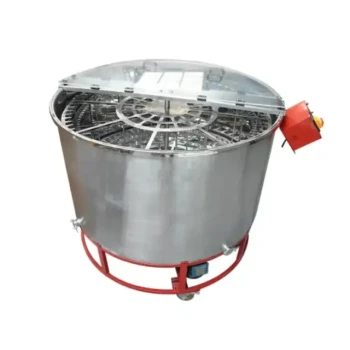
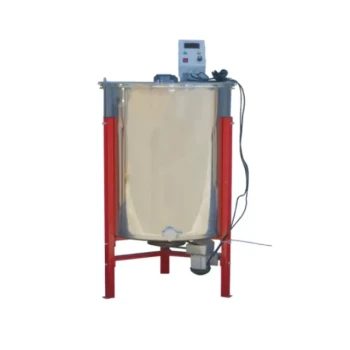
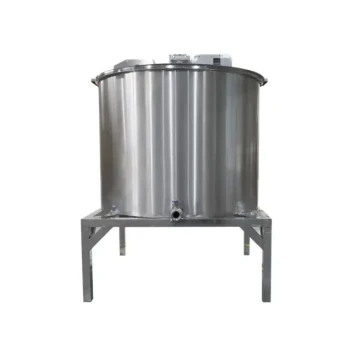
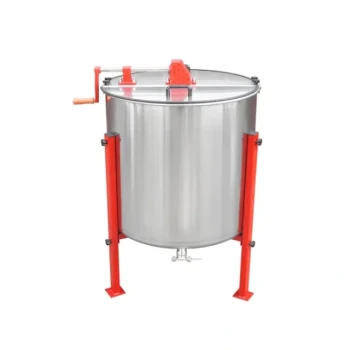
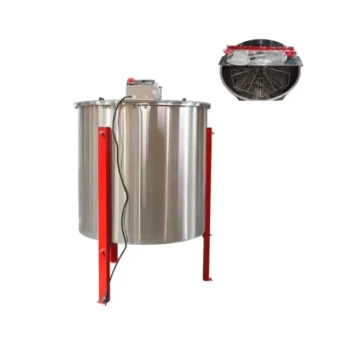
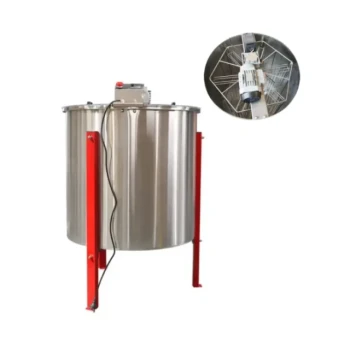
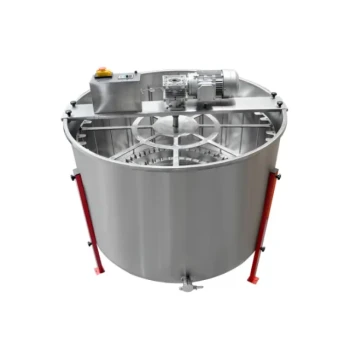
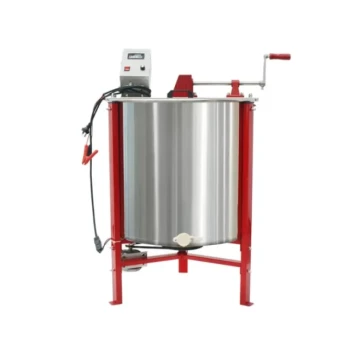
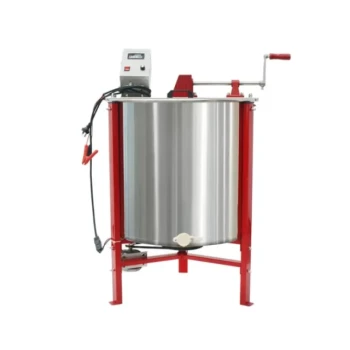
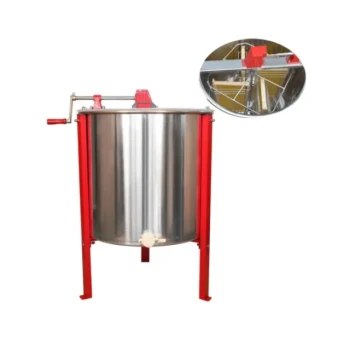
Industrial centrifugal honey extractors utilize high-speed rotational force to separate honey from the comb, offering a decisive technical advantage over manual methods. This mechanized approach drastically reduces physical labor and processing time while simultaneously improving the hygiene and biological integrity of the final product.
The core value of industrial centrifugal extraction lies in its ability to decouple harvest speed from comb destruction. By preserving the wax foundation, you not only ensure immediate operational efficiency but also significantly shorten the biological production cycle for the next harvest.
Preserving Hive Resources and Yield
The most significant long-term advantage of centrifugal extraction is the preservation of the wax honeycomb structure.
Non-Destructive Separation
Unlike manual squeezing or crushing methods, centrifugal extractors use balanced rotational force to pull honey out of the cells. This process leaves the delicate wax foundation intact.
The Energy-Yield Correlation
Because the wax structure is preserved, the empty combs can be returned directly to the beehive. This eliminates the need for bees to expend significant energy and resources rebuilding the comb. Consequently, the colony can immediately focus on foraging, which shortens the production cycle and increases the overall honey yield per season.
Enhancing Product Quality and Bioactivity
Industrial extraction is not just about speed; it is about maintaining the chemical and sensory profile of the honey.
Reducing Environmental Exposure
Manual harvesting is often slow, leaving honey exposed to the environment for extended periods. Industrial extractors rapidly complete the separation process, which shortens the time honey is exposed to air. This speed effectively minimizes the risk of environmental contamination, such as dust or foreign particles.
Preserving Flavor and Nutrition
Prolonged exposure to air and improper manual handling can degrade specific flavor compounds. By using a sealed, high-speed mechanical process, industrial extractors maximize the preservation of the honey's natural flavor and nutritional bioactivity. This ensures the final product retains the physicochemical indicators expected of high-quality, commercial-grade honey.
Operational Efficiency and Scalability
For producers aiming for commercial viability, the shift from manual to industrial equipment is driven by labor economics.
Automation and Multitasking
Motorized honey extractors automate the spinning process, removing the need for physical cranking. This allows the operator to multitask, such as uncapping the next set of frames while the current batch is spinning. This parallel processing significantly reduces overall labor intensity.
Consistency and Standards
Industrial-grade rotational balance control ensures a more thorough separation than hand-cranking, which can be inconsistent. This mechanical precision results in product consistency that meets commercial market standards, establishing a higher-quality foundation for subsequent grading and branding.
Understanding the Trade-offs
While industrial extractors offer superior efficiency, they are not the correct solution for every scenario.
Capital Cost vs. Volume
Industrial equipment represents a significant financial investment compared to manual extractors. For beginning beekeepers or those with very low hive counts, the lower price point of manual extractors often makes more economic sense despite the increased labor.
Complexity of Operation
Industrial machines often feature adjustable speed controls and require a power source. This adds a layer of operational complexity compared to the simplicity of a hand-cranked device, which is often easier to set up and transport to remote locations.
Making the Right Choice for Your Goal
The decision between industrial and manual extraction should be based on your production volume and commercial aspirations.
- If your primary focus is Commercial Scalability: Prioritize an industrial centrifugal extractor to maximize yield through comb preservation and reduce labor costs via automation.
- If your primary focus is Bioactive Quality: Choose industrial equipment to minimize air exposure time and ensure the retention of volatile flavor compounds.
- If your primary focus is Low-Cost Entry: Stick to a manual extractor to minimize upfront capital investment while learning the fundamentals of apiary management.
Industrial extraction transforms honey harvesting from a labor-intensive chore into a streamlined, sanitary manufacturing process.
Summary Table:
| Feature | Industrial Centrifugal Extractor | Manual Harvesting (Crushing/Hand-Cranking) |
|---|---|---|
| Comb Preservation | Non-destructive; wax remains intact for reuse | Often destructive; requires bees to rebuild |
| Production Speed | High; automated rotation for rapid processing | Low; labor-intensive and time-consuming |
| Honey Quality | High; minimal air exposure & contamination | Variable; higher risk of environmental exposure |
| Yield Efficiency | Maximum; extracts more honey per cell | Lower; honey remains trapped in crushed wax |
| Labor Intensity | Low; allows for operator multitasking | High; requires constant physical effort |
Scaling Your Apiary for Success with HONESTBEE
Ready to transform your honey production from a labor-heavy task into a streamlined, high-yield operation? At HONESTBEE, we specialize in supporting commercial apiaries and distributors with premium beekeeping solutions. From high-capacity industrial centrifugal extractors and automated honey-filling machines to specialized hive-making hardware, our comprehensive wholesale catalog is designed to maximize your efficiency and product quality.
Empower your business with professional-grade tools. Contact us today to explore our full range and request a wholesale quote!
References
- Fernanda Duarte Araújo, Abadia dos Reis Nascimento. HONEY ECONOMIC VALUATION IN THE STATE OF GOIÁS: CONSERVATION AND INCOME. DOI: 10.18677/agrarian_academy_015
This article is also based on technical information from HonestBee Knowledge Base .
Related Products
- electric honey extractor honey centrifuge 3 frame honey extractor stainless steel honey frame extractor
- HONESTBEE 72 Frame Industrial Electric Honey Extractor for Beekeeping
- Manual Hand Crank 4 Frame Honey Extractor Centrifuge for Beekeeping
- Professional 4 Frame Self Reversing Electric Honey Extractor for Beekeeping
- Commercial 48-Frame Stainless Steel Honey Extractor
People Also Ask
- What are the characteristics of electric honey extractors? Boost Your Apiary Efficiency with Automated Technology
- What are the disadvantages of using an electric honey extractor? Weighing Cost, Power, and Comb Safety
- What are the advantages of an electric honey extractor? Boost Efficiency and Scale Your Honey Production
- What are the technical advantages of electric honey extractors? Maximize Yield and Protect Your Bee Colony
- How does an electric honey extractor affect the quality of honey? Preserve Flavor & Purity with Precision Extraction