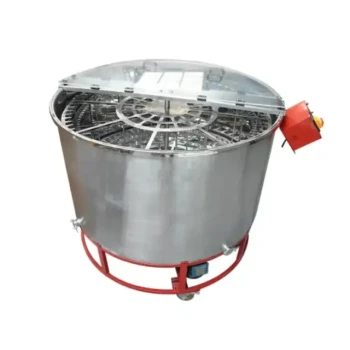
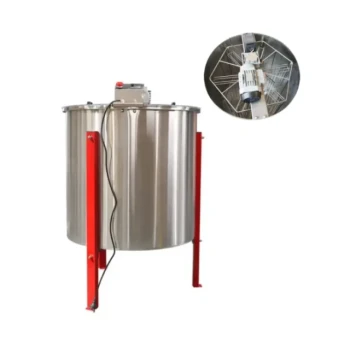
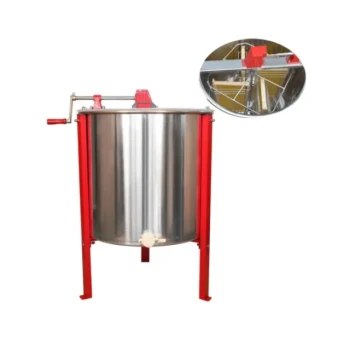
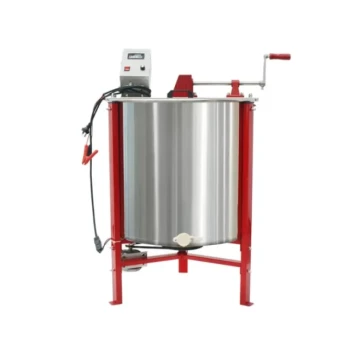
While honey extractors significantly streamline the harvest process, they introduce distinct financial, logistical, and operational challenges. The primary drawbacks include a substantial initial cost, the requirement for dedicated storage space, and critical maintenance needs to prevent disease transmission. Additionally, they are generally incompatible with alternative hive configurations such as Top Bar or Warre hives.
The decision to utilize a honey extractor involves trading capital and maintenance time for harvest speed. The most significant risks are not just financial, but biological—specifically the potential for spreading pathogens through improper cleaning and damaging delicate combs through excessive speed.
The Financial and Spatial Investment
High Initial Capital
Acquiring a honey extractor represents a significant upfront investment. This is particularly true for electric models, which command a much higher price point than manual versions. For small-scale hobbyists, this cost may be difficult to justify compared to simpler harvesting methods.
Storage Requirements
Extractors are bulky pieces of equipment that are often used only once or twice a year. They require adequate, dry storage space for the remainder of the season. If you lack a garage or shed, storing a large metal drum can become a logistical nuisance.
Complexity and Repair Costs
Automatic and electric models rely on technological components and motors. Unlike simple manual cranks, these parts require regular maintenance and may incur additional repair costs if the electronics or motor malfunction.
Bio-Security and Hive Compatibility
The Disease Vector Risk
One of the most critical drawbacks is the potential for spreading disease. If the equipment is not meticulously cleaned, it can harbor pathogens like American Foulbrood. This risk is amplified if the extractor is shared among a club or community of beekeepers.
rigorous Cleaning Demands
Cleaning an extractor is not a quick task. It is a time-consuming process required to prevent honey contamination and pest attraction. Electric models are often noted as being even more challenging to clean thoroughly than their manual counterparts.
Limited Hive Suitability
Extractors are designed primarily for Langstroth frames. They possess limited suitability for alternative hive designs. If you manage Top Bar or Warre hives, a standard centrifugal extractor is often useless because these frames typically lack the structural support to withstand spinning.
Understanding the Trade-offs: Electric vs. Manual
The Risk of Comb Blowout
Electric extractors offer speed, but they often lack the tactile feedback of a manual model. If the spin speed is too high, the centrifugal force can destroy the delicate wax honeycomb. Manual extractors allow the operator to "feel" the weight and adjust the speed to preserve the comb.
Power Dependency
Electric models introduce a dependency on infrastructure. They are rendered useless in areas with unreliable power supplies or in remote apiaries without electricity. This limits where you can set up your extraction line.
Loss of Control
While electric models are efficient, they provide less precise control over the acceleration compared to a hand crank. A sudden increase in speed by an automated motor is more likely to cause frame damage than the gradual acceleration applied by a human arm.
Making the Right Choice for Your Goal
Before investing in extraction equipment, assess your apiary size and hive style against these limitations.
- If your primary focus is preserving capital and comb integrity: Stick to a manual extractor or simple crush-and-strain methods to maintain tactile control and avoid high costs.
- If your primary focus is volume and efficiency: The high cost and maintenance of an electric extractor are justified trade-offs for the ability to process many frames simultaneously.
- If your primary focus is non-standard beekeeping (Top Bar/Warre): Avoid standard extractors entirely, as they are mechanically incompatible with your frames.
Success with an extractor depends on balancing the efficiency gains against the strict requirements for cleaning and maintenance.
Summary Table:
| Drawback Category | Key Limitations | Impact Level |
|---|---|---|
| Financial | High initial cost for electric models and potential repair fees. | High |
| Logistical | Bulky size requires dedicated dry storage space year-round. | Moderate |
| Operational | Risk of 'comb blowout' and dependency on power sources. | Moderate |
| Biosecurity | Potential disease vector (e.g., AFB) without rigorous cleaning. | Critical |
| Compatibility | Ineffective for Top Bar or Warre hive configurations. | Variable |
Maximize Your Harvest Efficiency with HONESTBEE
Transitioning from hobbyist tools to professional-grade equipment requires more than just a purchase—it requires a partner who understands the scale of commercial beekeeping. At HONESTBEE, we specialize in supporting commercial apiaries and distributors with high-performance honey-filling machines, durable hive-making machinery, and a complete spectrum of beekeeping tools.
Whether you are looking to upgrade your extraction line or stock your distribution business with essential consumables and honey-themed cultural merchandise, we provide the wholesale expertise you need to succeed. Don't let operational drawbacks slow your growth. Contact HONESTBEE today to discover how our industrial solutions can streamline your operations and enhance your apiary's value.
Related Products
- HONESTBEE 72 Frame Industrial Electric Honey Extractor for Beekeeping
- Commercial Electric 12 Frame Honey Extractor Spinner Motorized Honey Extractor
- HONESTBEE 3-Frame Manual Acrylic Honey Extractor
- electric honey extractor honey centrifuge 3 frame honey extractor stainless steel honey frame extractor
- HONESTBEE 6 Frame Self Reversing Electric Honey Extractor for Beekeeping
People Also Ask
- What is the importance of balancing honeycomb frames within a honey extractor? Ensure Stability and Protect Machinery
- How is honey separated from the frames after they are uncapped? Efficient Extraction Methods for High Yields
- What are the main benefits of using a honey extractor? Maximize Yields and Protect Your Honeycomb
- What are the recommended methods for removing honey from the honeycomb? Top Extraction Techniques for Maximum Efficiency
- How do manual honey extractors compare to electric honey extractors? Choosing the Right Tool for Your Apiary Growth