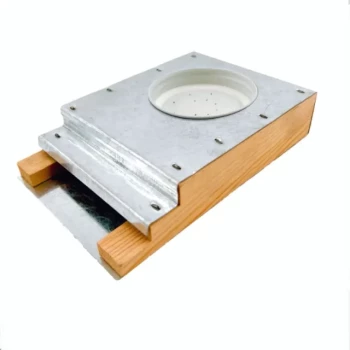
The closed feeding method prioritizes control and security. By placing food sources directly inside the hive structure or at the entrance, beekeepers ensure that nutrients are consumed exclusively by the intended colony. This approach eliminates competition from external animals and allows for the precise management of colony health through targeted additives and monitoring.
Core Takeaway Closed feeding is the superior strategy for beekeepers focused on biosecurity and precision management. It isolates resources to prevent cross-contamination or theft while enabling specific health interventions for individual hives.
Maximizing Resource Security
Elimination of External Competition
The most immediate advantage of closed feeding is exclusivity. By locating the food within the bees' living space, you ensure that no other animals access the food.
This prevents the loss of expensive syrup or supplements to "freeloaders." It effectively stops local wildlife, ants, wasps, and hornets from draining resources meant for your colony.
Reducing the Risk of Robbery
Open feeding can trigger a feeding frenzy that encourages strong hives to attack and rob weaker ones. Closed feeding keeps the food source contained and less aromatic to outsiders.
By limiting the scent of the food to the interior of the hive, you significantly lower the likelihood of inducing robbing behaviors from neighboring colonies or pests.
Precision Hive Management
Accurate Consumption Tracking
Because the food is isolated to a single colony, the beekeeper can accurately monitor consumption.
observing how quickly a specific hive empties its feeder provides immediate data on that colony's health, population size, and hunger levels. This is impossible to gauge with communal open feeding stations.
Targeted Health Interventions
Closed feeding enables individual hive treatment. You can customize the feed for a specific colony without affecting the rest of the apiary.
This allows for the use of additives to maintain health or deter pests. for example, beekeepers can safely add Wintergreen essential oils to the food of a specific hive to fend off hive beetles, ensuring the correct dosage reaches the target bees.
Biosecurity and Disease Prevention
Preventing Cross-Contamination
Open feeding stations attract a mix of insects, including bees from other apiaries, wasps, and ants. These visitors can carry diseases that may infect your hives.
Closed feeding acts as a quarantine measure. It prevents your bees from mingling with potential disease vectors at a communal trough, protecting the colony from pathogens carried by outside pests.
Understanding the Trade-offs
While closed feeding offers superior control, it requires a greater investment of resources.
- Time and Labor Intensity: Unlike open feeding, which is a quick "pour and go" process, closed feeding requires the beekeeper to put on protective gear and service each hive individually.
- Higher Equipment Costs: You must purchase specific equipment for every hive, such as hive-top, in-hive, or entrance feeders, rather than using a single communal container.
- Hive Disturbance: Refilling internal feeders often requires opening the hive. This disturbs the bees and disrupts their internal climate, which can be counterproductive in certain weather conditions.
Making the Right Choice for Your Goal
The decision between feeding methods depends on your specific management philosophy and the current threat level in your area.
- If your primary focus is Biosecurity: Use closed feeding to prevent the spread of disease and stop pests like ants and wasps from accessing the hive's food.
- If your primary focus is Colony Rehabilitation: Use closed feeding to deliver targeted additives or medications to specific, struggling hives without treating the entire apiary.
Closed feeding transforms feeding from a passive task into an active management tool, giving you full control over the health and inputs of your apiary.
Summary Table:
| Feature | Closed Feeding Benefit | Management Outcome |
|---|---|---|
| Resource Security | Exclusively for the target colony | Prevents food theft from ants, wasps, and wildlife |
| Disease Control | Eliminates communal contact | Minimizes cross-contamination and pathogen spread |
| Robbing Prevention | Contained scent profile | Reduces likelihood of neighboring hives attacking |
| Health Monitoring | Trackable consumption per hive | Enables data-driven decisions on colony strength |
| Customization | Targeted additives (e.g., oils) | Delivers precise treatments to specific colonies |
Elevate Your Apiary Management with HONESTBEE
To implement a successful closed feeding strategy, you need reliable, high-quality equipment designed for precision. HONESTBEE provides commercial apiaries and distributors with a comprehensive wholesale range of professional beekeeping tools, hive-making machinery, and honey-processing equipment. From specialized feeders that maximize security to advanced honey-filling machines, our portfolio is built to scale your business and ensure colony health.
Ready to optimize your beekeeping operations? Contact us today to explore our wholesale solutions and see how HONESTBEE can support your growth with industry-leading hardware and supplies.
Related Products
- Boardman Entrance Bee Feeder Durable Galvanized Steel and Wood Construction for Beekeeping
- Rapid Bee Feeder White Plastic 2L Round Top Feeder for 8 or 10-Frame Bee Hives
- Professional In-Hive Bee Feeder HONESTBEE Frame for Beekeeping
- White Plastic 0.5L Beekeeping Entrance Feeder for Bees
- HONESTBEE Entrance Bee Feeder Efficient Hive Front Liquid Feeding Solution for Beekeeping
People Also Ask
- What types of bee feeders are available for beginners? Start with the Simple Entrance Feeder
- How does a bee entrance feeder work? A Simple Guide to Convenient Hive Feeding
- What is a bee entrance feeder and what are its drawbacks? Essential Guide to Hive Security and Feeding Efficiency
- What are the advantages and disadvantages of using an entrance feeder for bees? Balance Convenience and Hive Security.
- How to make an entrance feeder for bees? A DIY Guide for Safe & Effective Feeding