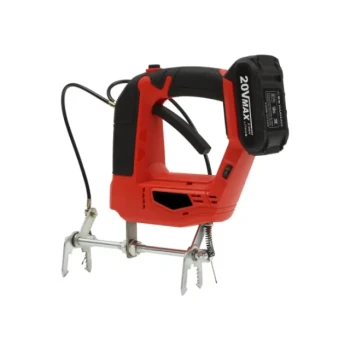
Industrial-grade orbital shakers significantly enhance Varroa assessment by replacing variable manual agitation with consistent, automated mechanical power. By maintaining a constant frequency and duration, these devices eliminate human variability, resulting in more precise mite counts and the ability to process a larger volume of samples efficiently.
While manual shaking is accessible, it is prone to inconsistency and operator fatigue. Industrial shakers standardize the separation process, ensuring that infestation data is statistically reliable and comparable across large sample sets.
Achieving Scientific Precision
Eliminating Human Error
The primary weakness of manual shaking is variability; no two people shake a sample with the exact same force or rhythm. An industrial shaker applies mechanical power uniformly to every sample. This standardization removes the "human factor," ensuring that a count reflects the actual infestation level, not the operator's energy level.
Consistent Frequency and Duration
Effective mite separation requires sustained agitation. Industrial units operate at a constant frequency, such as 130 RPM, for a set duration. This precise control guarantees that the wash is aggressive enough to dislodge mites without fluctuating during the process.
Thorough Mite Separation
To get an accurate count, mites must be physically dislodged from the bees' bodies. The automated mechanical force ensures a thorough wash that manual methods may struggle to replicate consistently. This reduces the risk of undercounting mites that remain attached to the bees.
Operational Efficiency
Increasing Sample Throughput
Manual washing is labor-intensive and creates a bottleneck when managing many hives. Utilizing an orbital shaker significantly increases sample processing throughput. This allows apiarists or researchers to assess more colonies in less time, providing a broader picture of apiary health.
Data Reliability
Because the mechanical process is repeatable, the resulting data is higher in precision. This reliability is critical when tracking infestation trends over time or comparing treatment efficacy between different colonies.
Understanding the Trade-offs
Equipment Dependency vs. Simplicity
While shakers offer superior precision, they introduce a dependency on industrial-grade hardware. Manual shaking requires only a jar and fluid, making it universally available. However, relying on manual methods for anything beyond a few hives introduces data noise that can obscure the true severity of an infestation.
Making the Right Choice for Your Goal
To decide between manual agitation and industrial automation, consider the scale of your operation and your need for data integrity.
- If your primary focus is Commercial Beekeeping or Research: You must use an orbital shaker to ensure high throughput and scientifically precise mite counts that are free from human error.
- If your primary focus is Small-Scale or Hobbyist Management: You may find manual shaking sufficient, provided you acknowledge that variability in your physical agitation can lead to less consistent data.
Standardizing your assessment method is the first step toward effective pest management.
Summary Table:
| Feature | Manual Shaking | Industrial Orbital Shaker |
|---|---|---|
| Consistency | Highly variable (operator dependent) | Standardized (constant frequency/duration) |
| Processing Speed | Slow; prone to fatigue | High throughput; automated |
| Accuracy | Risk of undercounting due to weak agitation | High; ensures thorough mite separation |
| Data Reliability | Low; difficult to replicate | High; scientifically comparable results |
| Best Use Case | Hobbyists with 1-2 hives | Commercial apiaries and researchers |
Elevate Your Apiary Health Management with HONESTBEE
Precise Varroa assessment is the cornerstone of sustainable beekeeping. At HONESTBEE, we specialize in empowering commercial apiaries and distributors with the professional tools needed for scientific precision. From industrial-grade laboratory equipment and honey-filling machines to durable beekeeping hardware and consumables, our comprehensive wholesale catalog is designed to optimize your operational efficiency.
Ready to scale your operation with reliable hardware? Contact us today to explore our full spectrum of beekeeping machinery and tools!
References
- Renata S. Borba, Stephen F. Pernal. Phenomic analysis of the honey bee pathogen-web and its dynamics on colony productivity, health and social immunity behaviors. DOI: 10.1371/journal.pone.0263273
This article is also based on technical information from HonestBee Knowledge Base .
Related Products
People Also Ask
- Why is the use of a bee shaker and alcohol wash necessary? Master Accurate Varroa Mite Monitoring
- What role do efficient auxiliary tools play in managing labor resources? Maximize Apiary Output & Labor Efficiency
- What should be done with the bee sample after conducting a varroa mite count with a shaker? Post-Test Care Guide
- What is an electric bee smoker? A Guide to Automated Hive Management
- What is the function of a high-performance bee smoker in commercial apiary management? Maximize Safety & Efficiency