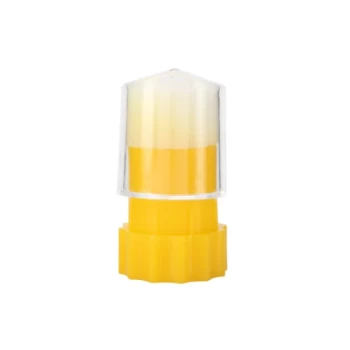
Specialized queen cups function as the critical interface for maximizing royal jelly production when paired with multi-queen colonies. By standardizing the rearing vessel, these cups allow beekeepers to leverage the massive, synchronized larval supply generated by multiple queens, resulting in high acceptance rates and significantly increased royal jelly yields per hive.
By combining the biological surplus of multi-queen colonies with the standardized architecture of specialized cups, producers transform a natural biological behavior into a scalable, high-efficiency manufacturing process.
The Mechanics of the Synergy
Synchronizing Supply and Demand
The primary advantage lies in the balance of resources. Multi-queen colonies are utilized specifically to produce a large and synchronized supply of larvae.
A single queen often cannot produce enough larvae of the exact right age to fill large arrays of grafting cups simultaneously. Multi-queen systems resolve this bottleneck, ensuring there are always enough larvae to fill the specialized cups.
Simulating the Natural Environment
Specialized queen cups are engineered to mimic the specific dimensions and materials of a natural queen cell. This physical structure triggers an instinctive response in worker bees.
When larvae from the multi-queen colony are grafted into these cups, the workers are induced to secrete massive quantities of royal jelly to feed them. The design of the cup directly influences the secretion efficiency of the worker bees.
Achieving High Acceptance Rates
For commercial viability, the hive must accept the grafted larvae rather than cleaning them out. The synergy between a densely populated multi-queen colony and standardized cups facilitates large-scale grafting with high acceptance rates.
The overwhelming presence of larvae in recognized "queen" vessels forces the colony into a mass-rearing mode, minimizing rejection.
Operational and Economic Efficiency
Facilitating Mechanical Collection
Specialized cups are not just biological vessels; they are production tools. Their specific dimensions are designed to facilitate mechanical or semi-mechanical collection.
Using standardized cups allows for faster harvesting compared to natural wax cells, which vary in shape and size. This significantly reduces labor costs and processing time.
Maximizing Output per Hive
The ultimate goal of this combination is economic efficiency. By ensuring every slot in the rearing frame is filled (thanks to the multi-queen larval supply) and accepted (thanks to the cup design), the royal jelly output per hive is maximized.
This creates a streamlined operation where biological constraints are minimized, and production volume is stabilized.
Understanding the Operational Trade-offs
Equipment Specificity
While efficiency increases, flexibility decreases. The dimensions of the cups must be precise to trigger the correct biological response and fit mechanical harvesting equipment.
Using incorrect materials or dimensions can lead to poor secretion rates, negating the benefits of the multi-queen colony.
Hive Management Complexity
Utilizing this method requires strict management of the hive layout. As noted in advanced setups, physical barriers like solid diaphragms and Hahnemann lattices are often required.
These structures control queen movement and guide worker flight paths to force foragers through the rearing area, further stimulating the perception of nectar flow and urging them to feed the larvae in the cups.
Making the Right Choice for Your Goal
To determine if this specialized approach aligns with your production targets, consider the following:
- If your primary focus is maximizing commercial yield: Prioritize the integration of multi-queen colonies with standardized cups to ensure a constant, synchronized supply of larvae for mass grafting.
- If your primary focus is operational speed: Select queen cups specifically designed for compatibility with mechanical extraction tools to reduce labor during the harvest phase.
Mastering the interaction between biological supply and standardized equipment is the key to scaling royal jelly production efficiently.
Summary Table:
| Key Advantage | Impact on Production | Benefit for Beekeepers |
|---|---|---|
| Standardized Architecture | Mimics natural queen cells | High larval acceptance rates |
| Synchronized Supply | Leverages multi-queen larval output | Maximizes every grafting frame slot |
| Mechanical Compatibility | Optimized for extraction tools | Significant reduction in labor costs |
| Enhanced Secretion | Triggers worker bee instincts | Increased royal jelly volume per hive |
| Operational Scalability | Transforms biology into a process | Reliable, high-volume commercial output |
Scale Your Royal Jelly Production with HONESTBEE
Are you looking to optimize your commercial apiary's efficiency? HONESTBEE provides the precision-engineered equipment necessary to turn biological potential into high-volume profit.
We specialize in supporting commercial apiaries and distributors with a comprehensive range of beekeeping tools, machinery, and essential consumables. From specialized queen cups and hive-making machinery to advanced honey-filling systems, our portfolio is designed to streamline your operations and maximize output.
Ready to upgrade your production? Contact us today to learn how our wholesale solutions can enhance your business performance.
References
- Huoqing Zheng, Vincent Dietemann. Maintenance and application of multiple queen colonies in commercial beekeeping. DOI: 10.3896/ibra.1.48.4.10
This article is also based on technical information from HonestBee Knowledge Base .
Related Products
- Brown Nicot Queen Cell Cups for Breeding Queen Bees Beekeeping
- JZBZ Type Wide Base Plastic Queen Cell Cups for Base Mounting and Queen Rearing
- JZBZ Push-In Queen Cell Cups for Beekeeping
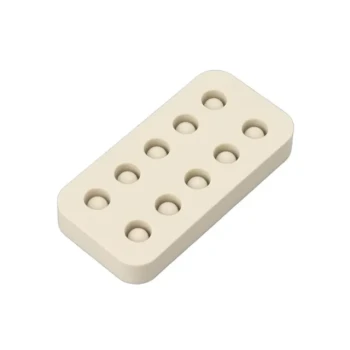
- 10-Cell Silicone Beeswax Bee Queen Cups Forming Mold
- Clear Black Plain Polystyrene Queen Bee Grafting Cell Cups No Lug for Bee Queen Cup
People Also Ask
- What role do specialized queen rearing tools play in developing mite-resistant honeybee stock? Master Genetic Selection
- What materials are used to make artificial queen cell cups for grafting? Beeswax vs. Plastic Guide
- What roles do specialized queen cell cups play in royal jelly production? Optimize Your Hive's Secretion and Yield
- How does the standardized depth of queen cell cups affect larval acceptance? Boost Success with 6mm Precision
- Why is a diluted royal jelly solution applied to queen cell cups? Boost Acceptance in Artificial Grafting