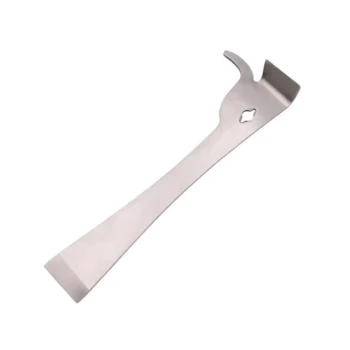
Effective hive tool maintenance requires a three-step process: removing physical debris, washing with warm soapy water, and drying the tool thoroughly. Performed after every use, this routine prevents the buildup of propolis and wax while protecting the metal from corrosion.
The Core Objective Cleaning your hive tool is about more than just equipment longevity; it is a critical biosecurity measure. By removing residue and sanitizing the tool, you actively prevent the cross-contamination of bee diseases between colonies.
The Standard Cleaning Protocol
Step 1: Physical Debris Removal
Immediately after use, you must remove the accumulation of propolis, wax, and honey. Use the sharp edge of the tool itself or a separate scraper to flake off these materials, paying close attention to the blade and the hook end.
Step 2: Washing
Once the bulk of the debris is removed, wash the hive tool in warm soapy water. This breaks down the sticky residues that dry scraping cannot remove and prepares the surface for storage or sanitization.
Step 3: Drying and Storage
After washing, dry the tool thoroughly with a clean cloth. Moisture is the enemy of the metal; storing a damp tool will lead to rust, which can dull the blade and compromise its structural integrity over time.
Deep Cleaning and Sanitization
While basic washing maintains the tool, sanitization is required to protect your bees.
The Role of Sanitization
Because hive tools are moved between different hives, they are vectors for spreading pests and bacteria. Sanitizing acts as a firewall, reducing the transmission of harmful pathogens like American Foulbrood.
Chemical Sanitization
For a thorough clean, soak the tool in a diluted bleach and water solution after scraping and washing. This step kills microscopic pathogens that soap alone may miss.
Heat Sterilization
In the field, some beekeepers sterilize their tools by placing the blade into the hot fire pot of a bee smoker. This uses high heat to burn off contaminants quickly, though it does not remove physical debris as effectively as washing.
Understanding the Trade-offs
Field Expediency vs. Hygiene
Some beekeepers "clean" their tools by stabbing them into the ground to strip off wax. While this removes sticky buildup quickly, it does not sanitize the tool and can introduce soil-based contaminants or moisture that promotes rust.
Heat vs. Metal Temper
Using a smoker for sterilization is convenient, but excessive heat can affect the metal. Overheating the tool can ruin the temper of the steel, making the prying end brittle or the edges prone to dulling faster.
Chemical Corrosiveness
While bleach is effective for disease control, it is an oxidizer. Leaving your tool in a bleach solution for too long without rinsing and drying immediately afterward will accelerate rust and corrosion.
Making the Right Choice for Your Goal
- If your primary focus is daily maintenance: Stick to the scrape, wash with soapy water, and dry routine to keep the tool rust-free and sharp.
- If your primary focus is disease prevention: Incorporate a bleach soak or heat sterilization between every hive inspection to minimize cross-contamination risks.
Treat your hive tool not just as a crowbar, but as a surgical instrument that requires a sterile standard to keep your apiary thriving.
Summary Table:
| Maintenance Level | Method | Primary Benefit | Frequency |
|---|---|---|---|
| Basic Cleaning | Scrape, soapy water, dry | Removes debris & prevents rust | After every use |
| Sanitization | Diluted bleach soak | Kills pathogens (e.g., AFB) | Between apiaries |
| Field Sterilization | Smoker fire pot (heat) | Quick pathogen reduction | Between hives |
| Deep Care | Sharpness & temper check | Ensures prying efficiency | Monthly |
Elevate Your Apiary Management with HONESTBEE
Maintaining sterile equipment is the foundation of a healthy honey harvest. As a dedicated partner to commercial apiaries and global distributors, HONESTBEE provides the professional-grade tools and machinery you need to scale your operations safely and efficiently.
Our comprehensive wholesale range includes:
- High-Durability Beekeeping Tools: Hive tools, smokers, and protective gear designed for longevity.
- Precision Machinery: Advanced hive-making and honey-filling machines to automate your production.
- Essential Consumables: A full spectrum of supplies for high-volume bee management.
- Cultural Merchandise: Unique honey-themed retail products for your brand.
Ready to upgrade your equipment with a supplier who understands the demands of large-scale beekeeping? Contact HONESTBEE today to discuss our wholesale solutions and secure your supply chain with industry-leading quality.
Related Products
- Professional Multi-Function Stainless Steel Hive Tool
- Professional Stainless Steel Pry-Bar Hive Tool
- HONESTBEE Professional Long Handled Hive Tool with Precision Cutting Blade
- HONESTBEE Premium Italian Style Hive Tool with Hardwood Handle
- Ergonomic Plastic Frame Spacer Tool for Rapid Hive Management Beekeeping
People Also Ask
- Why are professional hive tools considered indispensable? Master Beekeeping Maintenance with Precision Leverage
- What is the role of professional hive tools in routine apiary maintenance? Expert Tips for Hive Health and Longevity
- What are the benefits of a multi-functional hive tool? Streamline Your Apiary Workflow with One Tool
- What advantages do multi-functional hive tools offer? Maximize Your Apiary Efficiency and Workflow
- What are the common construction features of hive tools? Key Insights for Superior Beekeeping Efficiency