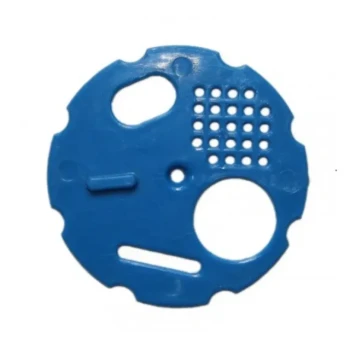
The entrance of a top bar hive is typically designed as either a narrow slot or a series of circular holes roughly one inch in diameter. These designs emulate the small, defensible openings honeybees prefer in nature, directly influencing how the colony organizes its internal living space.
The design and placement of the entrance serve as the anchor for the colony, as bees will instinctively establish their brood nest nearest the opening. A flexible entrance system allows a beekeeper to manipulate this internal organization and adjust for seasonal changes.
Common Entrance Configurations
The Multi-Hole System
The most versatile and popular design features a series of round holes drilled directly into the hive body.
According to standard practices, these holes are approximately one inch in diameter. This size is large enough for traffic flow but small enough to be easily defended.
The Strategic Layout
A highly effective configuration involves drilling three holes in the center of the hive body and one hole at each end on the opposite side.
This layout offers the beekeeper significant control. By using corks to close off holes not in use, you can force the bees to use specific entrances, thereby directing where they build within the long, horizontal cavity.
The Slot Entrance
Alternatively, some top bar hives utilize a simple horizontal slot.
Like the holes, this mimics natural crevices found in trees. However, slot designs often require additional entrance blocks to reduce the opening size during winter or periods of robbing.
Managing Colony Behavior Through Design
Dictating the Brood Nest
It is a biological imperative for bees to establish their brood nest (the nursery) closest to the entrance.
By selecting which holes to uncork, you determine the "front" of the hive. If you open the middle holes, the brood nest will form centrally, with honey stored towards the ends.
Seasonal Flexibility
The use of corks acts as a manual valve for the hive's ventilation and defense.
In the summer, opening multiple holes increases airflow. In the winter or during a "dearth" (when nectar is scarce), closing down to a single small hole helps the colony conserve heat and defend against robber bees from other colonies.
Understanding the Trade-offs
Simplicity vs. Control
A single fixed slot is simple to construct but offers less management flexibility. You cannot easily shift the location of the brood nest without physically modifying the hive or the slot size.
Ventilation vs. Defense
A common pitfall is providing an entrance that is too large.
While a large opening offers maximum ventilation, it makes the colony vulnerable to intruders and causes significant heat loss in cold months. A design that relies on multiple small, closeable holes generally offers a superior balance compared to one large permanent opening.
Making the Right Choice for Your Goal
The entrance is not just a door; it is a management tool. Choose your design based on how actively you intend to manage the colony's internal structure.
- If your primary focus is active management: Opt for the multi-hole configuration with corks (center and ends) to actively guide brood placement and honey storage.
- If your primary focus is mimicking nature: Ensure your openings (whether slots or holes) are roughly one inch in size, as this matches the bees' evolutionary preference for defensible cavities.
The best entrance design provides the bees with security while giving the beekeeper control over the hive's internal geography.
Summary Table:
| Entrance Design | Dimensions | Key Features | Management Benefit |
|---|---|---|---|
| Multi-Hole System | ~1 inch diameter | Circular holes at center/ends | High control over brood nest & ventilation |
| Horizontal Slot | Long narrow crevice | Mimics natural tree hollows | Simple construction, requires reducer blocks |
| Cork-Adjusted | Variable (1-3+ holes) | Uses corks to seal openings | Flexible defense against robbing and cold |
| End-Entry | 1 inch opening | Entrance located at hive ends | Encourages linear honey storage expansion |
Scale Your Beekeeping Operation with HONESTBEE
At HONESTBEE, we specialize in supporting commercial apiaries and professional distributors with premium-grade beekeeping solutions. Whether you are looking for high-precision hive-making machinery, automated honey-filling systems, or a bulk supply of essential beekeeping tools and consumables, we provide the industrial-strength equipment your business needs to thrive.
From specialized hardware to honey-themed cultural merchandise, our comprehensive wholesale portfolio is designed to enhance your production efficiency and market reach. Partner with the industry experts—contact us today to discuss your wholesale requirements and elevate your apiary business!
Related Products
- Top Bar Beehive for Beekeeping Wholesales Kenya Top Bar Hive
- Long Langstroth Style Horizontal Top Bar Hive for Wholesale
- Professional Reversible Beehive Hive Entrance
- Multi-Functional Sliding Hive Entrance for Beekeeping
- Multi-Functional Rotary Hive Entrance Disc for Beekeeping
People Also Ask
- How is burr comb and propolis removed from a top bar hive? A Practical Guide for Hive Maintenance
- How does comb construction differ between a top bar hive and a Langstroth hive? Choose the Best Method for Your Apiary
- Why do top bar hives require beekeepers to detach comb? Master the Detach-then-Lift Technique for Comb Safety
- How does the design of a top bar hive minimize disturbance to the bees during inspection? Achieve a Calmer, More Natural Approach
- What are the main differences between a top bar hive and a Langstroth hive? A Guide to Choosing Your Hive