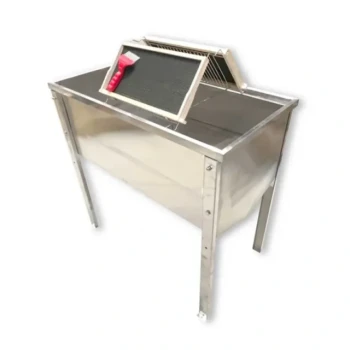
Single wall Clean-in-Place (CIP) tanks are engineered for industrial durability. They are specifically constructed using high-quality 3 mm, 11 gauge 304 stainless steel to ensure longevity and resistance to rigorous cleaning cycles.
Reliability in sanitary processing relies on material integrity. Single wall CIP tanks utilize heavy-duty 304 stainless steel to withstand the mechanical and chemical demands of automated cleaning processes without compromising structural stability.
Material Specifications and Build Quality
The Core Material: 304 Stainless Steel
The industry standard for these vessels is 304 stainless steel. This material is selected for its high quality and excellent corrosion resistance, which is essential for environments exposed to water and cleaning agents.
Wall Thickness and Gauge
To ensure the tank can withstand daily operation, the walls are constructed to a thickness of 3 mm, which corresponds to 11 gauge. This thickness provides the structural rigidity necessary for a tank that stays in place during high-velocity cleaning cycles.
Understanding the Trade-offs
Gauge Thickness: CIP vs. COP
It is important to distinguish between Clean-in-Place (CIP) and Clean-out-of-Place (COP) construction standards. While CIP tanks utilize heavier 11 gauge steel, COP wash tanks are typically built from lighter 14 gauge 304 stainless steel.
Why the Difference Matters
The lower gauge number indicates a thicker metal sheet. Because CIP systems often involve pressurized loops and automated agitation, the thicker 11 gauge construction is necessary to prevent deformation and ensure a longer service life compared to the manual soaking tanks (COP).
Making the Right Choice for Your Goal
When specifying equipment for your sanitary process, ensure the material grade matches your operational intensity.
- If your primary focus is automated system durability: Verify that the tank specification explicitly lists 11 gauge (3 mm) steel to handle the stress of in-place cleaning loops.
- If your primary focus is chemical compatibility: Confirm that 304 stainless steel is suitable for the specific detergents and sanitizers used in your facility's CIP recipe.
Select the gauge that matches the mechanical demands of your cleaning process to maximize equipment lifespan.
Summary Table:
| Feature | Specification | Benefit |
|---|---|---|
| Material | 304 Stainless Steel | High corrosion resistance & food-grade safety |
| Wall Thickness | 3 mm (11 Gauge) | Structural rigidity & resistance to deformation |
| Construction | Single Wall | Simplified design for efficient space utilization |
| Durability | Heavy-duty | Withstands high-velocity pressurized cleaning |
Elevate Your Beekeeping Operation with HONESTBEE Precision Equipment
Maintaining hygiene is critical for commercial honey production. At HONESTBEE, we specialize in providing high-performance machinery and tools tailored for commercial apiaries and distributors.
Our extensive portfolio includes everything from honey-filling machines and hive-making equipment to essential consumables and cultural merchandise. Whether you are looking to upgrade your extraction facility or source durable stainless steel processing hardware, we offer a comprehensive wholesale solution to help your business scale efficiently.
Ready to optimize your production line? Contact us today to discuss our full spectrum of beekeeping equipment and wholesale opportunities!
Related Products
People Also Ask
- What is an uncapping tank used for in honey harvesting? Maximize Your Honey Yield and Minimize Waste
- What are the functional advantages of using a dedicated uncapping tank during honey processing? Maximize Your Honey Yield
- What size uncapping tank do I need? Find the Perfect Fit for Your Apiary
- What are the features of the processing tanks offered? Engineered for Purity and Efficiency
- What types of stainless steel processing tanks are used for honey? Essential Equipment for Quality Honey Production