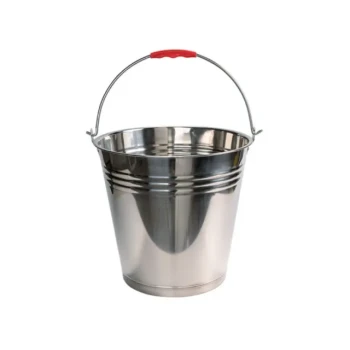
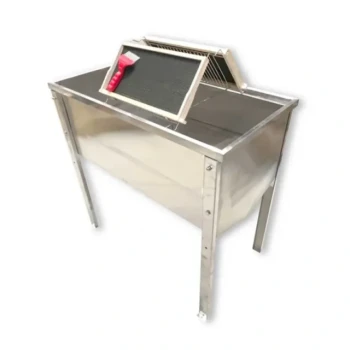
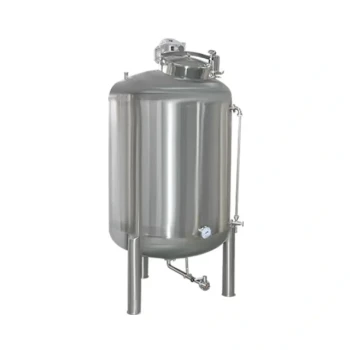
Professional stainless steel storage tanks provide two fundamental technical advantages: chemical inertness and superior sealing capabilities. By resisting the corrosive nature of naturally acidic honey, these tanks prevent metal ion contamination and maintain purity. Simultaneously, their airtight construction isolates the product from atmospheric moisture, preserving the low water content necessary to prevent fermentation and extend shelf life.
Core Takeaway: Beyond simple containment, stainless steel tanks function as a stable hygienic barrier. They actively preserve honey’s biochemical integrity by preventing chemical reactions and moisture ingress, ensuring the product remains compliant with rigorous export and organic safety standards.
Securing Chemical Stability and Purity
The Importance of Chemical Inertness
Honey is inherently acidic and corrosive, which can degrade ordinary storage containers over time. Chemical inertness is the primary technical benefit of professional stainless steel (specifically grades like AISI 304 or 316L). This property prevents the container material from reacting with the honey, thereby eliminating the risk of heavy metal leaching.
Preserving Biochemical Integrity
Storage conditions directly impact the biochemical markers of honey, such as diastase activity and color. Industrial-grade stainless steel tanks provide a stable environment that protects these delicate properties. This stability is critical for ensuring the honey meets strict export-grade standards after long-term storage.
Compliance with Organic Standards
High-grade stainless steel offers exceptional surface smoothness. This feature prevents the development of off-odors and ensures compatibility with Cleaning-In-Place (CIP) systems. The ability to sanitize these tanks thoroughly is often a mandatory requirement for maintaining organic certifications.
Moisture Management and Environmental Isolation
Counteracting Hygroscopic Properties
Honey is highly hygroscopic, meaning it naturally attracts and absorbs moisture from the surrounding air. If honey absorbs too much water, its viscosity decreases, and it becomes susceptible to spoilage. Professional stainless steel tanks provide an airtight seal that creates an effective barrier against external humidity changes.
Preventing Fermentation
The primary risk of increased moisture content is fermentation. By strictly isolating the honey from atmospheric moisture and airborne microorganisms, stainless steel tanks maintain the honey's stability. This prevents the yeast growth associated with fermentation, preserving the honey's quality for bottling or commercial conversion.
Optimizing Processing Efficiency
Facilitating Static Sedimentation
These tanks support the natural static sedimentation process. Due to differences in specific gravity, micro-bubbles and light impurities rise to the surface, while heavier sediments settle at the bottom. The stable, unreactive environment of a stainless steel tank allows this separation to occur without risking contamination.
Homogenization and Crystallization Control
Industrial-grade variants often integrate heating, stirring, or constant temperature control systems. These features allow operators to homogenize different batches to ensure consistent flavor, color, and moisture content. Furthermore, precise temperature control helps prevent or manage crystallization pressure during storage.
Understanding the Trade-offs
While stainless steel is the technical gold standard, operators must recognize the operational considerations.
Thermal Conductivity
Stainless steel is a conductor of heat. Without integrated insulation or temperature control systems, honey stored in these tanks is susceptible to ambient temperature fluctuations. Extreme heat can damage the honey's enzymes (increasing HMF levels), while extreme cold can accelerate crystallization.
Capital Investment
Compared to food-grade plastic, stainless steel represents a significantly higher upfront cost. It is a long-term infrastructure investment designed for durability and regulatory compliance, rather than a short-term storage solution.
Making the Right Choice for Your Goal
To maximize the value of stainless steel storage, align the equipment features with your specific processing objectives:
- If your primary focus is Organic Certification: Prioritize tanks made of AISI 304 or 316L steel with high surface smoothness to ensure compatibility with CIP cleaning protocols.
- If your primary focus is Large-Scale Export: Select industrial-grade tanks equipped with heating and stirring systems to homogenize batches for consistent color and moisture content.
- If your primary focus is Long-Term Preservation: Ensure the tank features hermetic sealing capabilities to prevent hygroscopic moisture absorption and fermentation.
By utilizing professional stainless steel infrastructure, you transform storage from a passive hold time into an active quality preservation process.
Summary Table:
| Technical Feature | Benefit for Honey Storage | Impact on Quality |
|---|---|---|
| Chemical Inertness | Resists honey's natural acidity | Prevents metal leaching & maintains purity |
| Hermetic Sealing | Isolates from atmospheric moisture | Prevents fermentation & moisture absorption |
| Surface Smoothness | Compatible with CIP systems | Meets organic standards & ensures hygiene |
| Thermal Integration | Controlled heating & stirring | Enables homogenization & manages crystallization |
| Structural Integrity | Supports static sedimentation | Facilitates natural removal of impurities |
Elevate Your Honey Production with HONESTBEE
Maximize the value of every harvest with professional-grade infrastructure designed for the modern honey industry. At HONESTBEE, we empower commercial apiaries and global distributors with a comprehensive suite of solutions—from precision-engineered stainless steel storage tanks and honey-filling machines to specialized hive-making equipment and essential consumables.
Whether you are scaling for export or pursuing organic certification, our industrial hardware ensures your honey meets the highest international standards for purity and stability. Let us help you transform your storage into an active quality preservation process.
Contact HONESTBEE Today to Discuss Your Wholesale Needs
References
- Mai Huỳnh Cang, Tai Huan Phan. Physico-chemical Properties and Biological Activity of Honey from Two Districts of Tien Giang Province, Vietnam. DOI: 10.14233/ajchem.2024.31217
This article is also based on technical information from HonestBee Knowledge Base .
Related Products
- Stainless Steel Honey Storage Tank with Lid for Honey
- Stainless Steel Honey Storage and Settling Tank with Double Strainer
- Stainless Steel Honey Tank Stand for Honey Storage
- Premium Stainless Steel Honey Tank Bucket Pail with Reinforced Handle and Polished Finish
- Stainless Steel Uncapping Tank with Stand and Strainer
People Also Ask
- What economic role do honey storage tanks play? Boost Your Revenue Through Strategic Inventory Management
- What roles do industrial honey storage tanks and filtration meshes play in processing? Ensure Purity & Consistency
- What is the purpose of a honey storage tank? Streamline Your Honey Processing for Quality & Efficiency
- What are honey storage tanks used for? Essential Features for Quality Preservation and Profit
- How do large honey storage tanks and gravity fall filling systems improve honey packaging efficiency and safety?