High-quality queen rearing is a four-stage operation: prepare young larvae, build and mature queen cells, move cells into mating nuclei, and integrate successfully mated queens into production colonies. Standardized equipment—cell bars, queen cups, grafting tools or non-grafting systems, cell builders, mating nuclei, and introduction cages—makes each stage more consistent and easier to scale.
The core principle is controlled continuity: genetics are selected at the breeder colony, development is supported in a strong cell-building colony, mating occurs in dedicated nuclei, and the finished queen is carefully introduced into a target hive.
1. Prepare the Larvae and Breeding Material
Select a suitable breeder colony
Operations begin by choosing a high-quality “queen mother” colony with desirable traits such as gentle temperament, disease resistance, low swarming tendency, and strong honey production.
The breeder colony should also be supported by healthy, sexually mature drones so the resulting queens have a reliable opportunity to mate successfully.
Select 24-hour-old larvae
For the standard Doolittle grafting method, workers select approximately 24-hour-old larvae from the breeder colony. Larval age is critical because young larvae are more suitable for development as queens.
The larvae are transferred with a fine grafting tool into artificial queen cups. Accurate handling minimizes injury and improves acceptance by nurse bees.
Load standardized queen cups
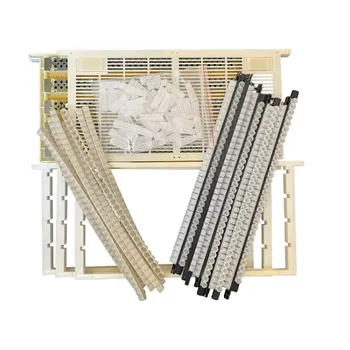
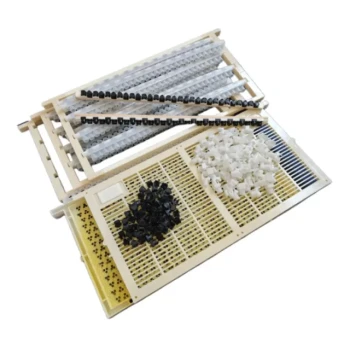
The cups are attached to cell bars, which are mounted in a queen-rearing frame. This arrangement allows many larvae to be handled, inspected, transferred, and harvested using a repeatable process.
Commercial operations may alternatively use a non-grafting or queen-isolation kit that allows the queen to lay directly into removable cups. These systems reduce manual grafting but may involve different operating procedures and equipment costs.
2. Build and Mature the Queen Cells
Place loaded bars in a cell-building colony
The loaded cell bar is placed downward into a strong starter or finisher colony. This colony must contain a dense population of nurse bees and ample pollen stores.
The colony may be queenless or may be configured so the resident queen is separated with a queen excluder. The objective is to encourage worker bees to accept the larvae and invest resources in queen development.
Support royal jelly production
Nurse bees draw out the artificial cups and feed the developing larvae royal jelly. A strong cell-building colony is essential because small mating nuclei generally cannot provide the same population of nurse bees or the same level of nutritional support.
Stable hive hardware helps maintain consistent spacing, ventilation, handling, and colony conditions across production batches.
Monitor capped queen cells
As development progresses, the larvae are converted into queen cells and eventually capped. The cells should be handled carefully and transferred before the virgin queens emerge.
This stage is the main biological production phase: equipment supports consistency, but colony strength, nutrition, weather, and bee behavior determine whether the cells develop properly.
3. Transfer Cells for Mating
Move mature cells into mating nuclei
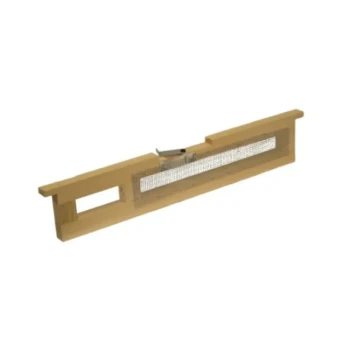
Completed, capped queen cells are transferred into dedicated mating nuclei, also called mating nucs, or into suitable receiving hives.
The timing must prevent a queen from emerging before placement. A mating nucleus provides a smaller, controlled colony in which the virgin queen can emerge and establish herself.
Provide suitable mating conditions
After emergence, the virgin queen takes mating flights and mates with available drones. Reliable results depend on:
- Suitable weather for mating flights
- An adequate supply of sexually mature drones
- Healthy worker populations in the mating nuclei
- Sufficient food reserves
- Properly positioned and managed nucs
Equipment cannot compensate for poor mating conditions, so production planning must account for seasonality and local weather.
Verify early performance
After mating, the queen should be checked for signs of successful establishment, including normal acceptance by workers and the beginning of regular egg laying.
Queen cages and transport equipment are used when queens must be moved between apiary locations or prepared for commercial distribution.
4. Integrate the Mated Queen
Harvest successfully mated queens
Queens that have successfully mated and begun laying can be removed from the mating nuclei for introduction into target colonies.
At this point, the operation shifts from queen production to colony replacement, expansion, or customer fulfillment.
Introduce the queen carefully
The queen is typically transported and introduced using a queen cage. The cage provides a controlled period of contact, allowing the colony to become accustomed to the new queen before release.
The receiving colony must be queenless or otherwise prepared to accept the replacement. Poor timing, an undiscovered resident queen, or colony stress can cause rejection.
Confirm colony integration
The target colony should be inspected after introduction to verify queen acceptance and normal egg-laying activity. A successful introduction is not complete until the queen is accepted and the colony is developing normally.
For planned replacement programs, many beekeepers replace older queens on an approximately two-year cycle, although actual timing should reflect colony performance, queen quality, and management objectives.
How Standardized Equipment Supports Quality
Create repeatable working conditions
Standardized cell bars, queen cups, frames, hive bodies, and mating nucs reduce variation in spacing, handling, ventilation, and colony configuration.
This makes the process easier to repeat across batches and simplifies training, inspection, inventory management, and order fulfillment.
Improve selection and measurement
Consistent equipment creates a more stable production environment for comparing queen-development results. It also supports objective evaluation of quality traits rather than confusing equipment-related variation with genetic or biological differences.
For commercial breeders, this creates a stronger basis for selecting desirable lines and refining production methods over time.
Enable a full production workflow
A complete queen-rearing setup normally includes:
- Breeder colonies for genetic selection
- Fine grafting tools or non-grafting queen-rearing systems
- Plastic or wax queen cups
- Cell bars and queen-rearing frames
- Strong starter/finisher colonies
- Mating nucs or receiving hives
- Queen cages for transport and introduction
- Queen marking pens, tags, or related identification tools
For distributors and resellers, offering these components as a coordinated system is more useful than supplying isolated products. Customers need compatible equipment across every operational stage.
Understanding the Trade-offs
Grafting versus non-grafting systems
Grafting is widely used for mass production because it supports controlled selection and high-volume handling. However, it requires operator skill, precise larval handling, and suitable grafting tools.
Non-grafting plug or isolation systems reduce manual handling and may be easier for some users. They can, however, require specialized kits and may provide less flexibility than conventional grafting for certain production programs.
Strong cell builders versus small nucs
Strong cell-building colonies provide the nurse-bee population and nutrition needed for high-quality queen-cell development. Using undersized colonies at this stage can reduce acceptance and developmental consistency.
Mating nuclei are highly useful after the cells are mature, but they should not be treated as substitutes for properly prepared cell-building colonies.
Standardization versus operational flexibility
Standardized equipment improves repeatability and makes commercial operations easier to scale. The trade-off is that users must maintain compatible components, follow defined procedures, and manage additional equipment inventory.
A one-stop equipment package can reduce sourcing complexity, but product compatibility and after-sales technical support remain important.
Biological variability remains
Standardized hardware improves environmental consistency, but it does not eliminate biological variation. Genetics, larval age, nurse-bee strength, nutrition, drone availability, weather, and queen acceptance all affect the final result.
The equipment should therefore be viewed as a control system—not a replacement for skilled bee management.
Making the Right Choice for Your Goal
Select the equipment and workflow based on the customer’s production scale, technical skill, and intended use.
- If your primary focus is commercial queen production: Build around the Doolittle grafting system, standardized cell bars, strong starter/finisher colonies, mating nuclei, and queen transport equipment.
- If your primary focus is reducing manual handling: Consider a non-grafting or queen-isolation system while maintaining dedicated cell-building and mating facilities.
- If your primary focus is premium queen quality: Prioritize breeder selection, young larvae, strong nurse-bee populations, high-quality nutrition, drone availability, and careful post-mating evaluation.
- If your primary focus is distribution and resale: Offer a compatible full-spectrum portfolio with rapid fulfillment, clear technical guidance, and replacement consumables such as cups, cages, bars, and grafting tools.
- If your primary focus is apiary expansion: Use mating nuclei and controlled queen introduction to produce replacement queens and establish additional colonies efficiently.
A disciplined four-stage workflow, supported by compatible standardized equipment and sound biological management, gives beekeepers the strongest foundation for producing and distributing reliable queen bees.
Summary Table:
| Stage | Key Activities | Essential Equipment | Critical Factors |
|---|---|---|---|
| 1. Prepare Larvae | Select breeder colony, gather 24-hour-old larvae, graft into queen cups | Grafting tools, queen cups, cell bars, queen-rearing frames | Larval age, gentle handling, genetic selection |
| 2. Build & Mature Cells | Place cell bars in a strong cell-building colony, monitor development | Cell bars, queen cups, cell-building colony, queen excluder | Nurse bee population, nutrition, colony strength |
| 3. Transfer & Mate | Move mature cells to mating nuclei, allow virgin queens to mate | Mating nuclei, queen cages, transport equipment | Weather, drone availability, food reserves |
| 4. Integrate Queens | Harvest mated queens, introduce to target colonies using cages | Queen cages, marking tools, introduction equipment | Colony acceptance, timing, colony preparation |
Streamline your queen rearing operation with HONESTBEE's comprehensive beekeeping equipment. As a leading wholesale supplier, we offer a full-spectrum portfolio including grafting tools, cell bars, queen cups, mating nucs, and queen cages — everything you need for efficient, high-quality queen production. Our dedicated support team ensures rapid response times, expert guidance, and ultra-fast delivery to keep your apiary thriving. For distributors and commercial beekeepers seeking a reliable one-stop sourcing partner, HONESTBEE delivers premium quality, OEM/ODM support, and supply reliability. Contact us today to discuss your requirements and elevate your queen rearing success!
Related Products
- Retractable Chinese Queen Rearing Grafting Tools Equipment
- HONESTBEE Improved No Grafting Queen Rearing Kit For Queen Rearing and Royal Jelly Production
- No Grafting Queen Rearing Kit: System for Royal Jelly Production and Queen Rearing
- Premium Nicot Style Queen Rearing Kit with Hair Roller Bee Cages
- Nicot Queen Rearing Kit for Beekeeping and Grafting in Nicot System
People Also Ask
- Which specialized tools are necessary for implementing standardized queen rearing? Scale Your High-Yield Apiary
- How does selective queen rearing benefit an apiary? Discover Essential Tools for High-Quality Queen Bees
- Why are specialized queen rearing tools necessary to mitigate winter hive losses? Boost Apiary Survival and Recovery
- What operational workflows and queen rearing tools are required for implementing instrumental insemination and isolated mating in commercial queen breeding programs?
- How do queen-rearing tools facilitate the sustainability and expansion of a commercial apiary? Drive Scalable Growth