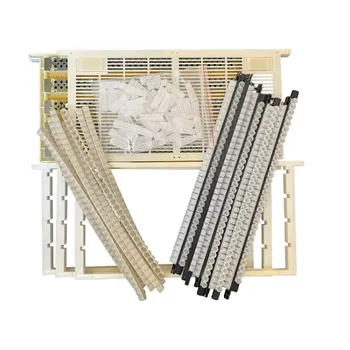
Commercial queen breeding requires two connected systems: a precision laboratory workflow for instrumental insemination and a disciplined field workflow for isolated mating. The essential tools include CO₂ anesthesia, a stereomicroscope, insemination stand and micro-manipulators, semen syringes, abdominal hooks, controlled drone colonies, grafting equipment, mating nucs, queen identification supplies, and transport cages.
Instrumental insemination provides maximum genetic control for early-generation breeders, while geographically isolated mating apiaries provide a more scalable route for commercial queen production. Success depends less on any single tool than on integrating selection, rearing, mating, identification, quality control, and fulfillment into one traceable workflow.
Build the Breeding Workflow Around Genetic Control
Define selection objectives first
The program should begin with measurable breeding objectives, such as improved hygienic behavior or other targeted colony traits. Breeder colonies must be evaluated and ranked before queens or drones are selected for reproduction.
Instrumental insemination is a tool within this broader selection system—not a substitute for performance testing, accurate records, technical skill, or long-term breeding management.
Separate breeder, drone, and production populations
A controlled program normally distinguishes:
- Breeder colonies supplying selected queens or larvae.
- Drone colonies supplying semen from genetically valuable males.
- Rearing colonies used to develop queen cells.
- Mating nucs used for virgin queen mating.
- Production or distribution colonies receiving finished queens.
This separation helps maintain pedigree accuracy and prevents commercial production requirements from compromising the genetic control of the breeding nucleus.
Prepare Drones and Semen for Instrumental Insemination
Maintain controlled drone sources
Drones should come from top-performing breeder colonies when the objective is to preserve or combine selected traits. For instrumental insemination, drone production may require closed, flight-proof colonies so that drones can be aged and collected under controlled conditions before semen extraction.
The operational requirement is not simply a supply of drones. The program must also know their colony origin and maintain records linking collected semen to the intended genetic group.
Collect and pool semen according to the breeding plan
Semen can be collected from selected drones and pooled when the breeding design calls for multiple paternal sources. Pooling should be documented by source colonies, collection date, and intended queen group.
The reference program uses example semen volumes of 4 µL per virgin queen when drone availability is limited in early spring and 8 µL in late summer. These figures are program-specific operating examples, not universal prescriptions; volume should follow the breeder’s protocol, queen condition, semen quality, and operator experience.
Essential semen-handling equipment
A practical insemination station requires:
- Precision micro-syringes for semen collection and delivery.
- Semen collection and handling accessories compatible with the syringe system.
- A stereomicroscope with suitable illumination.
- A stable insemination stand that prevents movement during the procedure.
- Micro-manipulators for controlled positioning of the syringe and hooks.
- CO₂ delivery equipment for queen immobilization.
- Abdominal hooks and a probe for opening the abdominal tip and moving the valvefold.
A reliable distributor or reseller should treat these as a compatible system rather than unrelated individual products.
Rear Queens Through a Repeatable Propagation System
Use grafting for predictable commercial volume
The Doolittle grafting method is the standard commercial approach for mass queen production. It transfers young worker larvae into artificial queen cell cups, where they are developed by queen-rearing colonies.
The Miller method and queenless nucleus hive methods can also support propagation, but the selected method should match the operation’s labor capacity, production volume, and technical expertise.
Establish the grafting sequence
A commercial grafting workflow generally includes:
- Select larvae from approved breeder colonies.
- Transfer young larvae with a fine grafting tool.
- Place larvae into wax or molded plastic cell cups.
- Mount cups on cell bars and cell bar frames.
- Introduce the bars into suitable starter and finisher colonies.
- Monitor acceptance and queen-cell development.
- Protect mature cells before transfer or introduction.
- Move virgin queens into mating nucs or prepare them for controlled insemination.
The critical operational point is consistency. Larval age, grafting accuracy, colony strength, and handling time all affect acceptance and queen quality.
Queen-rearing tools
The rearing system should include:
- Fine larval grafting tools for delicate transfers.
- Plastic or wax queen cell cups.
- Cell bar frames and wooden cell bars.
- Starter and finisher hive components.
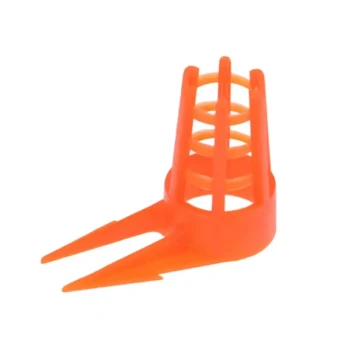
- Queen cell protectors and push-in cages.
- Queen marking tools.
- Queen cages for introduction and transport.
Cell protectors are particularly important when mature cells are placed into colonies where resident queens or workers could damage them.
Perform Instrumental Insemination as a Controlled Laboratory Workflow
Stabilize and prepare the queen
Virgin queens should be correctly identified and handled gently before the procedure. The operator uses CO₂ anesthesia to immobilize the queen while minimizing unnecessary handling.
The queen is secured in a holder or insemination stand under a stereomicroscope. Stable positioning is essential because the reproductive tract is small and easily damaged by uncontrolled movement.
Position the reproductive tract precisely
The operator uses dorsal and ventral abdominal hooks to expose the abdominal tip. A fine probe is used to move aside the valvefold, which otherwise obstructs access to the oviduct.
This is a precision procedure. The equipment must provide fine movement, adequate magnification, and consistent illumination; force or poor positioning can injure the queen.
Deliver semen with a micro-syringe
The syringe tip is guided into the oviduct, and the planned semen volume is delivered under controlled pressure. The objective is for the semen to migrate naturally toward the spermatheca after insemination.
Each queen should receive a complete record covering queen identity, breeder origin, semen source, semen volume, date, operator, and any relevant observations.
Recover and monitor inseminated queens
After insemination, queens require appropriate recovery and reintroduction into prepared colonies or cages according to the program’s established protocol. Post-procedure survival, onset of laying, brood pattern, and later colony performance should be monitored.
Instrumental insemination is not complete when semen is delivered. Post-insemination verification determines whether the procedure produced a viable, productive queen.
Scale Production Through Isolated Mating
Use controlled natural mating for higher volumes
When the program must produce large numbers of queens for commercial distribution, controlled natural mating in isolated mating apiaries can replace instrumental insemination for routine production.
This approach allows virgin queens to mate naturally while reducing exposure to unmanaged drone populations. It is generally more efficient for volume production than inseminating every queen individually.
Establish geographic and drone-source control
The primary reference describes isolated mating apiaries positioned approximately 19 km apart and operated without external drone sources. This spacing should be treated as a program design example, not a universal guarantee of isolation, because local geography, colony density, and drone movement affect mating control.
The mating site should be assessed for surrounding apiaries and unmanaged drone colonies before being designated as an isolated mating location.
Use mating nucs as the production unit
Mating nucs house virgin queens with small bee populations during mating flights. High-capacity mating nucs improve the operation’s ability to manage more queens while reducing the space and resource requirements of full-size colonies.
Each nuc should be linked to a queen identity or batch record so that mating location, introduction date, acceptance, laying status, and harvest status remain traceable.
Prepare and inspect mating nucs
Before introducing virgin queens, the operation should verify:
- Adequate worker population.
- Suitable food reserves.
- Queenlessness or correct queen removal status.
- Healthy colony condition.
- Proper entrance and nuc identification.
- Readiness for queen acceptance and mating.
Nuc preparation is a workflow issue, not merely a housing decision. Weak, queenright, or poorly identified nucs can create avoidable production losses.
Maintain Identity, Quality, and Distribution Control
Mark queens for rapid identification
Queen marking tools support visual identification during inspections, mating evaluation, harvest, and customer fulfillment. Marking should be linked to the program’s internal queen number or batch code.
Use wing-clipping supplies only within a defined tracking protocol
Wing-clipping supplies can support queen tracking and field identification, but they should be incorporated into a documented handling policy. The practice must be applied consistently and in accordance with the operation’s welfare standards and local requirements.
The tool itself does not create traceability. Traceability comes from linking the physical queen to accurate records.
Protect queens during transport
Finished queens require suitable queen transport and shipping cages that protect the queen and provide appropriate attendant-bee management during handling and delivery.
For commercial distribution, packaging should be integrated with dispatch procedures, order identification, customer documentation, and rapid fulfillment. A queen that is genetically valuable but poorly packaged is still a failed commercial delivery.
Record every transfer point
A robust pedigree and production record should connect:
- Breeder colony.
- Larval source.
- Grafting batch.
- Queen-cell bar and rearing colony.
- Mating nuc or insemination event.
- Semen source and volume, when applicable.
- Marking or wing-clipping status.
- Performance observations.
- Shipping cage and customer order.
This record structure is especially important for distributors and wholesalers handling multiple queen batches from different production periods.
Understanding the Trade-offs
Instrumental insemination offers control but requires high investment
Instrumental insemination can precisely control paternal genetics and is valuable when drone availability is limited or when early-generation crosses must be tightly managed.
Its limitations are substantial: it is labor-intensive, technically demanding, expensive, and dependent on specialized equipment, trained operators, controlled semen handling, and post-procedure monitoring.
Isolated mating improves throughput but does not equal laboratory control
Isolated mating apiaries are more practical for producing larger volumes of queens through natural mating. They reduce dependence on one-by-one laboratory insemination and can support commercial distribution more efficiently.
However, isolation is not absolute unless the surrounding area is properly assessed and external drone sources are controlled. The resulting genetic control is therefore lower than with documented instrumental insemination.
More equipment does not automatically produce better queens
Grafting tools, cell cups, nucs, cages, and marking supplies improve repeatability and handling, but they cannot compensate for poor breeder selection, weak rearing colonies, inaccurate records, or inadequate operator training.
Equipment should be selected as part of a complete workflow, with compatibility, replacement availability, delivery speed, and technical support considered alongside purchase price.
Commercial scaling introduces operational risk
High-volume production increases the consequences of small process failures. A shortage of grafting tools, cell protectors, mating nucs, or shipping cages can interrupt an entire production cycle.
For commercial buyers, dependable sourcing means maintaining a full-spectrum inventory, confirming compatibility before ordering, and planning replenishment around queen-rearing schedules rather than reacting after stock is exhausted.
How to Apply This to Your Breeding Program
The correct equipment package depends on whether the priority is genetic control, production volume, or distribution reliability.
- If your primary focus is early-generation genetic control: Build an instrumental insemination station with a microscope, CO₂ system, insemination stand, micro-manipulators, hooks, probe, and precision syringe, supported by controlled drone colonies and detailed semen records.
- If your primary focus is commercial queen volume: Invest in grafting equipment, cell cups, cell bars, starter and finisher components, high-capacity mating nucs, and an isolated mating site with documented drone-source control.
- If your primary focus is pedigree accuracy: Standardize queen marking, wing-clipping policies, batch coding, nuc identification, and records connecting every queen to its breeder and mating history.
- If your primary focus is distribution and resale: Maintain dependable stock of queen cages, cell protectors, marking tools, and transport supplies, with rapid order fulfillment and technical support for product compatibility.
- If your primary focus is operational resilience: Source the complete workflow from suppliers able to provide broad product coverage, fast response times, replacement parts, and consistent delivery rather than isolated low-cost components.
A successful commercial breeding program is built by matching precision breeding tools with disciplined field operations, traceability, and dependable fulfillment.
Summary Table:
| Workflow | Key Tools | Purpose |
|---|---|---|
| Instrumental Insemination | Stereomicroscope, CO₂ anesthesia, insemination stand, micro-manipulators, micro-syringes, hooks, probe | Ensure genetic control and precise mating under laboratory conditions |
| Queen Rearing | Grafting tools, queen cell cups, cell bars, starter/finisher colonies, cell protectors | Mass-produce queens through controlled larval transfer and development |
| Isolated Mating | Mating nucs, queen introduction cages, isolated apiary sites (≥19 km apart) | Facilitate controlled natural mating for large-scale production |
| Identification & Tracking | Queen marking kits, wing-clipping supplies, queen cages, batch codes | Maintain pedigree and traceability across all production stages |
| Distribution | Transport cages, shipping kits, order documentation | Ensure safe delivery and customer satisfaction |
Ready to optimize your queen breeding program?
HONESTBEE offers a comprehensive range of beekeeping tools, machinery, and equipment—including insemination stations, grafting kits, mating nucs, and transport cages. As a trusted partner for commercial apiaries and distributors, we provide one-stop sourcing, rapid response, OEM/ODM support, and certifications to ensure your supply chain is reliable and efficient. Contact our experts today to build a workflow that scales with your goals. Get in touch for a tailored consultation!
Related Products
- Retractable Chinese Queen Rearing Grafting Tools Equipment
- Plastic Chinese Queen Grafting Tool for Bee Queen Rearing
- Stainless Steel Beekeeping Queen Grafting Tool for Honey Bee Rearing
- Stainless Steel Queen Grafting Tool for Beekeeping and Bee Queen Grafting
- Plastic Beekeeping Honey Bee Larvae Grafting Tools for Queen Rearing and Chinese Grafting
People Also Ask
- Which specialized tools are necessary for implementing standardized queen rearing? Scale Your High-Yield Apiary
- Why are specialized queen rearing tools necessary to mitigate winter hive losses? Boost Apiary Survival and Recovery
- How do queen-rearing tools facilitate the sustainability and expansion of a commercial apiary? Drive Scalable Growth
- In what ways do modern queen rearing equipment and grafting tools improve competitiveness? Boost Breeding Success Rate
- What role do specialized queen rearing tools and consumables play in modern large-scale apiculture? Drive Production & Scale