The distinction lies in accessibility versus precision. Traditional hives remain the primary tool for the majority of beekeepers due to their widespread availability and established popularity. In contrast, frame hives are the specific instrument of choice for scientific research and advanced commercial production, enabling the isolation of specific honey types for rigorous quality analysis.
Core Takeaway While traditional hives are the accessible standard for the general beekeeping population, frame hives are essential for scientific applications. Frame hives allow for the precise separation of monofloral honey, ensuring the sample consistency required for analyzing physical and chemical changes over time.
The Role of Traditional Hives
Dominance in General Production
According to primary industry data, traditional hives function as the primary tool for the majority of beekeepers.
Their role is defined by high popularity and broad accessibility. They serve as the baseline for general honey production where scientific isolation of specific nectar sources is not the immediate priority.
Harvest Implications
It is important to note that traditional methods often involve destructive harvesting.
In these systems, the honeycomb must be destroyed to extract the honey. This requires bees to rebuild the comb after every harvest, which inherently limits the frequency of collection compared to modern methods.
The Role of Frame Hives in Research
Enabling Scientific Precision
Frame hives are specifically utilized for scientific harvesting and quality analysis research.
The primary advantage here is the ability to collect specific monofloral honey (honey derived from a single plant species). This isolation is difficult to achieve with traditional methods but is standard with frame hives.
Ensuring Sample Consistency
For research purposes, consistency is paramount. Frame hives allow researchers to control the sample origin with high precision.
This control is necessary for conducting accurate physical and chemical analyses. Specifically, it allows scientists to study variables such as the exact impact of storage time on honey quality without cross-contamination from different nectar sources.
Operational Advantages of Frame Hives
Non-Destructive Inspection
Modern frame hives feature removable frames, bottom boards, and covers.
This design allows for internal inspections without damaging the hive structure. Beekeepers can monitor colony health and pest levels precisely without disrupting the bees' work.
Enhanced Efficiency and Yield
Unlike traditional hives, frame hives preserve the integrity of the honeycomb during harvest.
Because the comb is not destroyed, bees can immediately return to storing honey rather than expending energy rebuilding wax. This leads to significantly higher annual yields—often 20-30kg per hive—and supports multiple harvests per year.
Mobility and Standardization
Frame hives provide a standardized environment that is highly effective for mobile beekeeping.
They allow for the precise transport of colonies to areas with high nectar density. This mobility further supports the production of specific monofloral honeys required for both premium commercial markets and scientific study.
Understanding the Trade-offs
Accessibility vs. Output
While traditional hives are more "accessible" and popular among the general population, they suffer from lower output.
The destruction of the comb limits production cycles. Frame hives require more complex equipment (removable frames, supers) but deliver exponentially higher economic benefits through volume and speed.
Sample Purity vs. General Blends
If the goal is a general polyfloral blend, a traditional hive suffices.
However, if the goal is scientific analysis or high-value single-source honey, the traditional hive is inadequate. The lack of movable frames makes it nearly impossible to segregate honey flows based on flowering periods effectively.
Making the Right Choice for Your Goal
To select the correct hive type, you must define whether your objective is general availability or precise control.
- If your primary focus is accessibility and general use: Stick to traditional hives, as they remain the popular standard for the majority of beekeepers despite lower efficiency.
- If your primary focus is scientific research or analysis: You must use frame hives to ensure consistent sample origins and the ability to isolate monofloral honey.
- If your primary focus is high-yield commercial production: Adopt frame hives to utilize non-destructive harvesting, which significantly increases annual output and allows for mobile management.
The choice ultimately dictates whether you are farming for volume and science, or simply maintaining a traditional practice.
Summary Table:
| Feature | Traditional Hives | Frame Hives |
|---|---|---|
| Primary Use | General production & accessibility | Scientific research & commercial scaling |
| Harvest Method | Destructive (comb must be destroyed) | Non-destructive (comb is preserved) |
| Honey Purity | General polyfloral blends | High-precision monofloral isolation |
| Yield Efficiency | Lower (limited by comb rebuilding) | Higher (20-30kg/hive; multiple harvests) |
| Inspection | Difficult / Disruptive | Easy (removable frames & boards) |
| Mobility | Low | High (ideal for mobile beekeeping) |
Elevate Your Apiary with Professional-Grade Equipment
Whether you are scaling a commercial apiary or conducting rigorous honey research, the right infrastructure makes all the difference. HONESTBEE empowers commercial beekeepers and distributors worldwide with a comprehensive wholesale selection of high-performance beekeeping tools and machinery.
From advanced frame hives designed for maximum yield to specialized honey-filling machines and hive-making equipment, we provide the full spectrum of hardware and consumables necessary for modern beekeeping success. Our portfolio also extends to honey-themed cultural merchandise to help you diversify your brand.
Ready to boost your efficiency and product purity? Contact HONESTBEE Today to discuss our wholesale solutions and discover how our expertise can streamline your operations.
References
- Dema Dugda, Sudi Dawud. Effect of Storage Time on Honey Quality in Selected Districts of West Hararghe Zone, Oromia Regional State. DOI: 10.11648/j.aas.20251003.13
This article is also based on technical information from HonestBee Knowledge Base .
Related Products
- Wooden Bee Hive Frames for Beekeeping and Wholesale
- Plastic Bee Frame Beekeeping Hive Frames for Wholesale
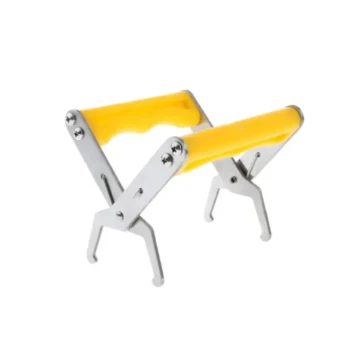
- Ergonomic High Visibility Plastic Frame Grip Handles
- Professional Galvanized Steel Frame Rest for Beehives
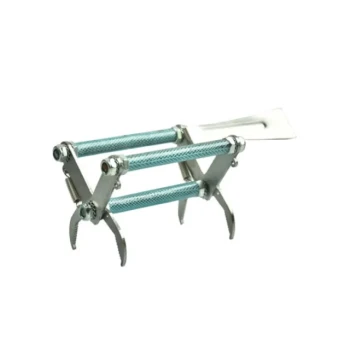
- Professional 3-Bar Frame Grip with Integrated Hive Tool
People Also Ask
- How do wooden and plastic hive frames compare in terms of durability? Wood vs. Plastic Longevity & Repairability
- How does balancing the number of frames impact hive productivity? Optimize Your Apiary's Biological Output
- What are the main considerations when choosing between wooden and plastic bee hive frames? Optimize Your Apiary's Efficiency
- How should beehive frames be maintained to prolong their lifespan? 5 Pro Tips for Durable Beekeeping Equipment
- Can I reuse old beehive frames? Save Money and Boost Hive Productivity