The type of mixing device you employ is the primary determinant of honey texture. While springs and paddles facilitate basic movement, industrial mixing screws are superior for controlled crystallization because they generate significant shear force. This force is essential for breaking down large crystal formations and distributing microscopic "seed" nuclei evenly throughout the batch.
Core Takeaway Achieving a smooth, market-ready creamy consistency requires more than just stirring; it requires mechanical shear. Mixing screws outperform passive devices like springs by actively fracturing crystal structures, ensuring a uniform, non-grainy texture even under sub-optimal temperature conditions.
The Mechanics of Texture Creation
The Role of Shear Force
To convert liquid honey into a fine creamed product, you must physically break down the glucose structures.
Mixing screws are designed to apply high levels of shear force. This mechanical stress fractures large, naturally forming crystals into microscopic particles that feel smooth on the tongue.
Uniform Distribution of Nuclei
The goal of mixing is to disperse crystallization nuclei—the "seeds" that start the hardening process—homogeneously.
Effective mixing devices create complex material circulation patterns. This ensures that the seed crystals reach every part of the vessel, preventing localized clumps or stratified layers of liquid and solid honey.
Impact on Crystal Size
Graininess in honey is caused by uncontrolled crystal growth.
Mechanical screws actively limit this growth by continuously disrupting the formation of large lattice structures. By keeping the crystals small and uniform, the device forces the honey into a fine, creamy state rather than a coarse, gritty solid.
Understanding the Trade-offs
The Limitations of Springs and Paddles
Manual stirring or spring-based attachments are generally classified as low-shear devices.
While they can blend ingredients, they often lack the mechanical power to fracture existing crystals effectively. Relying on these tools increases the risk of perceptible graininess, as they may simply push large crystals around rather than breaking them down.
Consistency vs. Temperature
Temperature control is critical, but a superior mixing device provides a safety net.
A high-quality mixing screw can compensate for sub-optimal ambient temperatures. Because the screw mechanically forces the breakup of crystals, it can produce a uniform texture even if the thermal environment is not perfectly regulated.
Making the Right Choice for Your Goal
Selecting the correct apparatus depends on the specific finish you require for your final product.
- If your primary focus is producing professional Creamed Honey: Utilize a mechanical mixing screw to maximize shear force, ensuring a velvety mouthfeel without grain.
- If your primary focus is simple homogenization: Simpler paddles may suffice for blending, but be aware that they will likely result in a coarser, more natural crystal structure.
The mechanical breaking of crystals is just as critical as the chemistry of the honey itself.
Summary Table:
| Mixing Device | Shear Force Level | Crystallization Quality | Primary Use Case |
|---|---|---|---|
| Industrial Mixing Screw | High | Ultra-fine & Velvet-smooth | Professional creamed honey production |
| Paddles | Medium | Variable / Naturally coarse | General blending & homogenization |
| Springs / Manual Stirring | Low | Grainy / Inconsistent | Small-scale hobbyist use |
Elevate Your Honey Production with HONESTBEE
Transitioning from liquid to premium creamed honey requires precision-engineered machinery. At HONESTBEE, we specialize in empowering commercial apiaries and distributors with the professional-grade tools needed to dominate the market.
Our comprehensive wholesale portfolio includes high-performance honey-filling machines, specialized hive-making hardware, and advanced mixing systems designed to provide the mechanical shear necessary for a perfect, non-grainy finish. Whether you are looking for essential consumables or large-scale industrial machinery, we deliver the quality that ensures your success.
Ready to scale your operation and enhance your product quality?
Contact our honey processing experts today to find the right equipment for your business.
References
- Mario Meixner, Margot Dasbach. Influence of Stirring Parameters on Creaminess of Spring Blossom Honey Measured by Crystal Size, Whiteness Index and Mouthfeel. DOI: 10.3390/foods12010048
This article is also based on technical information from HonestBee Knowledge Base .
Related Products
- Double Wall Honey Heating Stirring Homogenizer Mixing Machine with Various Capacity
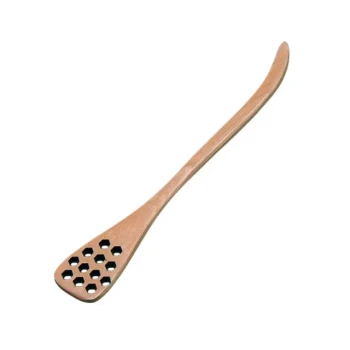
- Modern Honeycomb Pattern Wooden Honey Dipper for Stirring and Drizzling
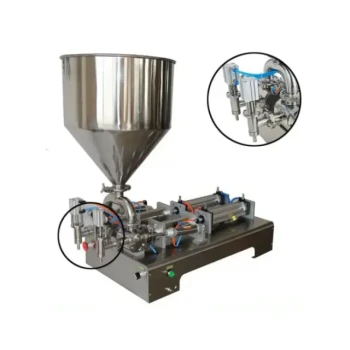
- Double Nozzle Small Honey Filling Machine Honey Sachet Packing Packaging Equipment
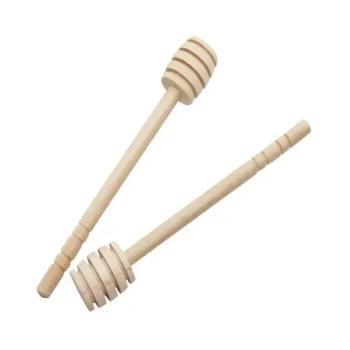
- Natural Wood Honey Dipper for Tea Coffee and Desserts
- Wide Adjustable Stainless Steel Honey Uncapping Fork with Scraper
People Also Ask
- What impact do homogenizers or oscillating equipment have on honey microbial detection? Ensure Testing Accuracy
- Why is thorough mechanical stirring and homogenization emphasized in honey processing? Ensure Sample Accuracy
- How do heating equipment and homogenizers liquefy crystallized honey? Expert Guide to Professional Honey Processing
- How does the honey mixer handle different types of honey? Master Viscosity for Perfect Blends
- What are the main components of the honey mixer? Engineered for Gentle, Efficient Honey Processing