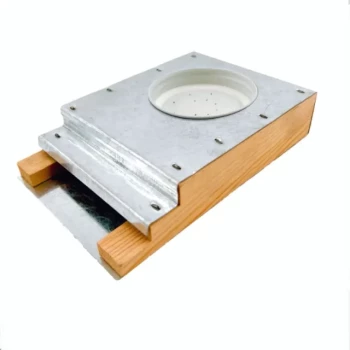
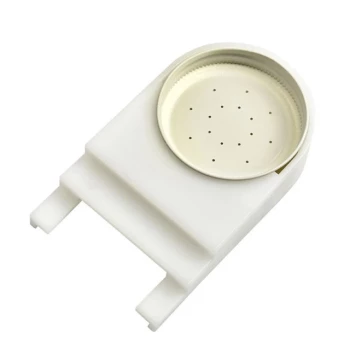
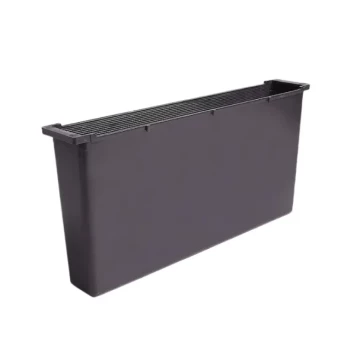
Entrance feeders are external feeding devices designed to sit directly at the hive entrance, consisting of a feeding tray that slides into the hive and an inverted syrup container that remains outside. They allow apiarists to verify syrup levels instantly without opening the hive, making them a popular choice for their simplicity and ease of access.
Entrance feeders maximize convenience for the beekeeper but introduce vulnerabilities for the colony, specifically regarding thermal regulation and hive defense. Successful use requires balancing the ease of monitoring against the risks of freezing temperatures and inciting robbing behavior.
Anatomy and Key Features
The Two-Part Design
Entrance feeders operate using a simple two-part system: a feeding tray that inserts into the hive entrance and an external reservoir.
The reservoir is typically an inverted jar, glass or plastic, which rests on the tray outside the hive body.
Advanced Material Construction
Modern iterations of these feeders often utilize UV-inhibitor plastic.
This material choice extends the lifespan of the equipment by preventing degradation from constant sun exposure at the hive entrance.
Drip Prevention Mechanisms
High-quality designs now incorporate solid bottoms within the feeding tray.
This feature is critical for capturing drips, ensuring syrup does not pool on the landing board where it can attract pests or predators.
Operational Advantages
Non-Intrusive Monitoring
The primary benefit of this system is visibility.
A beekeeper can assess exactly how much feed remains with a single glance, eliminating the need to smoke the bees or crack the propolis seal to check levels.
Simplified Refilling
Replenishing the food supply is minimally disruptive.
You simply remove the external jar, refill it, and replace it, often without needing to wear full protective gear or disturb the colony's internal cluster.
Critical Risks and Trade-offs
The Threat of Robbing
The most significant drawback of entrance feeders is their potential to induce robbing.
Because the food source is located at the colony's front door, the scent of syrup—especially if it drips—can attract wasps and robber bees from other hives, overwhelming the colony's guard bees.
Cold Weather Incompatibility
These feeders are generally unsuitable for cold climates or winter feeding.
Because the liquid is stored outside the hive body, it is prone to freezing, and the cluster of bees cannot break formation to travel to the entrance in low temperatures.
Capacity Limitations
Entrance feeders typically have a very small capacity compared to internal frame or top feeders.
They hold very little syrup, necessitating frequent refills and making them less effective for colonies requiring heavy feeding for rapid buildup.
Making the Right Choice for Your Goals
Before deploying an entrance feeder, evaluate your specific environmental conditions and the strength of your colony.
- If your primary focus is ease of monitoring: Use an entrance feeder during mild weather to check consumption rates without disturbing the hive.
- If your primary focus is preventing robbing: Select a design with a solid bottom to catch drips and avoid using these feeders during a nectar dearth.
- If your primary focus is winter survival: Avoid this equipment entirely in favor of internal feeders that benefit from the colony's heat.
Select the tool that supports the bees' biology first, and your convenience second.
Summary Table:
| Feature | Key Advantage | Critical Consideration |
|---|---|---|
| External Reservoir | Instant visual monitoring without opening the hive. | Limited capacity requires more frequent refilling. |
| Non-Intrusive Design | Refill syrup without disturbing the cluster or propolis. | Unsuitable for cold weather as bees cannot reach the entrance. |
| UV-Inhibitor Plastic | Durable construction for long-term outdoor exposure. | External scent can attract robber bees and wasps. |
| Drip Prevention | Solid bottom trays keep the landing board clean. | Spillage can lead to colony defense vulnerabilities. |
Scale Your Apiary Operations with HONESTBEE
Maximize your productivity and protect your colonies with professional-grade beekeeping solutions. HONESTBEE specializes in supporting commercial apiaries and distributors with high-volume wholesale offerings. From advanced entrance feeders and specialized hive-making machinery to honey-filling systems and essential consumables, we provide the full spectrum of tools needed to thrive in the modern honey industry.
Why partner with HONESTBEE?
- Comprehensive Inventory: Access everything from hardware to honey-themed cultural merchandise.
- Commercial Reliability: Durable equipment designed for the rigors of large-scale beekeeping.
- Wholesale Advantage: Competitive pricing and supply chain support for global distributors.
Contact our expert team today to streamline your equipment procurement and elevate your commercial beekeeping standards!
Related Products
- HONESTBEE Entrance Bee Feeder Professional Hive Nutrition Solution for Beekeeping
- HONESTBEE Entrance Bee Feeder Efficient Hive Front Liquid Feeding Solution for Beekeeping
- HONESTBEE Professional Entrance Bee Feeder Hive Nutrition Solution
- White Plastic 0.5L Beekeeping Entrance Feeder for Bees
- Professional Hive Front Entrance Bee Feeder
People Also Ask
- What types of bee feeders are available for beginners? Start with the Simple Entrance Feeder
- What are the advantages and disadvantages of using an entrance feeder for bees? Balance Convenience and Hive Security.
- What is a bee entrance feeder and what are its drawbacks? Essential Guide to Hive Security and Feeding Efficiency
- How does a bee entrance feeder work? A Simple Guide to Convenient Hive Feeding
- How to make an entrance feeder for bees? A DIY Guide for Safe & Effective Feeding