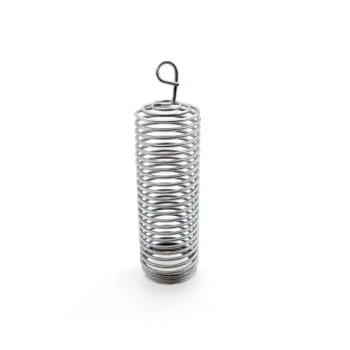
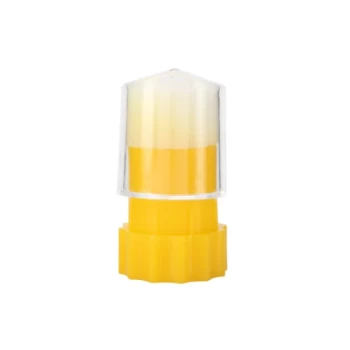
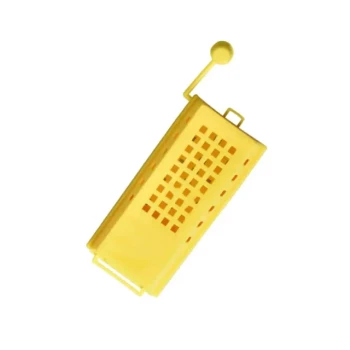
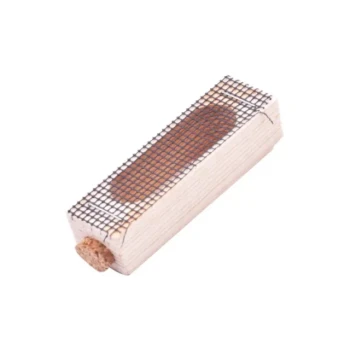
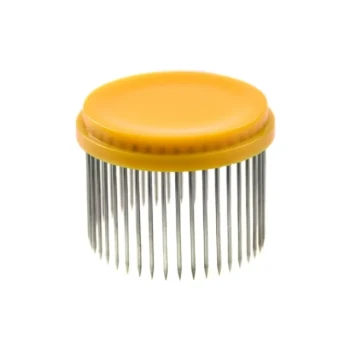
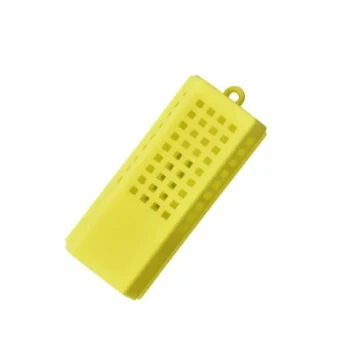
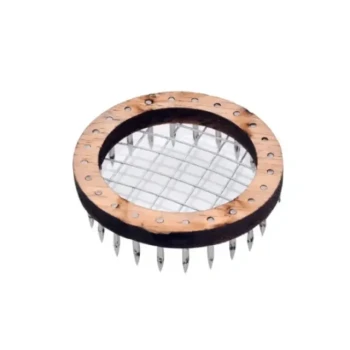
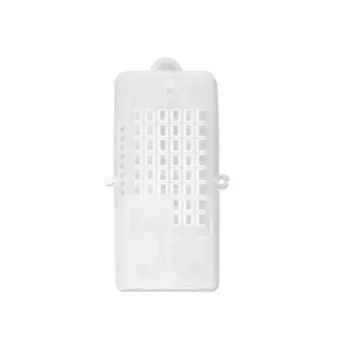
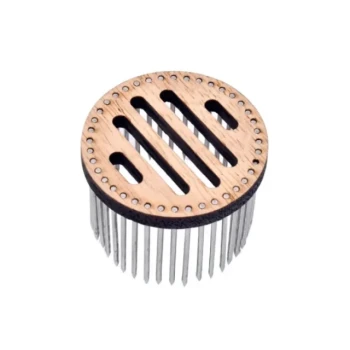
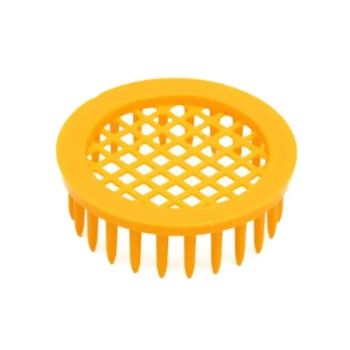
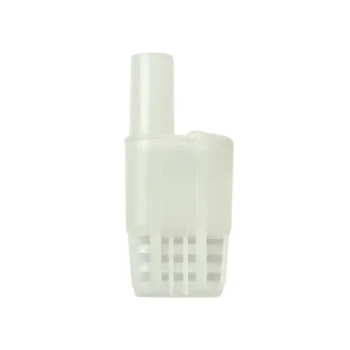
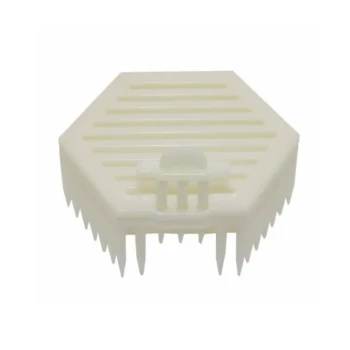
The fundamental difference lies in the environment of immobilization. A push-in marking cage secures the queen directly against the wax comb on the frame, using a pronged disc to trap her. In contrast, a queen marking tube is a handheld tool that isolates the queen inside a clear cylinder, using a soft-tipped plunger to gently elevate her toward a mesh screen for marking.
While push-in cages integrate the marking process directly onto the hive structure, marking tubes completely remove the queen from the comb to secure her in a controlled, handheld environment.
Mechanisms of Immobilization
The Push-In Cage Method
This tool functions as a physical barrier applied to the hive frame. It consists of a circular disc with prongs that the beekeeper presses into the wax comb.
The queen is trapped between the comb's surface and the cage's mesh screen. This method relies on the depth of the comb and the stability of the frame to hold the queen in place.
The Marking Tube Method
The marking tube functions as an independent isolation chamber. It is a clear plastic cylinder equipped with a soft foam plunger.
Once the queen is escorted into the tube, the user manually pushes the plunger up. This gently moves the queen toward a mesh screen at the top of the tool, immobilizing her against it without direct contact with the beekeeper's fingers.
Operational Workflow
Location of Use
The push-in cage requires the beekeeper to work directly on the frame. You must find an area of comb suitable for pressing the prongs in, ensuring the queen is safely underneath.
The marking tube moves the process off the frame. The queen is removed from the comb and placed inside the tool, allowing the beekeeper to step away from the open hive or hold the tool up to better light for precision.
Maneuverability
Push-in cages require two hands and a stable frame surface to apply correctly without injuring the queen.
Marking tubes are often designed for one-handed operation. This allows the beekeeper to hold the tube and adjust the plunger with one hand while holding the marking pen with the other, offering significant ease of maneuverability.
Understanding the Trade-offs
Safety and Pressure Control
The marking tube utilizes a soft-tipped plunger specifically designed to cushion the queen. This foam tip minimizes the risk of crushing her, provided the plunger is advanced slowly.
The push-in cage relies on the beekeeper's manual pressure control when inserting the prongs. If pressed too deeply or unevenly into the wax, there is a risk of restricting the queen too tightly against the comb.
Isolation vs. Context
Using a tube isolates the queen completely. This prevents her from running across the comb but requires you to successfully transfer her into the cylinder first.
Using a push-in cage keeps the queen in her natural environment on the wax. However, it requires a flat area of comb and precise placement to ensure she is not injured by the prongs.
Making the Right Choice for Your Apiary
To determine which tool better suits your workflow, consider your confidence in handling the queen:
- If your primary focus is controlled safety: The marking tube is generally preferred because the soft foam plunger provides a forgiving mechanism for immobilization.
- If your primary focus is minimizing transfer: The push-in cage is ideal as it secures the queen without requiring you to pick her up or remove her from the comb surface.
Select the tool that allows you to remain calm and steady, as your stability is the most critical safety factor for the queen.
Summary Table:
| Feature | Push-In Marking Cage | Queen Marking Tube |
|---|---|---|
| Mechanism | Prongs pressed into wax comb | Clear cylinder with foam plunger |
| Location | Directly on the hive frame | Handheld, off-frame isolation |
| Pressure Control | Manual pressure against comb | Soft-tipped plunger cushioning |
| Maneuverability | Requires two hands & stable frame | One-handed operation possible |
| Primary Benefit | Minimal queen handling/transfer | High precision and safety control |
Elevate Your Apiary Management with HONESTBEE
Precision queen marking is essential for maintaining high-performance colonies. At HONESTBEE, we specialize in supporting commercial apiaries and distributors with a comprehensive wholesale selection of professional beekeeping tools. From ergonomic queen marking tubes and cages to industrial-scale honey-filling machines and hive-making equipment, we provide the durable hardware and essential consumables your business needs to thrive.
Partner with us for industry-leading equipment and cultural merchandise. Contact HONESTBEE today to discuss our bulk pricing and discover how our specialized solutions can streamline your operations and grow your distribution network.
Related Products
- Plastic Queen Marking Tube Cage with Plunger for Beekeeping
- Queen Bee Marking Tube Cage Bottle Catcher Holder with Clear Plastic Plunger Marker
- One Hand Yellow Queen Marking Catcher Tube Cage Beekeeper Tool Accessory for Queen Bee
- Plastic Long Marker Device for Catching and Marking Bees Queen Bee Marking Tube and Cage
- Transparent Plastic Bee Catcher Queen Marker Tube Cage Beekeeping Tool Equipment
People Also Ask
- What is the function of a queen marker cage? Essential Guide to Safe Beekeeping Management
- How do you capture and immobilize a bee for marking? Master Safe Queen Handling for Your Apiary
- What tools are available for safely marking queens? A Guide to Secure and Efficient Queen Marking
- How does a queen marking tube facilitate the marking process? Enhance Safety and Precision in Your Apiary
- What tool is recommended for safe and efficient queen marking? The Essential Guide for Beekeepers