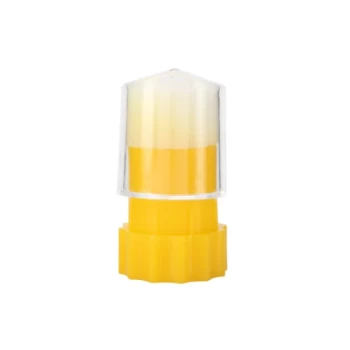
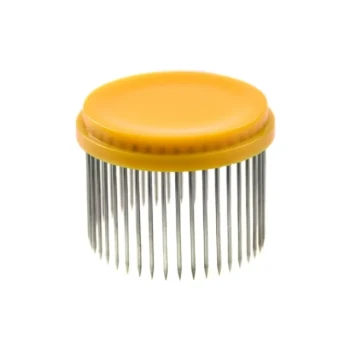
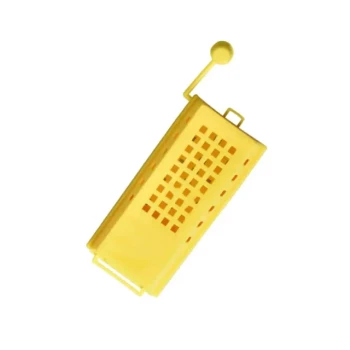
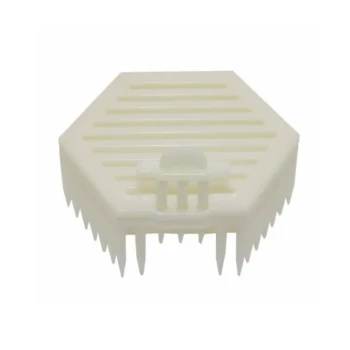
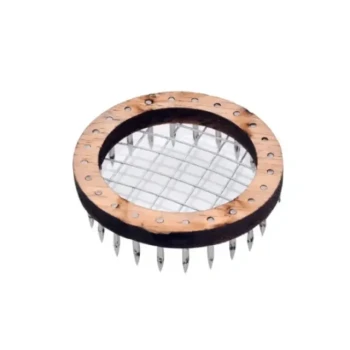
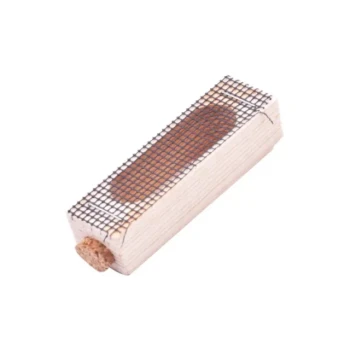
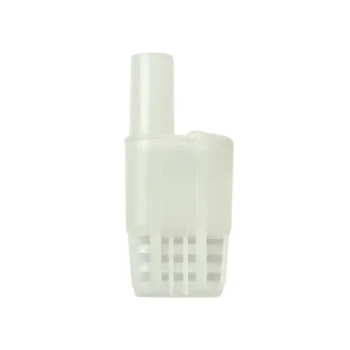
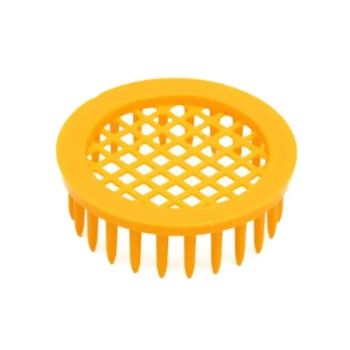
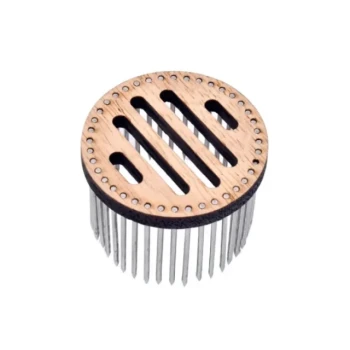
A queen marker cage is a specialized safety tool designed to immobilize a queen bee directly on the honeycomb for identification purposes. Its primary function is to trap the queen against the comb surface using a screened enclosure, allowing the beekeeper to apply paint or a marker without ever physically touching or removing her from the frame.
The marker cage bridges the gap between identification and safety, enabling beekeepers to mark a queen for future tracking while eliminating the high risks associated with manual handling.
The Mechanics of Isolation
Direct Application to the Comb
Unlike other isolation devices that require you to catch the queen first, the marker cage is used in situ. Once the queen is spotted on a frame, the cage is placed over her and pressed gently into the wax foundation.
Restricting Movement
The cage features sharp edges or points that sink into the honeycomb to create a seal. This creates a temporary, confined space that traps the queen between the wire mesh and the comb surface.
Interaction Through the Mesh
The top of the cage is constructed of a wide-gauge screen or mesh. This provides open access to the queen's thorax, allowing you to apply a dot of paint or a numbered disc through the gaps while preventing her escape.
The Strategic Value of Marking
Eliminating Handling Risks
The most significant advantage of this tool is risk mitigation. Manually picking up a queen requires a delicate touch; excessive pressure can damage her abdomen or legs, permanent affecting her egg-laying ability. By removing the need for fingers-on contact, the marker cage preserves the queen's physical integrity.
Reducing Pheromonal Disruption
Handling a queen can transfer human scents or stress pheromones onto her body. This can sometimes cause the worker bees to reject or "ball" (attack) the queen upon release. Keeping her on the comb maintains her scent profile and reduces colony stress.
Understanding the Trade-offs
Potential for Comb Damage
To secure the cage, you must press it into the wax. This inevitably causes minor structural damage to the honeycomb cells underneath the rim of the cage. If placed over capped brood or honey, these cells may be compromised.
Risk of "Leg Capping"
Precision is required when placing the cage. If the beekeeper is hasty, there is a risk of trapping the queen's legs or wings under the rim of the cage as it is pressed down. This requires a steady hand and careful observation before applying pressure.
Making the Right Choice for Your Goal
While expert beekeepers may mark by hand, the marker cage is often the superior choice for risk aversion.
- If your primary focus is Queen Safety: Use the marker cage to ensure the queen is never squeezed, dropped, or subjected to foreign scents.
- If your primary focus is Accuracy: Use the cage to hold the target perfectly still, preventing smeared paint or misapplied markers that can occur with a moving target.
Mastering the use of a marker cage transforms a high-stress procedure into a routine, safe management practice.
Summary Table:
| Feature | Function & Purpose | Key Benefit |
|---|---|---|
| In Situ Isolation | Traps queen directly on the honeycomb | Eliminates risks of manual handling and dropping |
| Screened Mesh | Provides access to the queen's thorax | Allows precise marking without removing the queen |
| Physical Barrier | Restricts movement on the frame | Prevents smeared paint and ensures marking accuracy |
| Scent Preservation | Minimizes human-to-queen contact | Reduces the risk of worker bees rejecting the queen |
Scale Your Apiary Operations with HONESTBEE
Precision queen management is vital for maintaining high-productivity colonies. At HONESTBEE, we empower commercial apiaries and distributors by providing a comprehensive wholesale range of high-quality beekeeping tools, specialized machinery, and essential consumables.
Whether you need precision hardware like hive-making and honey-filling machines or bulk supplies of professional-grade beekeeping equipment, we deliver the reliability your business demands.
Ready to enhance your efficiency and secure your queen health? Contact us today to discuss our wholesale offerings and how we can support your industry growth.
Related Products
- Plastic Queen Marking Tube Cage with Plunger for Beekeeping
- Queen Bee Marking Tube Cage Bottle Catcher Holder with Clear Plastic Plunger Marker
- One Hand Yellow Queen Marking Catcher Tube Cage Beekeeper Tool Accessory for Queen Bee
- Plastic Long Marker Device for Catching and Marking Bees Queen Bee Marking Tube and Cage
- Transparent Plastic Bee Catcher Queen Marker Tube Cage Beekeeping Tool Equipment
People Also Ask
- What are the functional differences between a push-in queen marking cage and a queen marking tube? Choose the Best Tool
- How do you capture and immobilize a bee for marking? Master Safe Queen Handling for Your Apiary
- What tools are available for safely marking queens? A Guide to Secure and Efficient Queen Marking
- How does a queen marking tube facilitate the marking process? Enhance Safety and Precision in Your Apiary
- What tool is recommended for safe and efficient queen marking? The Essential Guide for Beekeepers