The primary functional difference lies in the size of the particulate matter removed. Manual drainage is a coarse, passive process that typically only separates large pieces of beeswax, offering very limited purification. In contrast, screen filtration utilizes physical mechanical interception to actively capture fine contaminants—such as wax fragments, dead bees, and floating impurities—to achieve a much higher degree of clarity.
Core Takeaway: Manual drainage is merely a preliminary step that relies on gravity to remove bulk debris. To produce honey that meets commercial purity standards and possesses high visual clarity, screen filtration is not optional—it is the necessary mechanism for removing the fine impurities that drainage misses.
The Limitations of Manual Drainage
Passive Gravity Separation
Manual drainage is the most rudimentary form of purification. It relies entirely on gravity to separate honey from debris. Because it lacks a precise filtering medium, it allows significant amounts of solid matter to pass through with the liquid.
Incomplete Purification
This method is functionally limited to removing only the largest debris. While it may catch big chunks of comb or beeswax, it fails to address the finer particulates that affect the texture and appearance of the final product.
The Mechanics of Screen Filtration
Physical Mechanical Interception
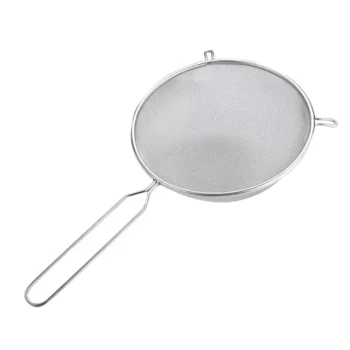
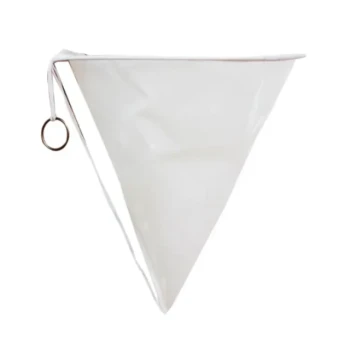
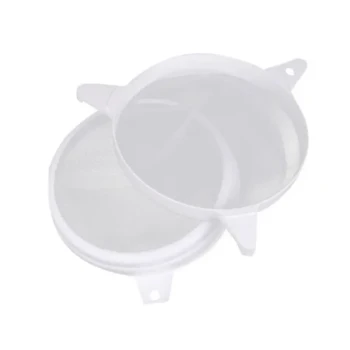
Screen filtration introduces a defined barrier into the process. Using professional sieves or filtration consumables, this method forces the honey through a mesh that physically blocks contaminants based on size.
Targeting Fine Impurities
Unlike drainage, screen filtration is capable of capturing microscopic and small macroscopic debris. The primary reference notes that this effectively removes wax fragments, dead bees, and fine floating impurities that would otherwise remain suspended in the honey.
The Impact on Product Quality
Achieving Visual Clarity
The functional goal of screen filtration is to improve the optical properties of the honey. By removing the "haze" caused by suspended wax and particles, the honey achieves the clear, polished look expected by consumers.
Meeting Commercial Standards
For beekeepers aiming for a marketable product, screen filtration is often a mandatory process step. It ensures the honey meets specific commercial purity standards that manual drainage alone cannot satisfy.
Understanding the Trade-offs
Process vs. Purity
Manual drainage is simple and requires no consumables, but the result is a "rough" product with lower visual appeal. Screen filtration requires specific equipment (sieves/screens) and maintenance (cleaning or replacing consumables), representing a higher operational effort for a significantly higher quality output.
The Risk of Over-Reliance on Drainage
Relying solely on manual drainage risks leaving organic matter in the honey. Over time, these left-behind impurities can affect the honey's crystallization rate and overall aesthetic, potentially lowering its market value.
Making the Right Choice for Your Goal
To determine which method suits your operation, assess your end-product requirements:
- If your primary focus is bulk separation for personal use: Manual drainage may be sufficient if you are unconcerned with fine sediments or slight cloudiness in the jar.
- If your primary focus is commercial sales and shelf appeal: You must utilize screen filtration to remove fine wax and organic debris, ensuring the clarity required for retail standards.
True quality control in honey processing begins where manual drainage ends—at the filter screen.
Summary Table:
| Feature | Manual Drainage | Screen Filtration |
|---|---|---|
| Mechanism | Passive Gravity Separation | Physical Mechanical Interception |
| Impurity Removal | Large bulk debris only | Wax fragments, dead bees, fine particles |
| Visual Result | Cloudy/Rough appearance | High clarity & polished finish |
| Goal | Preliminary separation | Commercial purity & retail standards |
| Operational Effort | Minimal | Requires equipment/consumables maintenance |
Elevate Your Honey Production with HONESTBEE
To achieve industry-leading clarity, your operation needs more than just gravity—it needs professional-grade technology. HONESTBEE empowers commercial apiaries and honey distributors with the high-performance tools required to scale quality.
Whether you are looking for advanced honey-filling machines, high-capacity filtration machinery, or essential beekeeping consumables, we provide the full spectrum of equipment to optimize your workflow. Our expert team is ready to help you meet the highest commercial standards and increase your market value.
Ready to upgrade your purification process?
References
- Kawnin Abdimahad, Fosiya Hussein. Assessment of Post-Harvest Handling Practices of Honey in Erer Zone, Somali Regional State, Ethiopia. DOI: 10.54536/ajaas.v2i2.1827
This article is also based on technical information from HonestBee Knowledge Base .
Related Products
- Electric Double Wall Honey Filtering Machine Purifier Equipment for Honey Processing Plant
- 0.5T Capacity Honey Dehumidifier Dryer with Vacuum Heating and Thickening Filtering Machine
- Professional Stainless Steel Honey Filtering Machine with Water Bath Heating for Beekeeping
- Honey Concentrating and Filtering Dehumidifier Machine 2T Capacity for Honey
- Professional Honey Filter with Tripod Support Stand
People Also Ask
- What types of equipment are used in honey filtering? Build an Efficient System for Pure, Marketable Honey
- What is the process of filtering honey? A Guide to Clean, Pure, and Market-Ready Honey
- What is the overall importance of using the right equipment in honey filtering? Boost Quality & Marketability
- What are the benefits of drying honey filtering equipment after use? Protect Your Honey Quality & Equipment Investment
- What is a potential concern associated with filtering honey? Balancing Clarity and Pollen Preservation