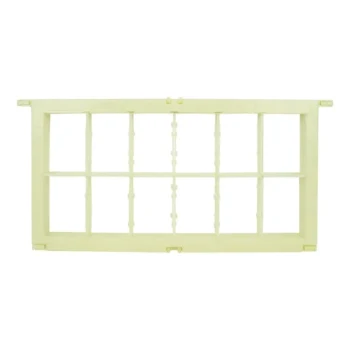
The primary applications divide into two distinct operational categories: internal hive management and external revenue generation. Stored beeswax frames are preserved over winter to facilitate rapid colony expansion in the spring, whereas rendered beeswax is purified and repurposed as a raw material for manufacturing diverse commercial products.
Core Takeaway Maximizing apiary profitability requires balancing the biological value of drawn comb for colony speed against the economic value of rendered wax. While stored frames act as critical infrastructure for bee population growth, rendered wax serves as the foundation for diversifying revenue streams through value-added manufacturing.
Leveraging Stored Frames for Operations
For the commercial beekeeper, beeswax frames are not just waste products; they are capital assets. Managing these frames effectively is crucial for the biological success of the hive.
Accelerating Spring Expansion
The most immediate application for stored frames is reusing them in the spring. Building new wax requires significant energy and resource consumption from the bees.
By providing colonies with drawn comb that was preserved over the winter, beekeepers allow the colony to bypass the wax-building phase. This enables the bees to focus immediately on brood rearing and food storage, leading to rapid colony expansion early in the season.
Guiding Mechanized Harvesting
Within the frames, wax foundation plays a structural role. This embossed sheet guides bees to build straight, uniform combs.
Uniformity is essential for commercial operations using mechanized harvesting equipment. Irregular comb growth can interfere with centrifugal extraction, risking damage to the machinery or the crop.
Commercial Applications for Rendered Wax
When wax is harvested and rendered into a purified form, it transforms from hive infrastructure into a valuable commodity. This allows beekeepers to diversify their income beyond honey production.
Personal Care and Cosmetics
Due to its natural moisturizing and protective properties, rendered beeswax is a staple ingredient in the beauty industry.
It is extensively used to formulate lip balms, body butters, and medicinal salves. It is also a common ingredient in soaps, deodorants, and healing balms, where it serves as both a thickener and a skin protectant.
Household and Artisan Products
Refined beeswax is highly valued for high-end household goods. It remains the premium standard for candle making due to its clean burn and natural scent.
Beyond candles, it is the primary active ingredient in furniture polishes and leather conditioners. Recently, it has gained popularity in the production of sustainable, reusable food wraps as an alternative to plastic.
Industrial and Manufacturing Uses
On a larger industrial scale, beeswax serves functional roles that go beyond aesthetics. It is frequently utilized as a natural lubricant for mechanical parts, such as sticking drawers or machine components.
It also appears in pharmaceuticals and food processing, often used as a coating or glazing agent. Some sectors, such as the tobacco industry, utilize it for moisture retention.
Understanding the Trade-offs: Reuse vs. Renewal
While reusing stored frames saves bee energy, indefinite reuse is a major management pitfall. You must weigh the benefits of rapid expansion against hive hygiene.
The Accumulation of Toxins
Old frames act as a sponge for contaminants. Over time, wax accumulates chemical residues and environmental toxins.
Persistently using old frames turns them into breeding grounds for pathogens, increasing the risk of disease within the population.
The Necessity of Rotation
Regularly culling and rendering old frames is a critical hygiene measure. Replacing them with fresh, high-quality foundation reduces the biological load on the hive.
Therefore, rendering is not just for profit—it is a sanitary necessity. An efficient collection and refining process enhances overall economic efficiency by turning this waste management requirement into a revenue stream.
Making the Right Choice for Your Goal
Deciding whether to store a frame for reuse or render it down depends on the age of the comb and your immediate business objectives.
- If your primary focus is Rapid Colony Growth: Prioritize storing clean, drawn frames to reduce the energy burden on bees during the spring buildup.
- If your primary focus is Disease Prevention: Aggressively cull dark, older frames to render them, preventing pathogen buildup and ensuring biological safety.
- If your primary focus is Revenue Diversification: Establish an efficient refining process to convert wax cappings and culled frames into high-margin products like cosmetics or candles.
Success in commercial beekeeping lies in knowing exactly when a frame stops being an asset to the colony and starts being a raw material for the market.
Summary Table:
| Application Type | Primary Use Case | Key Benefits for Beekeepers |
|---|---|---|
| Stored Frames | Spring colony expansion | Saves bee energy, accelerates brood rearing, and ensures uniform harvesting. |
| Rendered Wax | Cosmetics & Personal Care | Used in lip balms and salves; creates high-margin, value-added revenue. |
| Rendered Wax | Household & Artisan | Premium candles, furniture polish, and sustainable food wraps. |
| Industrial Use | Manufacturing | Natural lubricants, pharmaceutical coatings, and moisture retention agents. |
| Hive Hygiene | Frame Rotation | Culling old frames prevents pathogen buildup and chemical residue accumulation. |
Maximize the profitability of your apiary by converting hive waste into premium assets. At HONESTBEE, we empower commercial apiaries and distributors with the specialized machinery and tools needed to refine beeswax and scale production. From high-efficiency honey-filling machines to durable hive-making hardware and essential consumables, our comprehensive wholesale offering ensures your operation stays productive and hygienic. Contact us today to discover how our professional equipment can enhance your beeswax processing and expand your market reach.
Related Products
- Assembled Wooden Bee Frames with Beeswax Foundation Ready to Use by HONESTBEE
- Wooden Bee Hive Frames for Beekeeping and Wholesale
- Fully Automatic Beeswax Embossing Machine Foundation Mill
- Plastic Bee Frame Beekeeping Hive Frames for Wholesale
- Professional Sectional Comb Honey Frame with 250g Cassette System for Beekeeping
People Also Ask
- How should frames be rearranged as a bee colony grows? Master Hive Expansion and Nest Management
- Under what circumstances should bee frames be destroyed? Protect Your Apiary from American Foulbrood
- Do bee frames need foundation? Choose the Right Approach for Your Apiary
- When should frames with new foundation be given to colonies? Master Timing for a Thriving Hive
- What types of bee frames can be cleaned and returned to service? A Guide to Safe Apiary Refurbishment