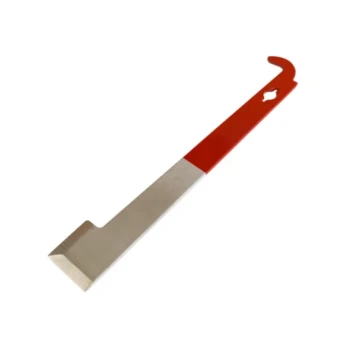
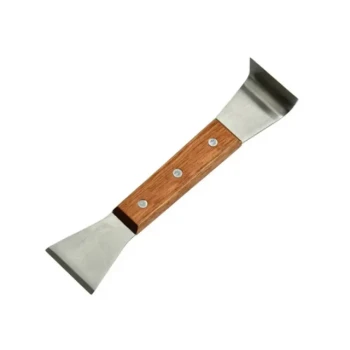
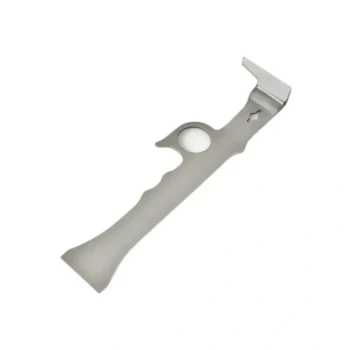
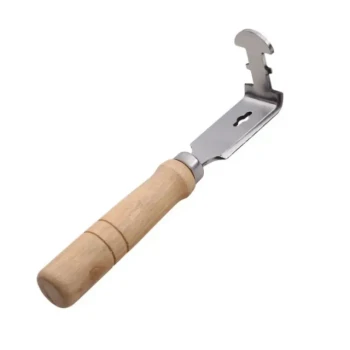
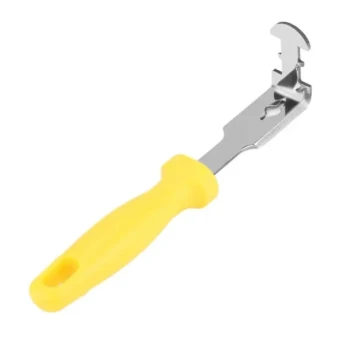
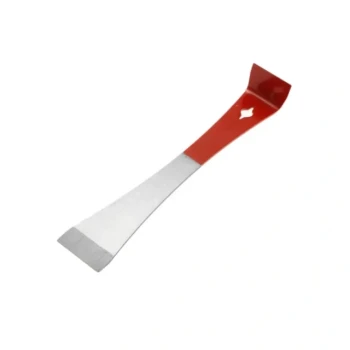
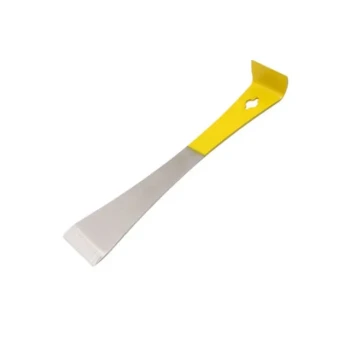
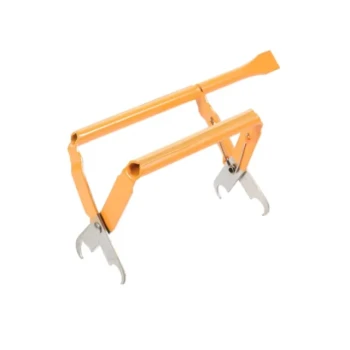
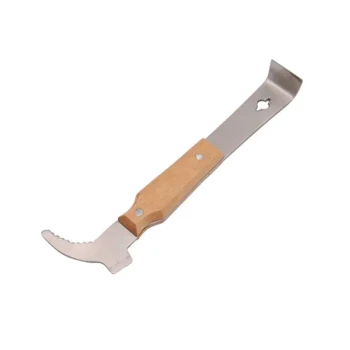
The stainless steel hive tool functions primarily as a lever and a scraper. Its main purpose is to pry apart hive covers and frames that bees have cemented together with propolis, a resinous "bee glue." Secondly, it is used to scrape away excess burr comb and propolis buildup to maintain the internal mechanics of the hive.
The hive tool is not just a wedge; it is the fundamental key to modern apiary management, allowing beekeepers to overcome the powerful adhesive force of propolis without destroying the wooden infrastructure of the hive.
Overcoming Biological Adhesion
The most immediate challenge in apiary maintenance is accessing the colony. Bees naturally seal the hive to maintain temperature and stability, creating a bond that manual force cannot break safely.
Breaking the Propolis Seal
Bees utilize propolis, a powerful adhesive substance, to seal cracks and cement hive components together.
This bond is often too strong to break by hand. The hive tool uses high-hardness stainless steel to penetrate this seal effectively.
Applying Mechanical Leverage
The tool is engineered with a flat blade and often a hooked end to act as a fulcrum.
This design provides the mechanical leverage necessary to separate heavy boxes and frames. It converts a small amount of human force into enough pressure to snap the propolis bond smoothly.
Protecting Hive Integrity
Without a specialized tool, beekeepers might resort to makeshift levers that damage the hive.
The hive tool is designed to separate components without splintering the wood or cracking composite materials. It ensures the equipment lasts longer by applying force correctly.
Maintenance and Hive Hygiene
Once the hive is open, the tool transitions from a lever to an instrument of maintenance.
Removing Burr Comb
Bees often build "burr comb"—excess wax in unintended areas—which bridges the gap between frames.
The sharp edge of the stainless steel tool allows the beekeeper to scrape away this excess wax. This ensures frames remain mobile and do not become permanently fused to the hive body.
Clearing Propolis Buildup
Over time, propolis accumulates on the rails and edges of the hive boxes.
The tool is used to scrape these surfaces clean during routine inspections. Regular cleaning prevents the buildup from becoming so thick that it misaligns the hive components or crushes bees during reassembly.
Understanding the Trade-offs
While essential, the material properties of the tool introduce specific risks that a beekeeper must manage.
Hardness vs. Wood Softness
Stainless steel possesses superior bending strength and hardness compared to wooden hive bodies.
If used aggressively, the tool can gouge or compress the soft pine often used in apiaries. The user must be careful to apply force only at the strongest points of the frame, usually the "ears" or reinforced edges.
The Risk of Compression
Using the tool as a wedge rather than a lever can compress the wood fibers.
Repeated compression can alter the precise "bee space" dimensions within the hive. It is critical to use the tool to lift and separate rather than to drive into gaps like a chisel.
Making the Right Choice for Your Goal
To maximize the utility of your hive tool, match your technique to your immediate objective.
- If your primary focus is Inspection Efficiency: Utilize the hooked end of the tool to lever frames upward, breaking the propolis seal on both sides before attempting to lift the frame.
- If your primary focus is Hive Longevity: Prioritize scraping the frame rests (rails) during every inspection to prevent the propolis buildup that necessitates damaging force in the future.
The stainless steel hive tool is the interface between the beekeeper's intent and the colony's architecture, essential for navigating the hive without destroying it.
Summary Table:
| Function | Primary Use Case | Key Benefit |
|---|---|---|
| Leverage | Prying apart hive covers and stuck frames | Breaks the propolis seal without damaging wood |
| Scraping | Removing burr comb and excess wax | Maintains mobility of frames and proper 'bee space' |
| Cleaning | Clearing propolis buildup on rails | Ensures hive components align correctly and prevents bee crushing |
| Maintenance | Routine inspections and hive hygiene | Extends the lifespan of expensive apiary equipment |
Elevate Your Beekeeping Operation with HONESTBEE
At HONESTBEE, we understand that high-quality tools are the backbone of a productive apiary. We cater specifically to commercial apiaries and distributors, providing a comprehensive wholesale selection of everything from precision stainless steel hive tools to advanced honey-filling machinery and hive-making equipment.
Our mission is to supply you with durable, industry-grade consumables and hardware that streamline your workflow and protect your investment. Whether you are scaling your production or stocking a distribution network, our portfolio offers the reliability your business demands.
Ready to upgrade your equipment? Contact us today to explore our wholesale offerings!
References
- Universiti Malaysia Terengganu. CURRENT AND FUTURE TECHNOLOGIES IN THE BEEKEEPING PRACTICE. DOI: 10.46754/jssm.2025.09.012
This article is also based on technical information from HonestBee Knowledge Base .
Related Products
- Professional Stainless Steel J-Hook Hive Tool
- Stainless Steel J Hook Hive Tool for Beekeeping
- Professional Stainless Steel Pry-Bar Hive Tool
- Professional Multi-Function Stainless Steel Hive Tool
- Professional Dual-End Stainless Steel Hive Tool for Beekeeping
People Also Ask
- What are the primary functions of a stainless steel hive tool? Essential Equipment for Professional Beekeeping
- Which technical challenges in hive maintenance are addressed by using a professional stainless steel hive tool?
- What is the function of a professional stainless steel hive tool in IFB? Optimize Your Colony Strength Assessment
- What is a J-hook hive tool and why is it favored by some beekeepers? Master Gentle Frame Handling
- What are the features of a J-hook hive tool? Effortlessly Lift Frames with Superior Leverage