The standard approach is to clear bees from honey supers with a passive escape device, fume board, or manual/mechanical tool, then move the bee-free supers directly to extraction or controlled cold storage. One-way escape boards are suited to planned harvesting, while brushes, frame shakers, and blowers support faster same-day operations. Once removed from the hive, supers should be protected from contamination, robbing, pests, spoilage, and unwanted crystallization.
Clear bees before transport, minimize the time supers remain at ambient conditions, and either extract them promptly or place them in a suitable temperature-controlled cold room.
Establish the Harvest Workflow
Plan the removal method
Choose the clearing method according to apiary scale, available labor, weather, and required harvest speed.
- Escape boards are appropriate when supers can remain in place overnight.
- Fume boards provide faster clearing when sunlight and approved bee repellents are available.
- Brushes, frame shakers, and blowers are useful when supers must be harvested immediately.
The objective is to move bees into the lower hive bodies without damaging comb or unnecessarily agitating the colony.
Prepare the receiving equipment
Before removing any supers, prepare empty supers, transport boxes, covers, and extraction equipment.
Cleared frames should be placed into a clean, enclosed container or empty super rather than left exposed. This reduces the risk of bee re-entry, robbing, debris, and unnecessary honey exposure.
Organize the extraction destination
Confirm that the honey house or extraction facility is ready before harvest begins.
The required downstream equipment may include honey extraction machinery and the associated frame-handling equipment. A delay between removal and extraction increases the need for protected, temperature-controlled storage.
Select the Appropriate Bee-Clearing Equipment
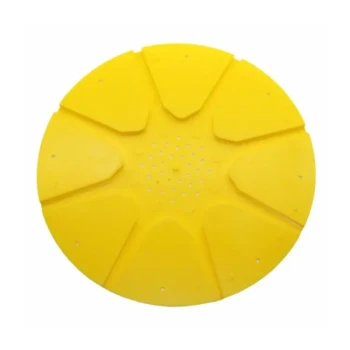
One-way escape boards
An escape board fitted with a one-way bee escape, such as a Porter or conical escape, is placed between the honey supers and the brood chamber.
Worker bees can move downward into the brood area but cannot readily return to the supers. The board is commonly installed the afternoon before harvest so the bees can clear the supers overnight.
Escape boards are most effective when the equipment is structurally sound and the supers do not have openings that allow bees to bypass the escape. They are less suitable when the crop must be removed immediately.
Fume boards
A fume board with a felt liner is placed over the super, with the liner moistened using an appropriate, approved bee-repellent product.
Heat from sunlight helps disperse the repellent and encourages bees to move downward into the hive. The operator should follow the repellent manufacturer’s instructions and prevent the product from contacting honey, wax, frames, or food-contact surfaces.
Fume boards are useful for faster clearing, but their performance depends on weather, sunlight, correct application, and the bees’ response to the repellent.
Bee brushes and frame shakers
For small-scale harvesting or final cleanup, operators can remove frames individually, shake off most bees, and use a soft bee brush to gently sweep remaining bees back toward the hive.
A frame shaker can accelerate removal from individual frames. Natural alternatives such as a goose wing or feather may be used where appropriate, but all tools should be clean and handled gently to avoid damaging comb or excessively disturbing bees.
Powered bee blowers
A powered bee blower can clear large numbers of supers quickly and is primarily suited to commercial operations.
It should be used with controlled airflow and in conditions that reduce the risk of robbing. Blowing bees into the surrounding area can disperse honey odors and agitate colonies, particularly during a nectar dearth.
Follow the Standard Clearing Procedure
Method 1: Passive overnight clearing
- Inspect the supers and confirm that the escape board is intact and correctly fitted.
- Install the escape board between the honey supers and the brood chamber.
- Leave it in place for the planned clearing period, commonly overnight.
- Inspect the supers before removal and manually clear any remaining bees.
- Transfer the cleared supers into covered transport equipment.
This method reduces direct contact with bees and is efficient when the harvest schedule allows advance preparation.
Method 2: Fume-board clearing
- Prepare the fume board and felt liner according to the repellent product instructions.
- Place the treated board over the honey super.
- Allow sunlight and the repellent to drive bees downward.
- Check the super before removal and clear any remaining bees with a brush or other suitable tool.
- Remove the super and cover it immediately.
The treatment should be controlled carefully. Excessive or inappropriate repellent use can create residue, odor, or honey-quality concerns.
Method 3: Manual or mechanical clearing
- Remove one frame at a time from the honey super.
- Shake or use a frame shaker to dislodge the bulk of the bees.
- Gently brush remaining bees back toward the hive.
- Place each cleared frame into an empty super or transport box.
- Close or cover the container before moving to the next frame.
This method requires more labor but provides direct control and is practical for smaller apiaries or final removal of stragglers.
Method 4: Commercial blower clearing
- Position the operation to limit bee dispersal and avoid exposing nearby supers to robbing.
- Use controlled airflow to clear frames or boxes.
- Inspect the supers for remaining bees.
- Transfer cleared equipment promptly into covered transport containers.
- Move the supers directly to the extraction facility or cold room.
Blower operations should be coordinated with the extraction workflow because their main advantage is speed, not long-term holding.
Handle Harvested Supers Before Extraction
Extract immediately when possible
The preferred workflow is to move cleared supers directly to honey extraction machinery.
Immediate processing reduces the time honey is exposed to ambient heat, moisture, insects, and airborne contamination. It also avoids unnecessary handling and makes the harvesting process easier to schedule.
Use controlled cold storage for delays
If extraction cannot occur immediately, place the harvested supers in a temperature-controlled cold room.
Cold storage helps protect honey quality and reduces the risk of:
- Spoilage
- Wax moth infestation
- Other pest activity
- Premature crystallization or undesirable changes in honey condition
The storage area should be clean, secure, and organized so that supers can be identified and moved efficiently when extraction resumes.
Protect supers during transport and staging
Keep harvested supers covered and protected during movement from the apiary to the extraction facility or cold room.
Avoid leaving open supers where bees can access them. Exposed honey can trigger robbing and create avoidable handling problems, especially during a nectar dearth.
Maintain equipment readiness
For distributors, wholesalers, and commercial operators, availability of the complete workflow matters more than any single tool.
A reliable setup may require escape boards, fume boards, approved repellents, bee brushes, frame shakers, blowers, empty supers, transport boxes, covers, cold-room capacity, and extraction machinery. Coordinating these items through one supplier can reduce harvest delays and simplify replenishment.
Understanding the Trade-offs
Escape boards versus immediate removal
Escape boards are gentle and labor-efficient, but they require advance installation and sufficient time for the bees to descend.
They are therefore best for planned harvests, not urgent same-day removal.
Fume boards versus chemical-control risks
Fume boards can clear supers rapidly, particularly in suitable sunny conditions. However, the repellent must be approved for the intended use and applied exactly as directed to avoid contamination or unacceptable odors.
Fume boards also depend on environmental conditions and may not perform consistently in cool, cloudy, or windy weather.
Manual tools versus labor requirements
Brushes and frame shakers provide precise control and require relatively simple equipment.
Their limitation is labor: clearing individual frames takes time and may be inefficient for large commercial volumes.
Blowers versus bee agitation and robbing
Blowers offer high throughput and are valuable for commercial apiaries.
However, they disperse bees and honey odors into the surrounding area. This can increase agitation and robbing risk, especially when natural forage is limited.
Ambient holding versus cold-room capacity
Leaving supers at ambient conditions simplifies logistics in the short term but increases exposure to pests, spoilage, and crystallization concerns.
Cold storage requires investment in space and temperature control, but it provides a more reliable buffer when extraction capacity or transport timing is uncertain.
Making the Right Choice for Your Goal
Use the following decision framework to match equipment with the operating requirement:
- If your primary focus is planned, low-disturbance harvesting: Use one-way escape boards installed in advance, followed by inspection and covered transport.
- If your primary focus is rapid same-day clearing: Use a fume board or manual clearing tools, with an approved repellent where applicable.
- If your primary focus is small-scale operation: Use frame shaking and a soft bee brush, supported by empty supers or transport boxes.
- If your primary focus is high-volume commercial throughput: Use powered blowers with controlled airflow, sufficient labor, and a direct route to extraction.
- If your primary focus is protecting supers before delayed extraction: Use covered transport and temperature-controlled cold-room storage.
- If your primary focus is dependable supply and fulfillment: Source the complete clearing, transport, storage, and extraction equipment portfolio from a supplier able to provide rapid response and coordinated delivery.
A disciplined process—clear, cover, transport, extract or cold-store—protects both honey quality and harvest efficiency.
Summary Table:
| Aspect | Recommended Approach | Key Equipment |
|---|---|---|
| Clearing Method | Choose based on scale, time, and weather | Escape boards, fume boards, brushes, shakers, blowers |
| Handling After Clearing | Cover and move promptly | Transport boxes, covers |
| Storage | Extract immediately or use cold storage | Cold room (temperature-controlled) |
| Equipment Readiness | Ensure complete workflow availability | Extraction machinery, repellents, etc. |
Ensure a smooth honey harvest with HONESTBEE's complete range of beekeeping equipment and supplies. From escape boards to extraction machinery, we provide everything you need for efficient bee clearing and honey handling. For distributors and commercial beekeepers, we offer fast delivery, OEM/ODM support, and competitive margins. Contact us today to optimize your harvest process and boost your profitability.
Related Products
- Efficient Hive Clearing: HONESTBEE 8-Way Plastic Bee Escape
- High-Efficiency Diamond Maze Bee Escape for Clearing Supers
- Commercial Grade Vertical Electric Bee Sweeper for Bee Removal
- Stainless Steel Scraper for Metal Queen Bee Excluders
- Lightweight Durable Plastic Queen Excluder Scraper for Beekeeping
People Also Ask
- How is a bee escape, or clearer board, used to harvest honey from a Langstroth hive? The Stress-Free Harvesting Guide
- What mechanical methods and tools are used to clear bees from honey supers? Efficient Tools for a Smooth Harvest
- What is the result of using a bee escape board for 24 hours? Achieve a Near Bee-Free Honey Super
- What are the different types of bee escape boards? Choose the Right One for a Stress-Free Honey Harvest
- How do bee escape boards and fume boards assist in honey harvesting? Optimize Your Harvest with Low-Stress Tools