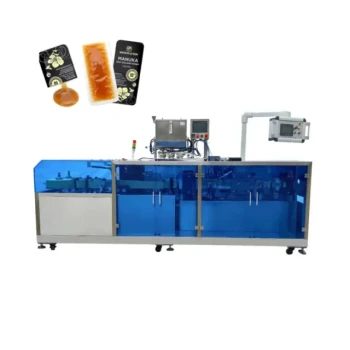
Automated honey straw production lines deliver a decisive technical advantage by integrating high-precision metering pumps with ultrasonic cold-sealing technology. This combination ensures consistent volumetric accuracy and preserves the honey’s delicate nutrient profile—tasks that manual filling cannot reliably perform. For B2B distributors, this translates to a scalable, retail-ready product that meets strict international metrological and hygiene standards.
The shift from manual to automated production replaces human variability with mechanical precision, ensuring every unit is identical in weight, seal integrity, and nutritional value. This transition is essential for any enterprise looking to move from artisanal batches to high-volume, reliable supply chains.
Superior Precision and Material Efficiency
High-Precision Volumetric Filling
Automated lines utilize industrial-grade metering pumps to deliver an exact volume of honey into every straw. Unlike manual methods, which are prone to overfilling or underfilling, these pumps minimize material waste and ensure that every straw meets the labeled net weight.
Metrological Compliance for International Trade
For wholesalers operating across borders, consistent net weight is a legal requirement. Automated systems provide the high-precision flow control necessary to fulfill strict international metrological standards, protecting your brand from compliance risks in global markets.
Prevention of Seal Failure
One of the most common issues in straw production is "overflow" during sealing. Automated systems use precise filling pressure control to ensure the honey does not enter the sealing area, preventing the seal failures and messy leaks often associated with manual labor.
Advanced Sealing and Product Integrity
Ultrasonic Cold-Sealing Technology
Unlike traditional thermal sealing, which uses heat that can degrade honey’s natural enzymes and nutrients, ultrasonic sealing creates a bond through high-frequency vibrations. This cold-sealing method preserves the honey's quality and extends its shelf life by maintaining its natural chemical composition.
Prevention of Crystallization
Advanced automated equipment often features integrated temperature control systems. By maintaining the honey at an optimal viscosity during the filling process, these machines significantly reduce the risk of premature crystallization, ensuring the product remains liquid and attractive on retail shelves.
Vacuum-Assisted Sealing
To further enhance shelf stability, many automated lines employ vacuum sealing technology. This removes excess air from the straw, reducing oxidation and ensuring the honey remains fresh during long-distance transportation and extended storage periods.
Hygiene Standards and Food Safety
Enclosed Hygienic Design
Automated machines feature a fully enclosed production environment that shields the product from external contaminants. This design is critical for adhering to modern food safety standards (such as HACCP or ISO), which are often impossible to guarantee with open-air manual filling.
Elimination of Secondary Contamination
Manual handling introduces multiple touchpoints where bacteria or foreign particles can enter the product. Automation removes the human element from the filling stage, effectively eliminating secondary microbial contamination and ensuring a sterile end product.
Rapid Processing Cycles
The time honey spends transitioning from bulk storage to a sealed straw is drastically reduced in an automated line. This high-efficiency workflow minimizes the window for environmental exposure, further safeguarding the purity of the honey.
Understanding the Trade-offs
Capital Investment vs. Labor Costs
The primary hurdle for automation is the initial capital expenditure. While manual filling has lower upfront costs, it carries high ongoing labor expenses and a higher "cost of error" due to product waste. Automation requires a higher initial investment but offers a much lower total cost per unit at scale.
Maintenance and Technical Expertise
Automated lines are sophisticated pieces of engineering that require regular scheduled maintenance and a degree of technical expertise to operate. Unlike manual setups, which are simple to manage, an automated line requires a dedicated partner who can provide rapid response times and professional technical support to prevent downtime.
How to Apply This to Your Business Strategy
Making the Right Choice for Your Goal
- If your primary focus is rapid market expansion: Prioritize automated lines to ensure you have the high-speed continuous production capacity to fulfill large-scale retail orders without delay.
- If your primary focus is premium brand positioning: Leverage the ultrasonic cold-sealing advantage to market a product that retains 100% of its natural nutrients and enzymatic activity.
- If your primary focus is supply chain reliability: Choose automated sourcing partners who offer one-stop sourcing and efficient fulfillment, as their mechanical consistency guarantees a stable product flow.
By embracing automated production, you secure a technical foundation that supports high-volume distribution, rigorous safety compliance, and the preservation of product quality.
Summary Table:
| Feature | Automated Production Line | Manual Filling Method | Business Advantage |
|---|---|---|---|
| Filling Precision | High-precision metering pumps | High variability (human error) | Minimized waste; metrological compliance |
| Sealing Tech | Ultrasonic cold-sealing | Thermal/Hand sealing | Preserves nutrients; prevents leaks |
| Hygiene | Enclosed, sterile environment | Open-air, high touchpoints | Meets HACCP/ISO food safety standards |
| Scalability | High-speed continuous output | Limited batch production | Faster fulfillment for large retail orders |
| Product Quality | Vacuum-assisted (no oxidation) | Air exposure likely | Extended shelf life and better aesthetics |
Scale Your Honey Business with HONESTBEE
Are you ready to transition from manual bottlenecks to high-volume profitability? HONESTBEE is your premier partner for one-stop sourcing in the beekeeping industry. We provide a comprehensive portfolio—from industrial honey-filling machines and hive-making hardware to essential consumables—designed specifically for distributors, wholesalers, and B2B resellers.
Why choose HONESTBEE?
- Deep Industry Expertise: Specialized equipment that ensures nutrient preservation and retail-ready quality.
- Reliable Supply Chain: Ultra-fast delivery and efficient order fulfillment to keep your inventory moving.
- Competitive Edge: Superior OEM/ODM support and premium trading services to maximize your profit margins.
- Rapid Response: Dedicated customer service to ensure your production line never stops.
Contact our expert team today to request a quote!
References
- Hilaria Guadalupe Ávila Cruz, Enrique Pascual Alvarado. Apicultura: Diversidad más allá de la miel. DOI: 10.35830/mcya.vi24.553
This article is also based on technical information from HonestBee Knowledge Base .
Related Products
- Fully Automatic Honey Filling Packaging Machine for Processing Line
- 32 Frame Commercial Electric Honey Extractor for Beekeeping and Honey Production
- Automatic Single-Dose Snap & Squeeze Honey Sachets Packing Machine
- Automatic Honey Filling and Filtering Machine for Beekeeping Bottle Filling
- Commercial Rotary Honey Filling Machine for Production
People Also Ask
- Why are fully automatic honey filling and packaging lines essential? Boost Your Honey's Market Value and Quality
- What is a fully-automatic honey filler? Streamline Your Production with High-Precision Automation
- How do automated honey filling and packaging machines affect profitability? Boost Margins with HONESTBEE Technology
- How do automated honey filling and packaging machines contribute to the market value of honey products? Maximize Your ROI
- How do industrial-grade automated honey filling and packaging machines mitigate the risk of physical contamination?