Standardized movable frame beehives provide a distinct technical advantage by decoupling the biological nest from the physical container. This design enables non-destructive inspections, allows for the efficient transport of colonies to follow seasonal flowering, and permits honey extraction without destroying the honeycomb, directly resulting in significantly higher production efficiency compared to fixed-comb wall or log hives.
The core innovation of the movable frame is the shift from passive observation to active management. By preserving the wax comb during harvest and inspection, beekeepers can increase yields by roughly 300% to 400% while maintaining superior colony health and hygiene.
The Mechanics of Non-Destructive Management
Preserving Structural Integrity
In traditional log or wall hives, harvesting honey often requires cutting out the comb, which destroys the bees' home and kills brood (larvae). Movable frames allow you to lift individual combs out for inspection and harvest without damaging the rest of the nest. This drastically reduces the stress placed on the colony during human intervention.
Scientific Colony Monitoring
Because frames can be removed, beekeepers can visually inspect the brood nest for health. This enables early detection of pests and diseases, allowing for targeted treatment rather than colony collapse. It also facilitates advanced techniques such as artificial swarming and queen introduction, which are nearly impossible in fixed-comb hives.
Enhanced Honey Purity
Traditional harvesting involves squeezing honey from combs, often contaminating it with crushed larvae, pollen, or fluids. Movable frames allow for centrifugal extraction. This separates the honey cleanly, resulting in a product with higher purity and commercial value.
Optimizing Production Efficiency
The Energy Economy of Wax Reuse
Bees consume a significant amount of honey to produce beeswax. In movable frame systems, empty combs are returned to the hive after extraction. Because the bees do not need to waste energy rebuilding the comb, they can focus entirely on foraging and nectar storage, which is a primary driver of increased yield.
Mobility and Migratory Beekeeping
A critical advantage cited in primary technical sources is transportability. Standardized hives are designed to be closed and moved to different altitudes or regions to chase peak flowering periods. This mobility extends the honey production season, a feat that is logistically impractical with heavy, fragile log or wall hives.
Quantifiable Yield Increases
The combination of colony stability, migratory capability, and comb reuse creates a massive gap in productivity. Data indicates that while traditional hives may yield 5-8kg annually, managed movable frame hives can achieve approximately 25.5kg per year.
Understanding the Trade-offs
Higher Management Complexity
While superior in output, movable frame hives require a higher technical skill set. The beekeeper must understand biology, seasonal management, and pest control to leverage the equipment effectively. Traditional hives are often "set and forget," whereas modern hives require active stewardship.
Equipment and Infrastructure Costs
Standardized beekeeping introduces an equipment dependency. You need specific frames, foundation sheets, and extractors to utilize the system. This creates a higher initial financial barrier compared to the negligible cost of a hollow log or wall cavity.
Making the Right Choice for Your Goal
The transition to movable frames is a choice between subsistence and scalability.
- If your primary focus is Commercial Production: You must use movable frames to achieve the 25.5kg+ annual yields and standardized purity required for market viability.
- If your primary focus is Colony Health: Movable frames are essential for pest monitoring and disease control, ensuring the long-term survival of your stock.
- If your primary focus is Migratory Beekeeping: The structural transportability of standardized hives is the only practical way to follow flowering seasons across regions.
Standardization turns beekeeping from a game of chance into a manageable, scalable science.
Summary Table:
| Feature | Traditional (Log/Wall) Hives | Movable Frame Hives |
|---|---|---|
| Annual Yield | 5 - 8 kg | 25.5 kg or more |
| Harvest Method | Destructive (comb removal) | Non-destructive (centrifugal) |
| Wax Economy | Low (bees must rebuild comb) | High (reusable comb saves energy) |
| Pest Control | Passive / Limited | Active / Visual Frame Inspection |
| Mobility | Stationary / Fragile | High (Built for Migratory Use) |
| Honey Purity | Low (crushed larvae/pollen) | High (Clean extraction) |
Scale Your Beekeeping Success with HONESTBEE
Ready to upgrade your apiary for maximum commercial efficiency? HONESTBEE caters to commercial apiaries and distributors with a comprehensive wholesale offering. We supply the full spectrum of beekeeping tools, machinery, and equipment, along with a wide array of essential industry consumables.
Our portfolio covers everything from specialized hardware, such as hive-making and honey-filling machines, to honey-themed cultural merchandise. Whether you are looking to increase yield purity or streamline migratory operations, we provide the industrial-grade solutions you need.
Contact us today to explore our wholesale catalog and expert solutions!
References
- Nagma Parveen, Bisht Satpal Singh. Socio-Economic Analysis of Traditional and Modern Beekeeping in Western Himalayan Region Uttarakhand, India. DOI: 10.33745/ijzi.2021.v07i02.055
This article is also based on technical information from HonestBee Knowledge Base .
Related Products
- Assembled Wooden Bee Frames with Plastic Foundation for Durability and Convenience by HONESTBEE
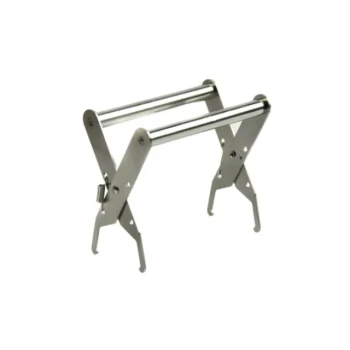
- Heavy-Duty Stainless Steel Clip-On Frame Perch
- HONESTBEE Wired and Assembled Wooden Bee Frames Foundation for a Thriving Hive
- Professional Galvanized Steel Frame Rest for Beehives
- Plastic Bee Frame Beekeeping Hive Frames for Wholesale
People Also Ask
- When should frames with new foundation be given to colonies? Master Timing for a Thriving Hive
- What are bee frames and how are they sized? A Professional Guide to Standardization & Material Choice
- Do you have to wire bee frames? Essential Guide to Frame Strength & Honey Harvesting
- How do you re-wax bee frames? A Simple Guide to Faster Comb Building
- Can beekeepers switch between wooden and plastic frames? Optimize Your Hive's Performance