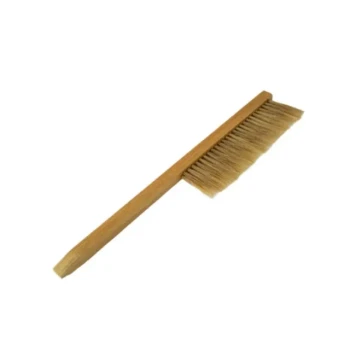
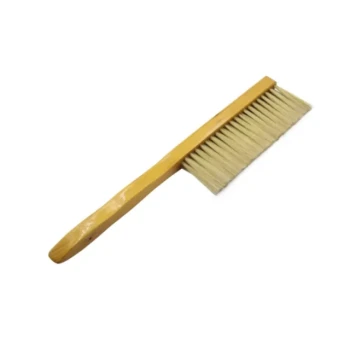
The primary technical advantage of using a soft bristle brush for handling recovered Varroa mites is the significant reduction of mechanical impact on the specimen. By providing a gentle contact force, this tool prevents physical crushing and cuticle damage, thereby preserving the mite's biological vitality for accurate downstream testing.
The integrity of your experimental data is directly linked to the physical condition of your specimens. A soft bristle brush serves as a non-destructive transfer mechanism, ensuring that Varroa mites retain the physiological functions necessary for reliable reproductive or toxicological studies.
Preserving Biological Integrity
Minimizing Mechanical Trauma
The exoskeleton and internal physiology of a Varroa destructor mite are surprisingly fragile. Harder tools, such as forceps or stiff brushes, can easily exert excessive pressure.
Using a soft bristle brush mitigates this risk by applying gentle contact force. This prevents the physical crushing or squashing of the mite, which is the most common cause of immediate mortality during handling.
Protecting Fragile Cuticles
Beyond internal damage, the mite's exterior cuticle is susceptible to abrasion.
Supplementary data indicates that adult female mites possess particularly fragile cuticles. A soft brush allows for manipulation without scratching or piercing this protective layer, which is critical for maintaining the mite's natural barrier against environmental stressors.
Ensuring Reproductive Viability
For research focused on biology or breeding, the mite must not only be alive but physiologically fully functional.
Rough handling can damage internal organs required for reproduction. By utilizing a soft brush, you ensure the mite remains fit for subsequent reproductive experiments, preventing false negatives in your data caused by handling-induced sterilization or weakness.
Precision Handling and Cleaning
Accurate Specimen Transfer
Research protocols often require moving mites between precise locations, such as from collection plates to scintillation vials or between host cells.
The soft bristles allow for fine motor control, enabling the researcher to lift and deposit the mite exactly where needed without the fumbling or dropping associated with rigid tools.
Safe Removal of Contaminants
In many experimental setups, mites may be covered in residual powders (such as sugar shake residues or treatment powders).
The primary reference notes that a soft brush, often combined with moisture, is the ideal tool for removing residual powder. The bristles can sweep away fine particles from the mite's body without applying the pressure that would grind the powder into the mite's spiracles or joints.
Understanding the Trade-offs
The Factor of Operator Consistency
While a soft bristle brush reduces the risk of crushing, it does not eliminate the variable of human error.
The tool relies entirely on the manual dexterity of the researcher. An unsteady hand can still apply too much pressure, even with soft bristles. Consequently, the "safety" of the tool is only as reliable as the training of the operator using it.
Moisture Management
When using a brush with moisture to clean mites, there is a risk of introducing an experimental variable.
Excessive moisture can alter the mite's local humidity environment or cause it to adhere to the vial walls. You must balance the need for cleaning with the necessity of keeping the specimen in a neutral physiological state.
Optimizing Your Handling Protocol
To get the most out of this tool, tailor your technique to your specific experimental end-point:
- If your primary focus is Reproductive Experiments: Prioritize the softest available bristles to prevent internal trauma that could skew fertility data.
- If your primary focus is Chemical Analysis (e.g., Scintillation): Use the brush to meticulously remove surface powders to prevent sample contamination.
- If your primary focus is High-Throughput Collection: Focus on the speed of transfer, using the brush to sweep mites quickly without individually lifting them to save time while maintaining basic viability.
The soft bristle brush is not just a cleaning tool; it is a critical instrument for standardized, non-destructive bio-assay preparation.
Summary Table:
| Technical Advantage | Benefit to Research | Impact on Specimen |
|---|---|---|
| Low Impact Force | Prevents physical crushing | Preserves biological vitality |
| Cuticle Protection | Avoids abrasions and piercings | Maintains natural barriers |
| Precision Control | Accurate specimen transfer | Minimizes handling errors |
| Contaminant Removal | Cleans without grinding particles | Ensures chemical purity |
Elevate Your Apiary Research and Operations with HONESTBEE
Maintaining the health of your colonies starts with the right tools. At HONESTBEE, we understand the precision required by commercial apiaries and distributors. Whether you are conducting scientific mite research or managing large-scale honey production, we provide a comprehensive range of professional-grade beekeeping tools, hive-making machinery, and honey-filling equipment.
Why choose HONESTBEE?
- Comprehensive Wholesale Range: From essential consumables to specialized hardware.
- Industrial Efficiency: High-performance machinery designed for large-scale commercial success.
- Industry Expertise: We cater to the unique needs of global distributors and large apiaries.
Ready to scale your beekeeping business with reliable equipment? Contact us today to explore our wholesale catalog and see how we can optimize your production line.
References
- P. A. Macedo, M D Ellis. Using inert dusts to detect and assess varroa infestations in honey bee colonies. DOI: 10.1080/00218839.2002.11101062
This article is also based on technical information from HonestBee Knowledge Base .
Related Products
- Durable 12V Oxalic Acid Vaporizer for Varroa Mite Treatment Beehive Beekeeping Tool
- Varroa Easy Check Mite Tester Kit Counter Alcohol Wash Jar
- Classic Wooden Bee Brush with Double-Row Boar Bristles
- Oxalic Acid Vaporizer 12V for Bee Varroa Mite Treatment
- Compact Circular Bee Mite Treatment Dispenser
People Also Ask
- What are the technical advantages of using professional Sublimators? Maximize Mite Control with Precision Vaporizers
- What is the minimum temperature for oxalic acid vaporization? Optimize Winter Mite Control at 37°F
- What is the recommended procedure for inserting and activating a vaporizer in a beehive? Master Hive Treatment Success
- What factors determine how often to treat for varroa mites with oxalic acid? Time Your Treatment for Maximum Efficacy
- What is the overall goal of using oxalic acid in late fall for beekeepers? Maximize Winter Survival with a Broodless Treatment