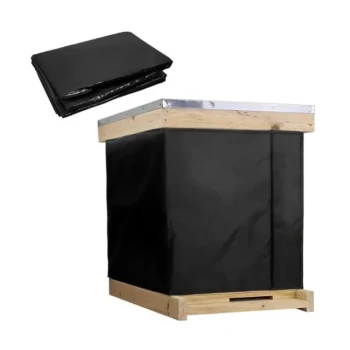
Improved beehives fundamentally transform beekeeping from a passive extraction activity into a controlled, technical production system. By utilizing standardized structural designs, these hives provide a regulated environment that facilitates active colony management, precise disease monitoring, and non-destructive harvesting, directly resulting in significantly higher honey yields and superior product quality.
The Core Insight While traditional hives rely on natural, often unstable conditions, improved beehives introduce standardized environmental control. This shift allows for the reuse of honeycomb structures and the maintenance of larger colonies, enabling producers to secure high-volume, high-quality sales channels that were previously inaccessible.
The Mechanics of Increased Yield
Eliminating the "Rebuild" Cycle
The most critical technical advantage of modern, improved hives is the use of removable frame designs. In traditional beekeeping, harvesting often destroys the honeycomb, forcing bees to consume vast amounts of energy and resources to rebuild the wax structure.
With improved frames, the comb remains intact during extraction. This allows bees to immediately focus their energy on nectar collection rather than reconstruction, significantly shortening the production cycle.
Quantifiable Production Gains
The impact of this structural efficiency is supported by concrete technical data. While traditional hives may average approximately 9.6 kg per hive, improved beehive systems can increase yields to 34.7 kg per hive. This substantial increase is driven by optimized internal space management which supports larger, more productive colonies.
Mobility and Resource Access
Unlike traditional log hives which are often fixed in trees, improved hives are designed for mobile beekeeping. This portability allows apiarists to transport colonies to areas with high nectar density based on seasonal blooming patterns. This capability ensures that collection efficiency remains high throughout the year, rather than being limited to the flora in a single location.
Environmental Control and Quality Assurance
Stabilizing the Micro-Environment
Improved beehives utilize scientific structural designs to maintain a stable temperature and humidity micro-environment. This stability reduces the physiological stress on the colony. When bees spend less energy regulating their hive's internal climate, they allocate more energy to brood rearing and honey production.
Isolation from Impurities
For producers targeting premium markets, improved hives offer superior isolation capabilities. The design effectively separates the honey storage areas from external contaminants and hive debris. This isolation is essential for producing organic honey that meets strict national and international quality standards.
Enhanced Disease Management
Traditional hives suspended in high-altitude forests make frequent inspection nearly impossible. Improved hives are designed for accessibility, allowing for daily management and disease monitoring. Early detection of pests and health issues allows for intervention before a colony is lost, significantly reducing operational losses compared to primitive methods.
Understanding the Operational Trade-offs
The Shift from Passive to Active
While the yield benefits are clear, improved beehives require a fundamental shift in operation. Traditional methods are often "set and forget," whereas improved hives demand active, regular management. Beekeepers must possess the technical skill to inspect frames, monitor health, and manage swarm control to realize the theoretical yield gains.
Investment in Infrastructure
Moving to improved hives transforms beekeeping from a low-input activity to an asset-heavy operation. The standardization provides efficiency, but it requires an initial investment in uniform equipment and maintenance tools. The advantage is only realized if the beekeeper utilizes the equipment to maintain a continuous, commercial-grade workflow.
Making the Right Choice for Your Goal
To maximize the benefits of improved beehives, align your specific technical implementation with your production targets:
- If your primary focus is Maximum Commercial Yield: Prioritize standardized box hives with removable frames to minimize comb repair time and enable the mobility required to chase seasonal nectar flows.
- If your primary focus is Product Purity and Certification: Leverage the structural isolation features of modern hives to ensure impurity-free extraction suitable for organic or high-end retail markets.
- If your primary focus is Colony Sustainability: Utilize top-bar systems or flexible frame management to inspect colony health non-destructively, reducing stress and overwintering losses.
The technical superiority of improved beehives lies not just in their construction, but in their ability to turn beekeeping into a predictable, scalable science.
Summary Table:
| Technical Feature | Traditional Beehives | Improved Beehives | Primary Benefit |
|---|---|---|---|
| Comb Structure | Fixed (Destroyed at harvest) | Removable Frames | Eliminates rebuild cycle; saves bee energy |
| Honey Yield | ~9.6 kg per hive | ~34.7 kg per hive | 260%+ increase in production volume |
| Mobility | Static / Fixed location | Fully Portable | Enables access to seasonal nectar flows |
| Environment | Natural / Unstable | Controlled Micro-climate | Reduces colony stress and improves health |
| Quality Control | High risk of impurities | High (Structural isolation) | Produces premium, market-ready honey |
Scale Your Apiary with HONESTBEE’s Professional Solutions
As a global leader in beekeeping excellence, HONESTBEE empowers commercial apiaries and distributors with the high-performance tools needed to dominate the market. Whether you are scaling up production or supplying the industry, our comprehensive wholesale portfolio delivers unmatched value:
- Precision Machinery: Industrial-grade hive-making and honey-filling machines.
- Full-Spectrum Equipment: From standardized hives to essential beekeeping hardware.
- Industry Consumables: A complete array of supplies for seamless daily operations.
- Cultural Merchandise: Unique honey-themed products to diversify your retail offering.
Ready to transform your honey production with professional-grade efficiency? Contact HONESTBEE today to discuss our wholesale opportunities and specialized equipment solutions.
References
- Kassa Tarekegn, Bosena Tegegne. Determinants of honey producer market outlet choice in Chena District, southern Ethiopia: a multivariate probit regression analysis. DOI: 10.1186/s40100-017-0090-0
This article is also based on technical information from HonestBee Knowledge Base .
Related Products
- Professional Insulated Plastic Bee Hives
- Wholesales Dadant Size Wooden Bee Hives for Beekeeping
- Inner Beehive Cover for Beekeeping Bee Hive Inner Cover
- Plastic Bee Hive Stand for Beekeeping
- Metal Hive Feet Bee Hive Stand for Ant Protection
People Also Ask
- What are the advantages of plastic bee hives? Boost Efficiency & Durability for Your Apiary
- Are plastic bee hives any good? Unlock Durability & Efficiency for Your Apiary
- How do plastic bee hives compare to wooden hives in handling? Reduce Strain & Boost Efficiency
- Are plastic bee hives good? Durable, Low-Maintenance Hives for Modern Apiaries
- What are the disadvantages of plastic beehives? Key Operational and Environmental Risks Exposed