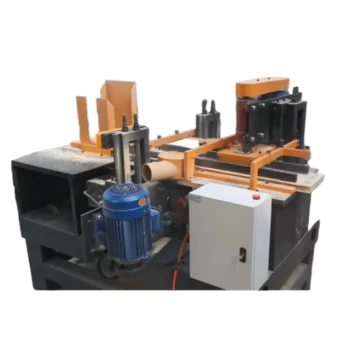
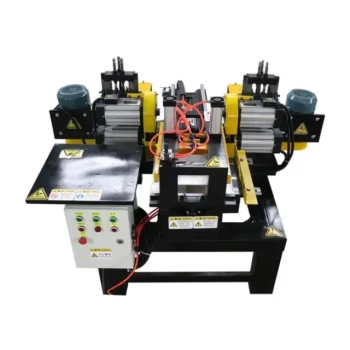
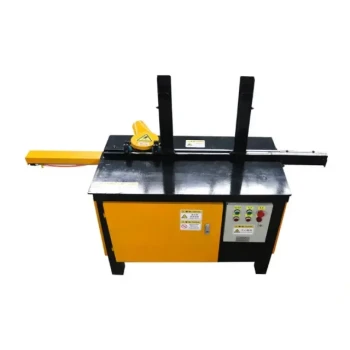
The primary technical advantages of using industrial-grade forming equipment are superior processing consistency and enhanced structural strength. Unlike manual fabrication, which is subject to human variability, industrial forming ensures that critical peripherals—such as queen excluders, pollen traps, and queen rearing equipment—maintain strict manufacturing stability. This results in hardware that is sufficiently durable to withstand complex outdoor environments without degrading.
Core Takeaway: Industrial forming shifts beekeeping hardware from variable, artisanal production to high-precision engineering. This creates durable, standardized components that support scientific breeding and efficient colony management by eliminating physical defects common in manual manufacturing.
Structural Integrity and Durability
Consistent Material Processing
Manual methods often lead to microscopic inconsistencies in material density or joint strength. Industrial-grade forming applies uniform pressure and precision, creating components with superior structural integrity. This is vital for maintaining the physical conditions necessary for efficient product collection over many seasons.
Resilience in Outdoor Environments
Beekeeping peripherals face harsh weather, humidity, and UV exposure. Equipment manufactured with industrial stability is far less likely to warp, crack, or fail in the field. This durability ensures that the equipment continues to function correctly, protecting the colony and the investment in hardware.
Biological Precision and Standardization
Supporting Scientific Breeding
Queen rearing and scientific breeding require exact physical parameters. Industrial forming guarantees that every unit meets specific biological dimensions. This precision provides a predictable environment for the bees, which is essential for successful, replicable breeding outcomes.
Interchangeability of Components
One of the most significant advantages of industrial manufacturing is standardization. Components produced this way are fully interchangeable. In a large-scale apiary, the ability to swap parts without fitting or modification significantly enhances management efficiency.
Optimized Colony Environments
Precise fabrication allows for the implementation of specific biological designs, such as thermodynamic structures or optimized entrance dimensions. Standardized hardware helps colonies regulate internal temperatures and defend against pests like Varroa mites, potentially improving winter survival rates.
Operational Efficiency
Reducing Labor Reliance
Manual manufacturing is labor-intensive and creates a bottleneck for growth. Industrial machines, including automated lines, replace this manual effort with automation. This technological shift reduces the per-unit labor cost of equipment production.
Enabling Commercial Scale
By lowering production costs and ensuring high-volume output, industrial equipment facilitates the transition to large-scale operations. It allows a single beekeeper or manager to oversee a significantly larger number of colonies effectively.
Understanding the Trade-offs
High Upfront Investment
The shift to industrial forming requires significant capital expenditure compared to low-cost manual tools. You are trading low initial costs for long-term efficiency. This approach is most viable when the volume of production justifies the expense of the machinery.
Loss of Flexibility
Industrial forming relies on molds and set specifications. Unlike manual methods, which allow for on-the-fly adjustments or bespoke customizations, industrial equipment is rigid. Changing a design often requires expensive re-tooling, making it less suitable for rapid prototyping or highly experimental, non-standard hive designs.
Making the Right Choice for Your Goal
To decide if industrial-grade forming is the right trajectory for your operation, consider your primary objectives:
- If your primary focus is scientific queen breeding: Prioritize industrial forming to ensure the strict physical consistency and dimensional accuracy required for controlled biological experiments.
- If your primary focus is large-scale commercial honey production: Prioritize industrial equipment to leverage component interchangeability and durability, which minimizes maintenance downtime and labor costs.
Ultimately, moving to industrial forming represents a commitment to precision and longevity over flexibility and low initial cost.
Summary Table:
| Feature | Industrial-Grade Forming | Manual Fabrication |
|---|---|---|
| Consistency | High-precision engineering; uniform output | High variability; human error risks |
| Durability | Superior structural integrity; weather-resistant | Prone to warping, cracking, or joint failure |
| Standardization | Fully interchangeable components | Non-standardized; requires manual fitting |
| Efficiency | Automated high-volume production | Labor-intensive; difficult to scale |
| Best Use Case | Commercial apiaries & scientific breeding | Small-scale hobbyists & custom prototypes |
Elevate Your Commercial Apiary with HONESTBEE
At HONESTBEE, we empower commercial apiaries and distributors with high-performance beekeeping technology. From high-precision hive-making and honey-filling machines to durable hardware like queen excluders and pollen traps, we provide the full spectrum of equipment needed for industrial-scale success.
Why partner with us?
- Comprehensive Wholesale Offering: A one-stop shop for tools, machinery, and consumables.
- Precision Engineering: Standardized components that ensure biological accuracy and durability.
- Scalability: Move beyond manual bottlenecks with our professional-grade manufacturing solutions.
Ready to optimize your production and increase operational efficiency? Contact us today to explore our wholesale catalog!
References
- AL- Kafage AL – Bedrey. EXTENSION AGRICULTURAL INNOVATION FOR BEE KEEPERS TO DEVELOP AND INCREASE PRODUCTIVITY IN THE CENTRAL REGION OF IRAQ. DOI: 10.36103/ijas.v47i5.497
This article is also based on technical information from HonestBee Knowledge Base .
Related Products
- Electric Flatting and Embossing Machine with Tray for Beekeeping
- Stainless Steel Queen Grafting Tool for Beekeeping and Bee Queen Grafting
- Durable Galvanized Steel Frame Grip
- HONESTBEE Bee Frame Side Bar Forming Machine Precision Engineered for High-Volume Production Bee Frame Machine
- Ergonomic Plastic Frame Spacer Tool for Rapid Hive Management Beekeeping
People Also Ask
- What are the advantages of implementing a pulley and belt drive system in beeswax foundation machinery? Master Quality.
- What are the primary technical challenges faced by beeswax foundation production machinery? Tackling Lipophilic Residues
- How does the beeswax flatting and embossing machine prepare the wax for processing? Achieve Perfectly Uniform Wax Sheets
- What is the purpose of the beeswax flatting and embossing machine? Boost Hive Efficiency & Honey Production
- What are the sequential stages of operation for a beeswax flatting and embossing machine? Master High-Quality Wax Sheets