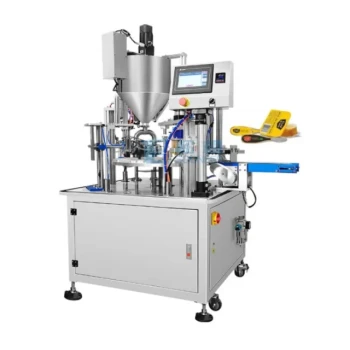
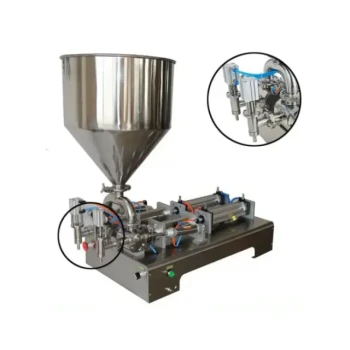
Industrial-grade honey-filling machines provide superior control over volume, hygiene, and chemical stability compared to manual methods. By utilizing high-precision flow control systems, these machines achieve exact quantitative filling, which drastically reduces product loss and ensures compliance with legal metrology standards. Furthermore, the sealed filling nature of industrial equipment isolates the honey from external contaminants, safeguarding the product's biological integrity.
Core Insight: The transition to industrial filling is not just about speed; it is about standardization and preservation. Automated systems maintain the chemical balance of honey—specifically regarding moisture content and HMF levels—ensuring the final product retains its market value and shelf life far longer than manually bottled alternatives.
Achieving Precision and Reducing Waste
High-Precision Flow Control
Industrial machines utilize advanced flow control systems to ensure quantitative filling. Unlike manual pouring, which relies on visual estimation, these systems deliver a precise volume or mass for every container, ensuring consistency across large production batches.
Minimizing Material Loss
Manual filling often leads to spillage, overfilling, or drips. Automated systems frequently integrate anti-drip mechanisms and precise shut-off valves, which significantly reduces raw material waste and keeps the packaging line clean.
Meeting Legal Metrology Standards
For commercial distribution, bottles must meet strict net content regulations. High-precision weighing sensors or piston systems ensure the deviation of each bottle remains within a minimal, legally compliant range, protecting your brand from regulatory disputes.
Enhancing Hygiene and Shelf Life
The Sealed Filling Process
The primary reference highlights that industrial machines operate within a sealed filling process. This isolation prevents contamination from external impurities and microorganisms, which is a common risk during open-air manual bottling.
Eliminating Secondary Contamination
Manual handling introduces the risk of "secondary contamination" from human contact or non-sterile tools. Automated machinery dispenses honey in a closed environment, effectively isolating the product to meet international food safety and hygiene standards.
Controlling Moisture and Oxidation
When paired with reliable sealing machinery, automated fillers maintain an airtight environment. This slows down oxidation and moisture absorption—two factors that can spoil honey or cause fermentation—thereby extending the product's stable shelf life.
Preserving Chemical and Physical Integrity
Managing Temperature and HMF Levels
Overheating honey destroys beneficial enzymes and raises Hydroxymethylfurfural (HMF) levels, a marker of poor quality. Advanced industrial fillers use precision temperature control and specialized valve designs to prevent overheating during the pumping process, preserving the honey's nutritional profile.
Ensuring Botanical Consistency
Honey containing pollen requires careful handling to ensure the grains are not filtered out or settled unevenly. Industrial equipment ensures that botanical characteristics, such as pollen grains, remain uniformly distributed within the bottle, maintaining the product's natural consistency.
Understanding the Operational Trade-offs
Maintenance and Cleaning Complexity
While manual bottling requires simple tools, industrial machines utilize complex valves, pistons, and sensors. These components require strict cleaning protocols to prevent cross-contamination between batches, particularly if switching between different floral varieties.
Setup Time for Variable Packaging
Industrial machines excel at repetition but require setup time to switch formats. If your operation uses many different bottle shapes or sizes frequently, the changeover time for calibrating the flow control and sealing mechanisms can impact overall efficiency.
Making the Right Choice for Your Production
To determine if industrial automation is the right step for your operation, consider your primary objectives:
- If your primary focus is Regulatory Compliance: Automated weighing systems are essential to ensure net content accuracy and meet legal metrology requirements for retail distribution.
- If your primary focus is Product Quality: The enclosed, temperature-controlled environment is critical for preventing HMF spikes and oxidation, ensuring your honey remains premium-grade.
- If your primary focus is Efficiency: The high-precision flow control minimizes product loss and cleanup time, maximizing the yield from every harvest.
Investing in industrial filling technology transforms honey packaging from a labor-intensive task into a standardized, scientifically controlled process that guarantees product safety.
Summary Table:
| Feature | Manual Bottling | Industrial Filling Machines |
|---|---|---|
| Filling Accuracy | Visual estimation (High variance) | High-precision flow control (±1% or less) |
| Hygiene Level | Risk of open-air contamination | Sealed process, isolates external impurities |
| Waste Reduction | Common spills and overfills | Anti-drip mechanisms & precise shut-off |
| Shelf Life | Vulnerable to oxidation/moisture | Vacuum/Sealed filling extends stability |
| HMF Control | Difficult to monitor temperature | Integrated temperature & flow regulation |
| Compliance | Hard to meet strict metrology laws | Automated weighing for legal standards |
Scale Your Honey Production with HONESTBEE
Transitioning from manual bottling to industrial automation is the key to protecting your honey's biological integrity and maximizing your profits. At HONESTBEE, we specialize in empowering commercial apiaries and distributors with professional-grade machinery designed for precision and durability.
Our comprehensive wholesale portfolio includes:
- Advanced Honey-Filling & Capping Machines for consistent, high-speed output.
- Specialized Hive-Making Machinery to expand your apiary infrastructure.
- Full-Spectrum Beekeeping Tools & Consumables for every stage of production.
- Honey-Themed Cultural Merchandise to enhance your brand's market appeal.
Whether you are scaling up your distribution or looking to minimize material loss, our experts are ready to provide the hardware and support you need. Contact HONESTBEE today to discuss your equipment requirements and take your honey production to the next level!
References
- William Shu Neba, Tangwe Tanga Pius. Mirroring the Ecological Impact of Apiculture as an Indigenous Activity in Mayo Darle, Cameroon. DOI: 10.55227/ijhess.v4i6.1481
This article is also based on technical information from HonestBee Knowledge Base .
Related Products
- Precision Durable Efficient HONESTBEE Rotary Honey Filling Machine
- Commercial Rotary Honey Filling Machine for Production
- Fully Automatic Honey Filling Packaging Machine for Processing Line
- Precision Automated Packaging Turntable Honey Spoon Filling Sealing Packing Machine
- Automatic Honey Filling and Filtering Machine for Beekeeping Bottle Filling
People Also Ask
- How do honey filling machines work? Achieve Precision & Speed for Your Apiary
- How do honey filling and processing machines aid native bee product conservation? Boost Value with HONESTBEE Technology
- How do high-precision honey filling machines ensure quality? Optimize Your Commercial Production with HONESTBEE
- What are the common types of bottling machines used for honey? Choosing the Right Solution for Your Apiary
- What is a key feature of the new generation of the honey filling machine? The Advanced Electronic Control Unit