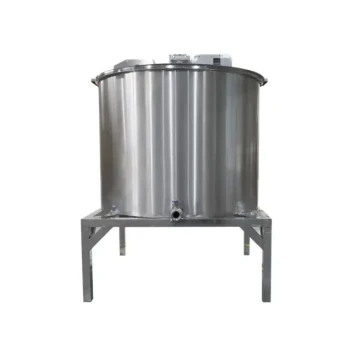
Modern honey processing technology is the primary driver of export readiness. By replacing manual extraction and filling with mechanical, closed-loop systems, producers can achieve the rigorous hygiene and consistency standards required by international markets. This technological shift is essential for overcoming technical trade barriers and competing with established global brands.
The Core Insight Export competitiveness is less about the quantity of honey produced and more about verifiable consistency. Modern automation transforms honey from a variable agricultural commodity into a standardized consumer product, satisfying the strict sanitary and labeling regulations that define high-value international trade.
Elevating Hygiene to International Standards
Moving Beyond Manual Methods
Traditional manual pressing introduces significant risks of contamination and impurity. Modern extraction machines utilize centrifugal force to separate honey from the comb.
The Closed-Loop Advantage
Automated systems create a closed-loop process that drastically reduces human contact with the product. This protects the honey from microbial contamination during the critical transition from extraction to packaging.
Ensuring Visual Purity
Mechanical separation maintains the structural integrity of the wax, resulting in fewer impurities in the final liquid. This ensures the high levels of transparency and clarity that international buyers associate with premium quality.
Precision and Standardization in Packaging
Exacting Weight Control
Export markets have zero tolerance for labeling discrepancies. Automated filling machines use high-precision piston or weighing-based systems to ensure the net content of every jar matches the label specifications strictly.
Reducing Raw Material Waste
Manual filling often leads to overfilling or spillage, which erodes margins. Automated metering eliminates these deviations, maximizing the yield from every harvest.
Professional Presentation
First impressions drive retail sales. Modern equipment features no-drip nozzles and automatic capping, ensuring bottle necks remain clean and seals are airtight. This eliminates sticky residue and projects a professional, hygienic brand image.
Securing Market Access and Longevity
Overcoming Technical Barriers
International trade is governed by strict technical barriers regarding food safety. Implementing advanced filtration and filling technology provides the physical infrastructure necessary to meet these regulatory requirements.
Extending Shelf Life
Vacuum sealing and airtight capping prevent oxidation and secondary contamination. By stabilizing the product environment, producers can offer the extended shelf life required for long-distance logistics and retail warehousing.
Meeting Retail Contract Requirements
Large-scale supermarkets and exhibitions require volume consistency that manual labor cannot sustain. Automation enables standardized, quantitative packaging, allowing producers to fulfill large commercial contracts reliably.
Understanding the Trade-offs
The Cost of Consistency
While automation ensures compliance, it requires a significant upfront capital investment. Producers must weigh the cost of machinery against their projected export volumes to ensure a return on investment.
Operational Complexity
Transitioning to automated lines shifts the labor requirement from manual handling to technical maintenance. Operators must be trained to clean, calibrate, and troubleshoot sophisticated pneumatic and electronic components to prevent downtime.
Making the Right Choice for Your Goal
To leverage technology for export success, align your equipment choice with your specific market strategy:
- If your primary focus is entering strict regulatory markets (EU/US): Prioritize closed-loop extraction and vacuum sealing systems to satisfy rigorous hygiene and anti-contamination protocols.
- If your primary focus is retail shelf presence: Invest in high-precision filling and capping machines to ensure professional aesthetics and strict weight compliance.
Ultimately, modern equipment is not just a production tool; it is the certification of quality that allows local honey to traverse global borders.
Summary Table:
| Key Feature | Benefit for Export Competitiveness | Impact on Product Quality |
|---|---|---|
| Centrifugal Extraction | High-volume purity and clarity | Minimizes impurities and wax debris |
| Closed-Loop Systems | Meets international hygiene standards (EU/US) | Eliminates microbial contamination risks |
| Precision Filling | Strict weight compliance for labeling | Reduces waste and prevents overfilling |
| Automatic Capping | Extended shelf life for global logistics | Ensures airtight, leak-proof packaging |
| No-Drip Nozzles | Professional retail presentation | Maintains clean, marketable bottle aesthetics |
Scale Your Honey Business for the Global Market with HONESTBEE
Transitioning from manual production to a high-efficiency automated facility is the key to securing international contracts and maximizing your profit margins. HONESTBEE specializes in empowering commercial apiaries and honey distributors with the professional-grade tools needed to compete globally.
Our Value to You:
- Comprehensive Wholesale Range: From industrial honey-filling and hive-making machines to specialized beekeeping hardware and consumables.
- Export-Ready Standards: Our machinery is designed to meet the rigorous hygiene and standardization requirements of international trade.
- Total Equipment Support: We provide the full spectrum of tools for both primary production and honey-themed cultural merchandise.
Ready to transform your production line and enhance your brand’s international reputation? Contact us today to discuss your wholesale requirements!
References
- Wakshuma Gelalcha Gebewo, Mahendra Pal. Current Status of Beekeeping in Ethiopia and Its Future Prospects. DOI: 10.26855/ijfsa.2023.06.007
This article is also based on technical information from HonestBee Knowledge Base .
Related Products
- Fully Automatic Honey Filling Packaging Machine for Processing Line
- Automatic Honey Filling and Filtering Machine for Beekeeping Bottle Filling
- Precision Durable Efficient HONESTBEE Rotary Honey Filling Machine
- Semi Automatic Small Honey Bottle Filling Machine Honey Filler
- Manual Honey Filling Machine Bottling Machine for Honey
People Also Ask
- Why are fully automatic honey filling and packaging lines essential? Boost Your Honey's Market Value and Quality
- What is a fully-automatic honey filler? Streamline Your Production with High-Precision Automation
- How do automated honey filling and packaging machines affect profitability? Boost Margins with HONESTBEE Technology
- How do automated honey filling and packaging machines contribute to the market value of honey products? Maximize Your ROI
- How do industrial-grade automated honey filling and packaging machines mitigate the risk of physical contamination?