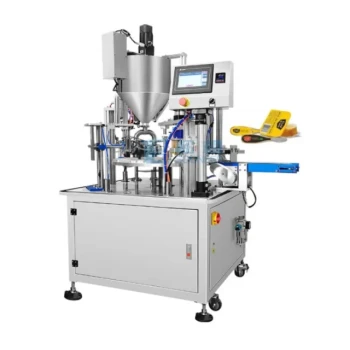
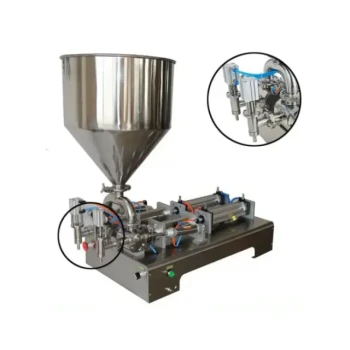
Automatic honey filling machines are critical for commercial viability because they simultaneously solve the problems of product loss and environmental contamination. By strictly controlling the weight or volume of every container, these systems eliminate overflow waste while operating in a closed environment that shields the honey from moisture absorption and microbial threats.
Commercial honey production relies on automation to bridge the gap between agricultural raw material and retail-ready commodities. These machines provide the necessary technical foundation to ensure hygiene, standardize packaging, and meet the rigorous logistics requirements of modern supply chains.
Ensuring Product Integrity and Hygiene
The Closed-Loop Advantage
The primary technical benefit of an automatic filler is its closed environment operation. Unlike manual filling, which exposes the product to the open atmosphere, these machines minimize the contact surface between the honey and surrounding air.
Combating Moisture and Microbes
Honey is hygroscopic, meaning it naturally absorbs moisture from the air. Automated filling prevents this moisture uptake, which is critical for maintaining product stability and preventing fermentation. Furthermore, the closed system significantly reduces the risk of microbial contamination that often occurs during open-air processing.
Eliminating Secondary Contamination
Manual operations invariably introduce the risk of "secondary contamination" through human contact or unsterilized tools. Automation removes the human element from the filling stage. This ensures the product remains sterile and meets the high hygiene standards required for international export and high-end retail markets.
Maximizing Operational Efficiency
Precision and Waste Reduction
One of the most immediate impacts of automation is the precise control of weight or volume. Manual filling often leads to overfilling (product loss) or underfilling (regulatory non-compliance). Automatic machines ensure consistency across every unit, virtually eliminating overflow loss.
Speed and Labor Optimization
Transferring honey from large storage tanks to retail packaging is a bottleneck in manual operations. Automated workflows drastically reduce this transfer time. This high-efficiency processing lowers labor costs and allows producers to scale operations to meet supermarket demand without a linear increase in staffing.
Meeting Commercial Market Standards
Standardization and Brand Image
Retail chains and logistics providers demand uniformity. Automated lines ensure that every bottle looks identical in fill level and cleanliness, improving packaging aesthetics. This standardization is a core requirement for building a trusted brand image and securing shelf space in commercial distribution networks.
Handling Viscosity Variations
Commercial producers often handle different honey types, from fluid acacia to thicker multi-flower blends. Industrial-grade machines are engineered to process these varying viscosities consistently. This capability allows for large-scale production diversity without sacrificing the net weight accuracy of the final product.
Understanding the Operational Trade-offs
Capital Intensity vs. Long-Term Savings
While automation reduces labor costs and waste, it requires a significant upfront capital investment. Producers must weigh the initial cost of the machinery against the long-term savings in product yield and manpower to determine the return on investment.
Maintenance and Calibration
Automation introduces a requirement for technical maintenance. To maintain the high-precision quantitative packaging promised by these machines, operators must adhere to strict cleaning protocols and regular calibration schedules. Neglecting this can lead to the very inconsistencies the machine was bought to prevent.
Making the Right Choice for Your Goal
To select the appropriate level of automation, you must evaluate your specific commercial targets:
- If your primary focus is Market Expansion: Prioritize machines that offer high-speed throughput to meet the volume demands of supermarkets and logistics chains.
- If your primary focus is Brand Protection: Focus on equipment with advanced closed-loop designs to guarantee hygiene and prevent the secondary contamination that destroys consumer trust.
- If your primary focus is Cost Control: Select machines with the highest rated filling precision to minimize overflow waste and maximize the yield from your bulk storage.
Ultimately, the transition to automatic filling is not just about speed; it is the technical prerequisite for transforming a local agricultural product into a standardized, safe, and globally exportable commodity.
Summary Table:
| Key Benefit | Description | Business Impact |
|---|---|---|
| Hygiene Control | Closed-loop systems prevent moisture absorption and microbial contamination. | Ensures product stability and international export compliance. |
| Precision Filling | Advanced weight/volume sensors eliminate overflow and underfilling. | Maximizes product yield and ensures regulatory compliance. |
| Operational Speed | High-throughput automation removes the bottleneck of manual labor. | Scalable production to meet supermarket and wholesale demand. |
| Standardization | Consistent fill levels and clean packaging across all units. | Builds brand trust and professional retail shelf presence. |
| Versatility | Engineered to handle various honey viscosities (e.g., Acacia vs. Multi-flower). | Allows for diversified product lines without accuracy loss. |
Elevate Your Commercial Apiary with HONESTBEE Machinery
At HONESTBEE, we specialize in empowering commercial apiaries and distributors with the industrial tools needed to scale. Whether you are looking to eliminate product waste with high-precision honey-filling machines or seeking a comprehensive supply of specialized beekeeping hardware and consumables, we provide the technical foundation for your success.
Why partner with HONESTBEE?
- Comprehensive Wholesale Offering: From hive-making machinery to essential industry consumables.
- Commercial Grade Reliability: Our equipment is designed to meet the rigorous hygiene and standardization needs of modern supply chains.
- Expert Support: We help you transition from agricultural raw materials to retail-ready commodities efficiently.
Ready to optimize your production and protect your brand? Contact our experts today to find the perfect solution for your honey business.
References
- Alessandra Durazzo, Giuseppe Pignatti. Bee Products: A Representation of Biodiversity, Sustainability, and Health. DOI: 10.3390/life11090970
This article is also based on technical information from HonestBee Knowledge Base .
Related Products
- Automatic Honey Filling and Filtering Machine for Beekeeping Bottle Filling
- Fully Automatic Honey Filling Packaging Machine for Processing Line
- Semi Automatic Small Honey Bottle Filling Machine Honey Filler
- Automatic Single-Dose Snap & Squeeze Honey Sachets Packing Machine
- Precision Durable Efficient HONESTBEE Rotary Honey Filling Machine
People Also Ask
- What process advantages do professional honey filtering and filling machines provide? Optimize Your Organic Honey Output
- How do honey filling and filtering machines increase product value? Turn Raw Honey into Premium Export-Grade Goods
- How do honey filtration and filling machinery contribute to industrialization? Scale Your Commercial Honey Production
- What specific issues do industrial filtration and automated filling machinery address? Ensure Honey Quality & Compliance
- How does the use of professional honey filtration and filling machinery facilitate international honey exports?