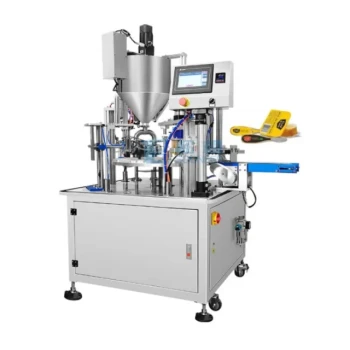
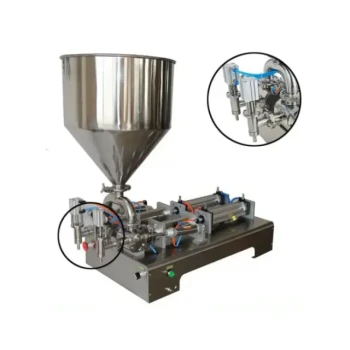
Automatic and semi-automatic honey filling machines transform professional production by delivering high-precision quantitative control and establishing superior hygiene standards that manual methods cannot match. These systems are the technological cornerstone for large-scale commercial distribution, significantly increasing packaging speed while simultaneously eliminating the risks of secondary contamination.
The adoption of automated filling technology acts as the critical hardware bridge between traditional beekeeping and modern commercialization. It guarantees product safety through enclosed sterile operations and ensures market consistency via high-precision metering.
Elevating Hygiene and Food Safety
Eliminating Secondary Contamination
Manual filling processes introduce significant risks of biological contamination through human contact or exposure to the environment. Automated machines utilize fully enclosed piping systems to transfer honey from storage tanks to final containers.
Sterile Operational Environment
By minimizing the honey's exposure to external air and human handling, these machines create a sterile processing environment. This prevents the introduction of environmental bacteria or microorganisms, ensuring the product remains safe and pure for the consumer.
Compliance with Safety Regulations
For large-scale apiaries, meeting strict food safety regulations is non-negotiable. The sanitary design of professional filling equipment provides the necessary hardware support to strictly adhere to hygiene standards required by distributors and regulatory bodies.
Precision and Market Standardization
Exact Quantitative Control
In professional retail, volume consistency is critical for brand reputation and legal compliance. Industrial filling machines use precision metering systems to guarantee that the weight of every unit matches the labeled volume.
Achieving Product Consistency
Manual filling often results in volume fluctuations that can lead to material waste or consumer complaints. Automation ensures that standardization is maintained across thousands of units, a requirement for entering high-end markets.
Minimizing Material Waste
By strictly controlling the fill volume, producers significantly reduce the "giveaway" or overfilling that often occurs during manual packaging. This efficiency directly impacts the bottom line by maximizing the number of units produced from a bulk harvest.
Preserving Honey Quality and Structure
Protecting Bio-Active Properties
Advanced filling machinery is designed to package honey without subjecting it to unnecessary secondary heating. This preservation is vital for maintaining the honey's natural antimicrobial properties, antioxidant indicators, and overall biological activity.
Maintaining Sensory Characteristics
High-quality machines integrate multi-stage filtration systems that remove impurities introduced during extraction without stripping the honey of its character. This ensures that the specific sensory profile of monofloral honeys remains intact after packaging.
Respecting Crystalline Structure
For specific honey varieties, maintaining texture is essential. Professional filling equipment can achieve high-precision results without disrupting the natural crystalline or grain structure of the honey, which is particularly important for organic or raw honey products.
Understanding the Operational Trade-offs
Investment vs. Throughput
While automation is a necessary investment for scaling, it represents a shift from low-cost manual labor to capital-intensive hardware. The "hardware investment" mentioned in the industry standards implies an upfront cost that is justified primarily by higher throughput and market access.
Maintenance of Enclosed Systems
The advantage of an enclosed piping system is hygiene; the trade-off is the requirement for rigorous cleaning protocols. To prevent cross-contamination between batches, the internal components must be maintained to the same high standards they are designed to uphold.
Making the Right Choice for Your Production
To select the appropriate level of automation, you must align the equipment capabilities with your specific business objectives.
- If your primary focus is Commercial Scaling: Prioritize machines with high-speed throughput and robust quantitative control to meet the volume demands of large distributors.
- If your primary focus is Organic Certification: Select equipment designed to minimize heat and shear force to preserve the natural crystalline structure and antioxidant activity of the honey.
- If your primary focus is Risk Mitigation: Invest in fully enclosed, automated systems to maximize the barrier against environmental and human-borne contaminants.
Automating your filling process is not just about speed; it is the decisive step toward ensuring the safety, consistency, and professional quality required to compete in the modern honey market.
Summary Table:
| Feature | Manual Filling | Semi-Automatic / Automatic Filling |
|---|---|---|
| Hygiene Standard | High risk of secondary contamination | Enclosed sterile piping systems |
| Precision Control | Variable (prone to human error) | High-precision metering (exact weight) |
| Processing Speed | Slow and labor-intensive | High throughput for commercial scaling |
| Quality Preservation | Potential heat/air exposure | Maintains bio-active & sensory profiles |
| Market Readiness | Suitable for local/small scale | Required for large distributors/retail |
Scale Your Honey Business with HONESTBEE Professional Equipment
Transitioning from traditional methods to a modern commercial production chain requires the right hardware. At HONESTBEE, we specialize in providing commercial apiaries and distributors with high-performance automatic and semi-automatic honey filling machines, precision honey-making machinery, and comprehensive wholesale beekeeping tools.
Our solutions are designed to help you:
- Guarantee Product Safety: Achieve superior hygiene standards with enclosed systems.
- Maximize Profitability: Eliminate material waste through precise quantitative control.
- Ensure Consistency: Maintain the natural crystalline structure and quality of your honey for high-end markets.
Ready to enhance your production efficiency? Contact us today to explore our full spectrum of industrial beekeeping equipment and consumables tailored to your business needs.
References
- Ameline Lehébel-Péron, Bertrand Schatz. De la ruche-tronc à la ruche à cadres : ethnoécologie historique de l’apiculture en Cévennes. DOI: 10.4000/ethnoecologie.2531
This article is also based on technical information from HonestBee Knowledge Base .
Related Products
- Precision Durable Efficient HONESTBEE Rotary Honey Filling Machine
- Semi Automatic Small Honey Bottle Filling Machine Honey Filler
- Economy Small Honey Filling Machine Honey Bottle Filler Packaging Machine
- Fully Automatic Honey Filling Packaging Machine for Processing Line
- Commercial Rotary Honey Filling Machine for Production
People Also Ask
- How do honey filling and processing machines aid native bee product conservation? Boost Value with HONESTBEE Technology
- What are the common types of bottling machines used for honey? Choosing the Right Solution for Your Apiary
- How do high-precision honey filling machines ensure quality? Optimize Your Commercial Production with HONESTBEE
- What is a key feature of the new generation of the honey filling machine? The Advanced Electronic Control Unit
- What quality control role does professional honey filling equipment perform? Ensure Consistency and Product Stability