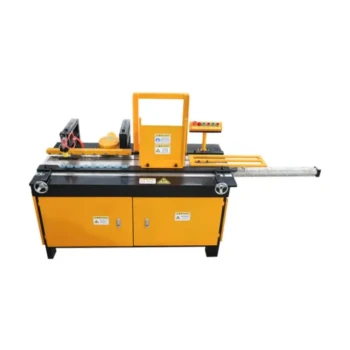
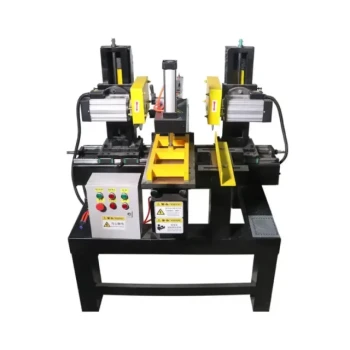
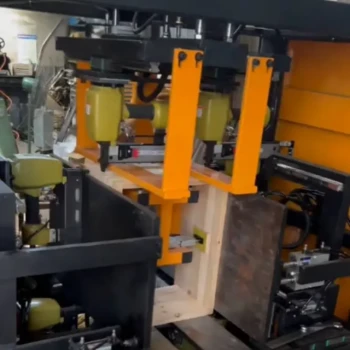
Industrial hive-making machines fundamentally transform apiary operations by automating the production of hive components with rigorous dimensional precision. These machines allow commercial apiaries to achieve full hardware standardization, ensuring that every frame, box, and stand is interchangeable across thousands of colonies while significantly reducing labor intensity.
The primary technical advantage is not just manufacturing speed, but the creation of a standardized infrastructure ecosystem. By ensuring absolute dimensional consistency, these machines unlock the ability to use automated extraction lines and mechanized transport, serving as the prerequisite for scaling commercial beekeeping operations.
The Power of Absolute Standardization
Achieving Full Component Interchangeability
The most critical advantage offered by industrial hive-making machines is the elimination of variance. In manual production, slight deviations are common, but industrial machines utilize high-precision cutting to ensure identical specifications.
This allows for the seamless exchange of combs, frames, and boxes between different colonies. It eliminates the logistical nightmare of matching specific components to specific hives, dramatically simplifying apiary management.
Enabling Automated Honey Extraction
Modern commercial apiaries rely on unified extraction equipment to process honey at scale. Industrial hive-making ensures that frames fit perfectly into uncapping machines and extractors every time.
Without this "hardware standardization," automated lines suffer from jams or inefficiencies caused by irregular frame dimensions. Therefore, machine-made hives are a technical prerequisite for high-throughput processing.
Enhancing Operational Scalability
Facilitating Rapid Colony Expansion
Timing is critical in commercial beekeeping, particularly during the spring buildup. Industrial machinery enables the mass production of hive bodies and frames at a speed impossible to match with manual labor.
This capability allows apiaries to rapidly deploy new infrastructure to catch nectar flows or split colonies. It removes hardware availability as a bottleneck for growth.
Streamlining Mechanized Logistics
Large-scale apiaries operate effectively by treating hives as industrial assets rather than individual units. Standardized dimensions allow for the use of mechanized loading and unloading systems, such as forklifts and palette loaders.
This compatibility with heavy machinery is vital for migratory beekeeping. It facilitates the industrial movement of colonies across regions for pollination services without the risk of equipment mismatch or instability during stacking.
Optimizing Asset Management
Reducing Lifecycle Maintenance Costs
Uniformity simplifies the maintenance cycle of beekeeping assets. Because parts are produced to identical standards, replacing a damaged wall or frame does not require custom fitting.
This "plug-and-play" maintenance reduces the labor costs associated with equipment repair. It also lowers the overall acquisition cost of individual units through economies of scale.
Ensuring Structural Durability
Industrial-grade machines utilize standardized assembly processes that often result in higher structural integrity compared to variable manual assembly.
Consistent joinery and precise cuts ensure the hives can withstand the rigors of transport and heavy honey loads. This durability extends the lifespan of the equipment, providing a better return on investment over time.
Understanding the Trade-offs
High Initial Capital Expenditure
While the per-unit cost drops over time, the upfront investment for industrial hive-making machinery is significant. For smaller operations, the cost of the machinery may outweigh the benefits of standardization.
Rigidity in Design Specifications
Once an industrial workflow is established, changing hive dimensions or styles becomes difficult. The system favors strict adherence to a single standard, which limits flexibility if an apiary wishes to experiment with non-standard equipment configurations.
Making the Right Choice for Your Goal
To determine if industrial hive-making technology aligns with your operational needs, consider your primary business objectives:
- If your primary focus is rapid scaling: Invest in these machines to eliminate hardware bottlenecks during critical spring expansion windows.
- If your primary focus is automation: Prioritize machine-made components to ensure zero downtime in your honey extraction and processing lines.
- If your primary focus is migratory beekeeping: rely on this technology to ensure stack stability and compatibility with forklift-based logistics.
Ultimately, industrial hive-making is less about wood processing and more about establishing a reliable hardware foundation that permits the automation of the rest of your business.
Summary Table:
| Technical Advantage | Operational Impact | Strategic Benefit |
|---|---|---|
| Dimensional Precision | Full component interchangeability | Simplifies apiary management and repairs |
| Hardware Standardization | Compatibility with automated extractors | Enables high-throughput honey processing |
| Mass Production Speed | Rapid deployment of new hives | Facilitates fast colony expansion |
| Uniform Dimensions | Seamless use of forklifts and loaders | Optimizes migratory beekeeping logistics |
| Structural Integrity | Increased durability of hive bodies | Lowers long-term maintenance costs |
Modernize Your Beekeeping Infrastructure with HONESTBEE
At HONESTBEE, we understand that for commercial apiaries and distributors, precision is the key to profitability. We provide a comprehensive wholesale range of hive-making machines, honey-filling equipment, and specialized beekeeping tools designed to help you achieve absolute hardware standardization.
Whether you are scaling your own colonies or supplying the industry, our portfolio of machinery and consumables ensures your operations run with industrial-grade efficiency.
Ready to automate your production? Contact HONESTBEE Today to Discuss Your Wholesale Equipment Needs
References
- Dennis vanEngelsdorp, Jeffery S. Pettis. A Survey of Honey Bee Colony Losses in the U.S., Fall 2007 to Spring 2008. DOI: 10.1371/journal.pone.0004071
This article is also based on technical information from HonestBee Knowledge Base .
Related Products
- High-Efficiency Pneumatic Bee Hive Making Machine for Rapid Box Assembly
- Beehive Handle and Frame Rest Cutting Machine: Your Specialized Hive Machine
- Automatic Finger Joints Joint Making Machine for Bee Box and Hive Making
- Beehive Machine Double End Saw for Precision Hive Component Manufacturing
- Mini Desktop Bee Hive Frame Forming Making Machine
People Also Ask
- How does the introduction of professional beehive-making machinery benefit sustainable beekeeping? Scale Your Apiary
- Why is specialized beehive-making machinery critical for low-defense breeding? Enhance Selection with Precision Tools
- How does the introduction of specialized beehive making machinery contribute to increasing the scale of regional beekeeping industries?
- What is the importance of specialized beehive making machinery in a circular bio-economy? Build Local Sustainability
- Why is specialized beehive-making machinery essential? Scale Your Apiary with Precision Industrial Standards