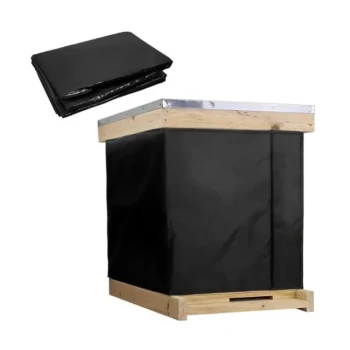
Insulated hives act as a critical thermal barrier that decouples the colony's internal environment from extreme external temperatures. By utilizing materials with low thermal conductivity and precision joinery, these hives significantly reduce the biological energy bees must waste on active cooling, directly enhancing colony survival and productivity.
The Core Insight In tropical or desert environments, the limiting factor for a colony is often energy exhaustion caused by heat stress. Insulated hives solve this by stabilizing the internal microclimate, effectively converting energy previously lost to "climate control" into tangible gains in foraging and honey production.
The Physics of Thermal Stabilization
Creating a Consistent Micro-Climate
The primary technical function of an insulated hive is to create a barrier against environmental stress.
Materials with low thermal conductivity prevent the rapid transfer of external heat into the hive. This isolation is essential in climates with severe temperature fluctuations, ensuring the internal temperature remains stable regardless of the midday sun.
The Role of Precision Joinery
Thermal efficiency is not just about the material; it is about the construction.
Industrial-grade manufacturing produces standardized components with precise joinery. This consistency eliminates gaps that allow heat infiltration, offering superior thermal performance compared to manually constructed hives that may suffer from material inconsistencies.
Reducing Thermal Load
In a standard wooden hive, the internal temperature rises in lockstep with the ambient temperature.
Insulated hives break this synchronization. By flattening the temperature curve inside the box, the colony is subjected to significantly fewer "heat spikes," protecting the brood from thermal damage without requiring immediate emergency cooling responses.
Biological Energy Conservation
Minimizing Active Cooling
When a hive overheats, bees must engage in fanning, a behavior where they beat their wings to circulate air.
This process is energy-intensive. Insulated hives reduce the internal heat load, drastically lowering the frequency and duration of fanning required. This preserves the colony’s glucose reserves (honey stores) that would otherwise be burned as fuel for these cooling activities.
Redirecting Resources to Production
Energy not spent on survival is energy available for growth.
By minimizing the biological resources spent on temperature regulation, the colony can reallocate that energy. The result is a measurable increase in foraging activity, pollination, and honey production, as more workers are freed from "HVAC duty" to gather resources.
Increasing Survival Rates
Heat stress is a silent killer in tropical and desert climates.
By shielding the colony from harsh weather conditions, insulated hives significantly increase survival rates. The reduction in physiological stress allows the bees to maintain health and vigor even during the most demanding seasons.
Understanding the Trade-offs
Ventilation vs. Insulation
It is critical to distinguish between insulation (temperature control) and ventilation (air exchange).
While insulation keeps heat out, a sealed hive must still allow for moisture and carbon dioxide to escape. An insulated hive with poor ventilation can create a stifling environment; therefore, technical management of airflow remains essential.
Construction Quality
Not all insulated hives provide the same benefits.
The advantages described above rely on consistent material thickness and structural integrity. Poorly manufactured hives that degrade under UV light or warp in the heat will lose their insulative properties, negating the technical advantages over time.
Making the Right Choice for Your Goal
When selecting equipment for high-temperature environments, align your choice with your specific operational focus:
- If your primary focus is Maximum Yield: Choose insulation to minimize fanning, maximizing the number of bees available for nectar collection and honey production.
- If your primary focus is Colony Sustainability: Prioritize insulation to reduce environmental stress, ensuring higher survival rates during extreme weather events.
By mechanically stabilizing the hive environment, you allow the colony to focus on biology rather than survival.
Summary Table:
| Technical Feature | Mechanism of Action | Practical Benefit to Beekeeper |
|---|---|---|
| Low Thermal Conductivity | Decouples internal hive temp from external heat spikes | Protects brood and prevents colony overheating |
| Precision Joinery | Eliminates gaps and heat infiltration points | Ensures consistent thermal performance and durability |
| Energy Conservation | Minimizes intensive wing fanning and active cooling | Higher foraging activity and increased honey production |
| Micro-Climate Stability | Flattens the daily temperature curve | Significantly higher survival rates in desert/tropical zones |
Maximize Your Apiary's Productivity with HONESTBEE
Don't let extreme heat drain your colony's energy and your profits. HONESTBEE specializes in supporting commercial apiaries and distributors by providing high-performance, industrial-grade beekeeping solutions designed for the toughest climates.
Why partner with us?
- Comprehensive Wholesale Catalog: From precision-engineered insulated hives to advanced hive-making and honey-filling machinery.
- Industry-Leading Supplies: A full spectrum of beekeeping tools and essential consumables tailored for large-scale operations.
- Cultural Merchandise: Expand your brand with our unique array of honey-themed cultural goods.
Whether you are scaling your honey production or looking for reliable equipment distribution, we provide the technical edge your business needs.
Contact HONESTBEE Today to Secure Your Wholesale Pricing
References
- Abdulmajeed Albarrak, Alison Gray. Seasonal Colony Loss Rates and Honey Bee Management in the Kingdom of Saudi Arabia: Results of a Survey of Beekeepers. DOI: 10.3390/insects14060513
This article is also based on technical information from HonestBee Knowledge Base .
Related Products
- Professional Insulated Plastic Bee Hives
- Professional Insulated Winter Hive Wrap for Beekeeping
- Inner Beehive Cover for Beekeeping Bee Hive Inner Cover
- In-Hive Dual Compartment Frame Bee Feeder for Targeted Colony Nutrition
- Stainless Steel Round Beehive Air Vents for Ventilation
People Also Ask
- What are the advantages of plastic bee hives? Boost Efficiency & Durability for Your Apiary
- Are plastic bee hives any good? Unlock Durability & Efficiency for Your Apiary
- How do plastic bee hives compare to wooden hives in handling? Reduce Strain & Boost Efficiency
- Are plastic bee hives good? Durable, Low-Maintenance Hives for Modern Apiaries
- What are the disadvantages of plastic beehives? Key Operational and Environmental Risks Exposed