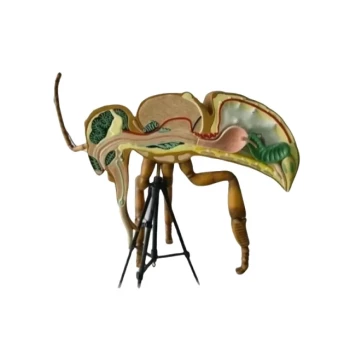
Standardized INPA model beehives optimize intensive stingless bee management by establishing a uniform physical environment that reduces operational variables and simplifies colony maintenance. This specific structural design facilitates the precise measurement of production metrics—such as brood disc diameters and food pot volumes—while significantly minimizing physical damage to the nest during colony multiplication, which is critical for maximizing survival rates.
The transition to the INPA model represents a shift from improved carpentry to scientific management. By providing a replicable, modular environment, you convert beekeeping from a variable craft into a controlled process that ensures data comparability and efficient scaling.
Enhancing Colony Survival and Propagation
Minimizing Structural Damage
The primary technical advantage of the INPA model is its ability to protect the colony during multiplication or splitting processes. Traditional methods often require invasive cutting that destroys nest architecture.
The INPA model's modular design allows for the separation of hive sections without extensive destruction. This minimizes structural damage, preserving the delicate arrangement of the colony.
Improving Adaptation and Survival
Because the physical structure of the nest remains largely intact during a split, the stress on the bees is significantly reduced.
This structural preservation directly correlates to enhanced survival rates for newly formed colonies. It allows the bees to focus energy on environmental adaptation and foraging rather than rebuilding their core infrastructure.
Precision in Data and Management
Enabling Comparative Analysis
For intensive management, data is the most valuable asset. The INPA hive provides a uniform physical environment, which is essential for comparing performance across different colonies.
Without standardized dimensions, it is impossible to know if a colony is underperforming due to genetics or simply due to hive constraints. The INPA model eliminates the variable of "nest space" from the equation.
Accurate Biological Measurements
The specific structure of these hives allows for the precise measurement of internal biological markers.
Technicians can accurately assess brood disc diameters and calculate the volume of honey and pollen pots. This granular data is vital for tracking colony health and selecting the best genetic stock for propagation.
Operational Efficiency and Hygiene
Separation of Brood and Storage
A critical architectural feature of the INPA model is the effective isolation of the brood area from the honey storage area.
This modularity ensures that honey can be harvested without disturbing the queen or the developing larvae. It allows for the collection of clean honey and prevents contamination during extraction.
Streamlined Inspections
The layered structure facilitates routine internal inspections and cleaning.
Unlike hollow logs or single-box designs, the INPA model allows a manager to install feeding devices or observe worker behavior without triggering a defensive response or causing the bees to abscond.
Understanding the Trade-offs
Species-Specific Sizing
While standardization is advantageous, it must be applied with biological context. A "standard" INPA box dimensions (e.g., 18x18 cm vs. 13x13 cm) must match the specific cluster size of the stingless bee species being managed.
Using an INPA hive that is too large for a small species can lead to issues with thermoregulation and pest control. Standardization requires selecting the correct volume class for your specific bee species to ensure the "controlled environment" does not become a burden to the colony.
Making the Right Choice for Your Goal
To maximize the benefits of the INPA model, align the hive configuration with your primary management objective:
- If your primary focus is Commercial Production: Utilize the modular separation to harvest honey frequently without disturbing the brood, ensuring a clean product and continuous colony growth.
- If your primary focus is Research and Breeding: Leverage the uniform internal dimensions to compare hygienic behaviors and production metrics across colonies, eliminating environmental variables.
The INPA model transforms the hive from a simple container into a precision tool for data-driven beekeeping.
Summary Table:
| Feature | Technical Advantage | Impact on Management |
|---|---|---|
| Modular Design | Minimizes structural damage during colony splitting | Enhances survival rates and reduces stress |
| Uniform Dimensions | Creates a replicable physical environment | Enables precise data comparison and breeding selection |
| Layered Isolation | Separates brood chamber from honey storage | Ensures clean honey harvesting without nest disturbance |
| Precision Access | Facilitates internal inspections and feeder installation | Improves colony hygiene and simplifies maintenance |
Elevate Your Commercial Apiary with HONESTBEE Precision Solutions
Transitioning to the INPA model is a strategic move toward scientific beekeeping. HONESTBEE is dedicated to supporting commercial apiaries and distributors with high-quality, standardized equipment designed for maximum efficiency.
Our Value to Your Business:
- Comprehensive Wholesale Range: From specialized hive-making machinery to honey-filling systems.
- Total Equipment Supply: A full spectrum of beekeeping tools and essential industry consumables.
- Strategic Growth: We provide the hardware and cultural merchandise needed to scale your brand and optimize production metrics.
Ready to transform your operation into a high-yield, data-driven enterprise? Contact HONESTBEE today to explore our wholesale offerings and professional equipment solutions.
References
- Baden Bell Pereira Brito, Carlos Alfredo Lopes de Carvalho. Parâmetros biométricos e produtivos de colônias em gerações de melipona quadrifasciata anthidioides. DOI: 10.21071/az.v62i238.669
This article is also based on technical information from HonestBee Knowledge Base .
Related Products
- In-Hive Dual Compartment Frame Bee Feeder for Targeted Colony Nutrition
- Professional Grade Foldable Beehive Handles
- Durable Plastic Hive Number Set for Beekeeping
- Wholesales Dadant Size Wooden Bee Hives for Beekeeping
- Wooden Bee Hive Frames for Beekeeping and Wholesale
People Also Ask
- What are the advantages of using a frame feeder for bee colonies? Boost Growth and Prevent Robbing Efficiently
- Why should sugar syrup or dry sugar not be left out in the open when feeding bees? Avoid a Dangerous Feeding Frenzy
- What precautions should be taken when feeding bees inside the hive? Safeguard Your Colony from Robbing and Leaks
- How do in-hive feeders support honey bee colonies during autumn? Ensure Overwintering Success for Your Apiary
- Why is an in-hive feeder necessary for stimulatory feed? Protect Nano-Particle Integrity and Dosage Accuracy