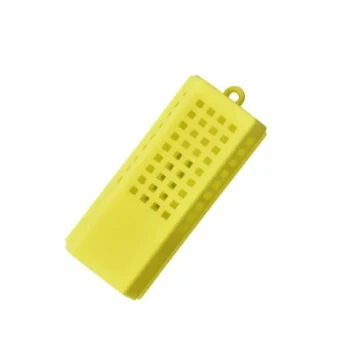
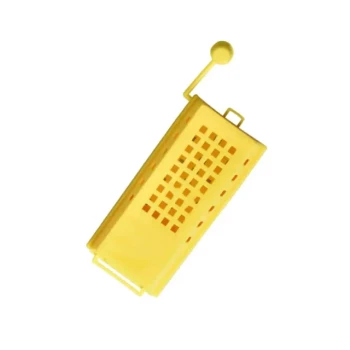
Standardized plastic queen cups optimize the queen-rearing process by providing a mechanically uniform substrate that ensures consistent cell geometry and spacing. Unlike natural wax, which can vary in texture and structure, these cups offer a durable, easy-to-clean foundation that stabilizes the developmental environment, minimizes variations caused by irregular cell shapes, and significantly improves larval acceptance rates in commercial operations.
The Core Advantage: Plastic queen cups act as a controlled variable in a biological process. By enforcing strict geometric standards and material stability, they eliminate the structural inconsistencies inherent in hand-dipped wax cups, allowing apiarists to achieve reproducible quality and high survival rates across large-scale production batches.
Precision and Geometric Uniformity
Eliminating Structural Variability
The primary technical advantage of plastic cups is the provision of a uniform substrate. In nature, or with hand-made wax cups, slight irregularities in shape can affect how nurse bees build out the cell. Plastic cups enforce consistent spatial specifications, ensuring every larva begins development in an identical physical environment.
Reducing Developmental Deviations
Irregular cell shapes can lead to inconsistent feeding or growth patterns. By standardizing the physical base, apiarists reduce developmental variations among queen candidates. This consistency ensures that the resulting virgin queens are uniform in size and quality, rather than varying based on the quality of the starting cup.
Optimization for Batch Processing
The standardized dimensions of plastic cups allow for precise alignment on grafting frames. This ensures that larvae remain vertically suspended at exact intervals. This orientation aligns with worker bee instincts, facilitating optimal royal jelly deposition and efficient capping of the cells.
Material Stability and Operational Hygiene
Durability for Repeated Use
Plastic offers superior material stability compared to wax. The cups are robust and do not deform under the temperatures typical of a hive or during handling. This durability allows the cups to be reused across multiple rearing cycles, making them a cost-effective solution for high-volume apiaries.
Simplification of Sanitization
Hygiene is critical in professional rearing. Plastic cups are easy to clean and sterilize between batches. This allows the operator to remove old royal jelly and wax debris completely, reducing the risk of pathogen transmission between grafting cycles.
Secure Fixation
The structural design facilitates easy and secure fixation onto wooden cell bars. This mechanical reliability ensures that cups do not detach or shift during the grafting process or while the frame is being manipulated within the hive.
Integration with Biological Instincts
Enhancing Larval Acceptance
Despite being artificial, high-quality plastic cups are designed to mimic the natural shape of queen cells. This design triggers the biological instincts of nurse bees to feed and extend the cell. The primary reference notes that the plastic surface itself induces successful building, resulting in a higher larval acceptance rate.
The Role of Beeswax Coating
To further bridge the gap between the artificial cup and the biological colony, these cups are often coated with a thin layer of molten beeswax. This combines the structural rigidity of plastic with the natural texture and scent of the hive. This hybrid approach creates a "familiar" environment for nurse bees, ensuring immediate attention to the transferred larvae.
Understanding the Trade-offs
While standardized plastic cups offer significant advantages in scale and consistency, there are operational nuances to consider.
- Preparation Requirements: While plastic is durable, it often requires a beeswax coating to achieve maximum acceptance rates, adding a preparatory step to the workflow.
- Cleaning Labor: Unlike wax cups which can be melted down and recycled immediately, plastic cups require labor to scrape, wash, and sterilize before reuse.
- Initial Cost: The upfront investment for plastic components is higher than raw wax, though this is amortized over many uses.
Making the Right Choice for Your Goal
- If your primary focus is Scalability and Consistency: Adopt standardized plastic cups to ensure identical cell geometry and streamline the management of large grafting batches.
- If your primary focus is Hygiene and Disease Management: Leverage the non-porous, easy-to-clean nature of plastic to rigorously sterilize equipment between rearing cycles.
- If your primary focus is Maximizing Acceptance: Utilize plastic cups that have been pre-coated with beeswax to combine structural reliability with biological familiarity.
Ultimately, standardized plastic queen cups transform queen rearing from an art dependent on variable materials into a precise, reproducible technical process.
Summary Table:
| Feature | Advantage | Impact on Production |
|---|---|---|
| Geometric Uniformity | Eliminates structural variability | Consistent queen size and quality |
| Material Stability | Robust and heat-resistant | Reliable vertical suspension and alignment |
| Surface Hygiene | Easy to clean and sterilize | Reduced pathogen transmission between batches |
| Biological Mimicry | Mimics natural cell shape | Higher larval acceptance rates from nurse bees |
| Durability | Reusable across multiple cycles | Cost-effective for large-scale commercial apiaries |
Elevate Your Queen Rearing Precision with HONESTBEE
At HONESTBEE, we understand that professional queen rearing requires absolute consistency and high-performance equipment. As a leading provider for commercial apiaries and distributors, we offer a comprehensive range of standardized queen-rearing tools, high-precision machinery, and essential consumables designed to scale your operations.
From durable queen cups to advanced honey-filling machines, our portfolio is built to support your growth. Contact us today to discover how our wholesale beekeeping solutions can optimize your production efficiency and ensure the highest quality for your colonies.
References
- Azza Helmy, Aml A. A. Abdelmawla. THE EFFECT OF GENETIC ORIGIN OF THE GRAFTED LARVAE AND REARING COLONIES ON THE ACCEPTANCE RATE, WEIGHT AND CELL LENGTH OF APIS MELLIFERA QUEENS.. DOI: 10.21608/fjard.2016.191277
This article is also based on technical information from HonestBee Knowledge Base .
Related Products
- JZBZ Type Wide Base Plastic Queen Cell Cups for Base Mounting and Queen Rearing
- Clear Black Plain Polystyrene Queen Bee Grafting Cell Cups No Lug for Bee Queen Cup
- Durable Plastic Push In Queen Bee Cage
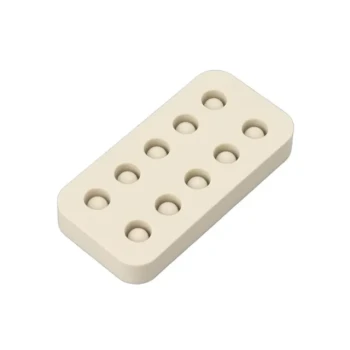
- 10-Cell Silicone Beeswax Bee Queen Cups Forming Mold
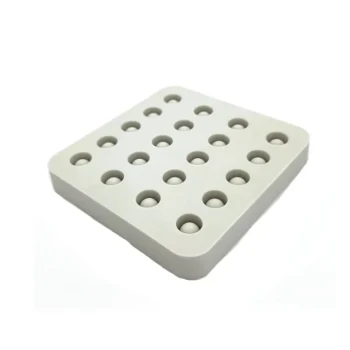
- High-Efficiency 20-Cell Silicone Mold for Beeswax Bee Queen Cup Production
People Also Ask
- What is the primary function of commercial plastic queen cell cups? Driving Efficiency in Mass Queen Rearing
- What are the primary advantages of using plastic queen cell cups? The Industrial Choice for High-Efficiency Apiaries
- What technical advantages do commercial plastic queen cell cups offer? Scale Your Queen Rearing for Maximum Efficiency
- What is the function of standardized plastic Queen Cell Cups? Boost Efficiency in Commercial Larval Grafting
- Why are standardized plastic queen cell cups preferred? Boost Commercial Queen Rearing Efficiency