The primary technical distinction lies in how mechanical force is applied to the honeycomb structure. The honey pressing method utilizes direct mechanical pressure to squeeze highly viscous Jatropha honey from the comb, sacrificing the comb's structure to capture a pollen-rich sample. In contrast, centrifugal extraction employs high-speed rotation to separate honey without damaging the comb, prioritizing production efficiency and hive sustainability.
Core Takeaway While centrifugal extraction is the industry standard for high-volume, pure commercial production, the pressing method is uniquely suited for processing mature, viscous Jatropha honey for scientific analysis. Pressing provides a sample rich in botanical markers, whereas centrifugal extraction maximizes yield by preserving the honeycomb for reuse.
The Pressing Method: Viscosity and Composition
Handling High Viscosity
The pressing method is specifically advantageous for highly mature and viscous honey varieties like Jatropha.
Because this honey resists flow, mechanical pressure is required to physically squeeze the substance from the honeycomb cells.
This ensures a thorough collection of the product that might otherwise remain trapped during rotational extraction.
Impact on Pollen Content
A defining characteristic of pressing is the compression of bee bread (stored pollen) along with the honey.
This results in a significantly higher concentration of pollen in the final product.
While sometimes classified as "third-level pollution" due to the mixing of hive elements, this characteristic makes pressed honey ideal for physical and chemical research requiring specific botanical identification.
Centrifugal Extraction: Efficiency and Preservation
Non-Destructive Separation
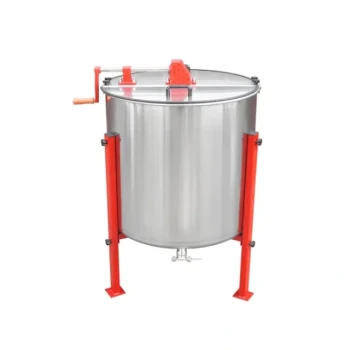
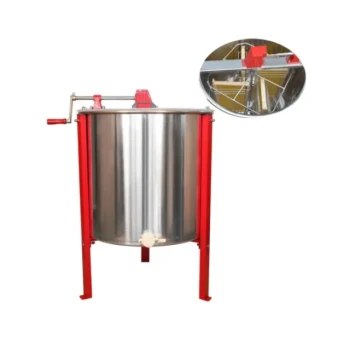
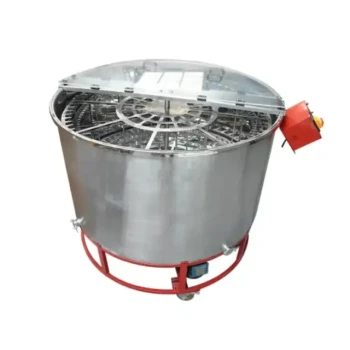
The technical advantage of centrifugal extractors is the use of rotational force to spin honey out of the cells.
Crucially, this process creates zero damage to the physical structure of the honeycomb.
Unlike pressing, which destroys the wax structure, centrifugal extraction maintains the integrity of the frame.
Energy Conservation and Yield
Because the combs remain intact, they can be immediately returned to the hive for reuse.
This allows bees to redirect energy from secreting wax—a resource-intensive process—toward foraging and honey production.
Consequently, this method significantly increases the overall yield and production cycle efficiency of the apiary.
Understanding the Trade-offs
Purity vs. Profile
Centrifugal extraction typically yields a "purer" liquid honey that meets international export standards for clarity and hygiene.
It prevents the honey from mixing with wax residues, larvae, or excessive pollen, preserving the natural flavor and color without "third-level pollution."
Pressing, conversely, creates a complex mixture that is less about visual purity and more about biological density.
Sustainability vs. Specificity
The choice involves a trade-off between hive sustainability and sample specificity.
Centrifugal extraction is sustainable for the bees, reducing their workload and shortening harvest intervals.
Pressing is destructive and energy-inefficient for the hive, but it is the only way to obtain a specific unifloral sample necessary for deep analysis of Jatropha honey's properties.
Making the Right Choice for Your Goal
To select the correct processing method, you must define the end-use of the Jatropha honey.
- If your primary focus is Scientific Research: Use the pressing method to obtain a pollen-rich sample ideal for botanical identification and chemical analysis, despite the destruction of the comb.
- If your primary focus is Commercial Production: Use centrifugal extraction to maximize yield, ensure hygiene standards, and preserve honeycombs for immediate reuse by the colony.
Select the method that aligns with whether you need a biological sample or a marketable product.
Summary Table:
| Feature | Honey Pressing Method | Centrifugal Extraction |
|---|---|---|
| Mechanism | Direct mechanical pressure/squeezing | High-speed rotational force |
| Comb Integrity | Destructive (comb is destroyed) | Non-destructive (comb is reusable) |
| Pollen Content | High (includes squeezed bee bread) | Low (pure liquid honey) |
| Honey Viscosity | Ideal for highly viscous/mature honey | Best for standard flowable honey |
| Primary Use | Scientific research & botanical analysis | Commercial production & high yield |
| Efficiency | Low (bees must rebuild wax) | High (saves bee energy and time) |
Scaling Your Honey Production with HONESTBEE
Choosing the right extraction method is only half the battle. HONESTBEE empowers commercial apiaries and distributors with the high-performance tools needed to maximize efficiency. Whether you require specialized honey-filling machines for your retail line or advanced hive-making machinery to expand your operation, we provide the full spectrum of beekeeping hardware and essential consumables.
From industrial-grade centrifugal extractors to honey-themed cultural merchandise, we cater to the diverse needs of the global beekeeping industry. Contact us today to discover how our wholesale solutions can optimize your yield and elevate your brand's market presence.
References
- M. Fröschle, Otmar Spring. Characterization of Jatropha curcas honeys originating from the southern highlands of Madagascar. DOI: 10.1016/j.lwt.2018.04.006
This article is also based on technical information from HonestBee Knowledge Base .
Related Products
- Manual Hand Crank 4 Frame Honey Extractor Centrifuge for Beekeeping
- Stainless Steel 3 Frame Manual Honey Extractor Spinner for Bee Honey Extraction
- HONESTBEE 3-Frame Manual Acrylic Honey Extractor
- Stainless Steel Manual 8 Frame Radial Honey Extractor Machine for Beehives
- Electric 4 Frame Tangential Honey Extractor
People Also Ask
- What are some tips for achieving efficient honey extraction with a centrifuge extractor? Maximize Your Yield & Efficiency
- What is the proper procedure for maintaining a centrifuge honey extractor? Expert Tips for Longevity and Hygiene
- What are the advantages of using a centrifuge honey extractor? Maximize Yields and Protect Your Honeycombs
- Which type of honey extractor is generally more durable? Focus on Material & Build Quality for Longevity
- What is a manual honey extractor? The Essential Guide to Cost-Effective Beekeeping for Beginners