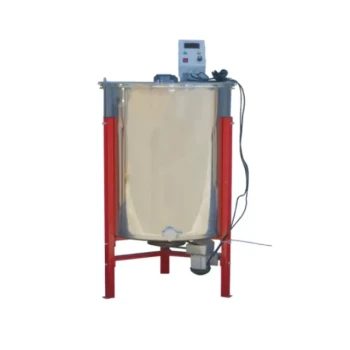
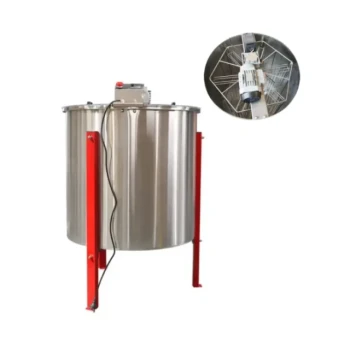
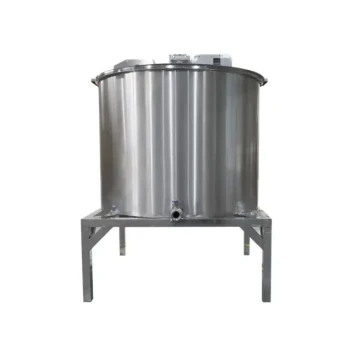
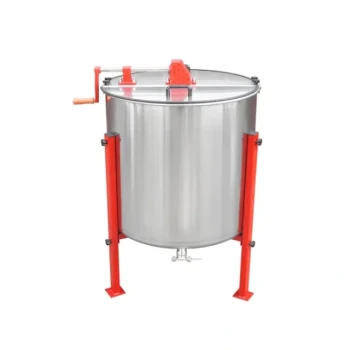
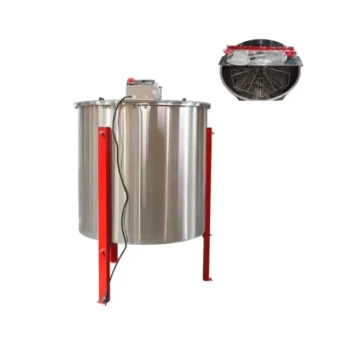
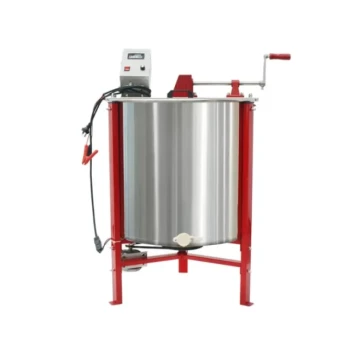
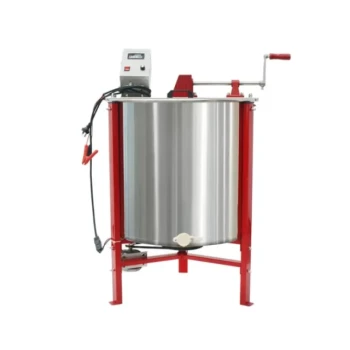
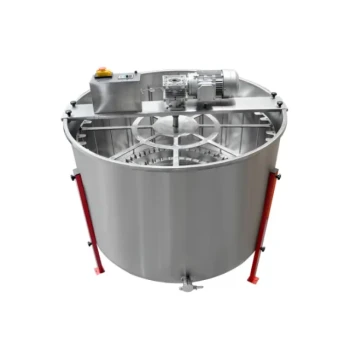
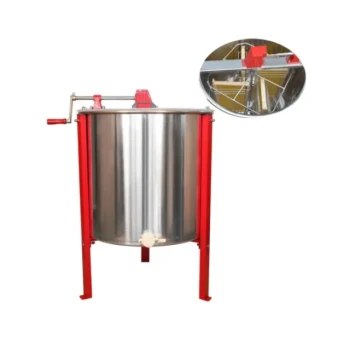
To properly maintain a centrifuge honey extractor, you must rigorously disassemble and wash all contact parts with warm soapy water immediately after every use. This process removes residual honey and beeswax to prevent bacterial growth, while subsequent storage in a cool, dry location is essential to stop rust from compromising the machine's longevity.
Core Takeaway: Maintenance is not just about cleaning; it is about preservation. Your primary goal is to sanitize surfaces to prevent mold while simultaneously protecting the mechanical gearbox and bearings from moisture intrusion and unnecessary lubrication.
Sanitation and Cleaning Standards
The Deep Clean Protocol
To ensure hygiene, you must disassemble the equipment after each extraction session. Taking the unit apart allows you to reach crevices where honey and wax accumulate.
Wash all disassembled parts thoroughly using warm soapy water. This neutralizes the sugars that attract bacteria and mold.
Handling Beeswax Residue
Beeswax is notoriously sticky and difficult to remove with cold water.
Utilize warm water specifically to soften the wax, making it easier to wipe away from the extractor walls and basket.
Pre-Use Preparation
Maintenance is a cycle that begins before you extract. For electric models specifically, it is best practice to clean the unit before and after use.
Prior to loading frames, use a damp towel soaked in warm water to gently wipe down the surface to remove any dust settled during storage.
Protecting Mechanical Components
Water Management
While the drum requires washing, the mechanical components do not. You must take extreme care to prevent water from reaching the bearings and gearbox.
After washing the drum, wipe the entire unit with a dry cloth immediately. Any lingering moisture is a primary cause of mechanical failure and rust.
The Lubrication Rule
There is a common misconception that all moving parts require oil.
Do not apply oil or grease to the gearbox or its shaft. These components are designed to operate without external lubrication; adding grease can attract debris and damage the mechanism.
Operational Maintenance
Load Balancing
Preserving the extractor’s structure requires careful operation. Always load frames in a balanced manner within the basket.
An unbalanced load causes excessive vibration during the spin cycle. Over time, this vibration will damage the bearings and weaken the extractor's structural integrity.
Speed Control
For electric models, you must manage the spinning speed carefully.
Start slowly to prevent excessive centrifugal force from breaking the wax combs. Broken combs create a mess that complicates cleaning and strains the motor.
Common Pitfalls to Avoid
Over-Lubrication
Applying grease to the gearbox is a frequent error. This does not help the machine; it creates a sticky trap for dust and wax particles that can seize the gears.
Moisture Neglect
Storing the extractor while it is still damp is the fastest way to ruin it. Even stainless steel can degrade if left in a humid environment. Always ensure the unit is bone-dry before putting it away.
Thermal Shock
While warm water is necessary for cleaning wax, avoid using boiling water on plastic components or seals, as this can cause warping or degradation of the materials.
Making the Right Choice for Your Goal
To maximize the life and safety of your equipment, tailor your focus to your specific objective:
- If your primary focus is Food Safety: Prioritize disassembling and washing with warm soapy water after every single use to eliminate bacteria and mold risks.
- If your primary focus is Mechanical Longevity: Focus on keeping water away from the gearbox and ensuring the unit is completely dry to prevent rust.
- If your primary focus is Operational Efficiency: Ensure you balance the frames every time you load the basket to prevent vibration damage to the bearings.
Treat your extractor as a precision instrument, not just a bucket; keep it clean, keep it dry, and leave the gearbox alone.
Summary Table:
| Maintenance Aspect | Action Required | Key Frequency/Rule |
|---|---|---|
| Sanitation | Disassemble and wash with warm soapy water | Immediately after every use |
| Wax Removal | Use warm water to soften and wipe residue | During deep cleaning protocol |
| Mechanical Parts | Keep gearbox and bearings bone-dry | Never apply oil or grease |
| Loading | Balance frames evenly in the basket | Every extraction cycle |
| Storage | Wipe down and store in a cool, dry place | Post-cleaning & drying |
| Speed Control | Start rotation slowly | Throughout the spin cycle |
Maximize Your Harvest with Professional-Grade Equipment
Maintaining your gear is crucial, but starting with the right machinery is the foundation of success. At HONESTBEE, we specialize in supporting commercial apiaries and distributors with high-performance beekeeping solutions. From precision honey-filling machines and durable centrifuge extractors to specialized hive-making hardware, our comprehensive wholesale portfolio is designed for industrial efficiency.
Ready to upgrade your apiary's productivity? Contact HONESTBEE today to explore our full range of tools, machinery, and essential consumables tailored for your business growth.
Related Products
- Manual Hand Crank 4 Frame Honey Extractor Centrifuge for Beekeeping
- electric honey extractor honey centrifuge 3 frame honey extractor stainless steel honey frame extractor
- Professional 4 Frame Self Reversing Electric Honey Extractor for Beekeeping
- Electric 4 Frame Tangential Honey Extractor
- HONESTBEE 72 Frame Industrial Electric Honey Extractor for Beekeeping
People Also Ask
- What are some tips for achieving efficient honey extraction with a centrifuge extractor? Maximize Your Yield & Efficiency
- What are the advantages of using a centrifuge honey extractor? Maximize Yields and Protect Your Honeycombs
- Which type of honey extractor is generally more durable? Focus on Material & Build Quality for Longevity
- What is a manual honey extractor? The Essential Guide to Cost-Effective Beekeeping for Beginners
- Why are manual extractors popular among beginner beekeepers? A Guide to Starting Simple & Saving Money