Reliable honey analysis depends on strictly controlling variables in your sampling method. The two most critical factors for obtaining accurate results are ensuring the sample comes from a thoroughly mixed container and calculating the average of multiple readings rather than relying on a single test.
Even a calibrated refractometer will yield false data if the honey itself is stratified. True accuracy requires homogenizing the batch to eliminate moisture gradients and using statistical averaging to correct for human or instrument variance.
Addressing Sample Stratification
To get a result that reflects the reality of your honey crop, you must first address the physical inconsistencies within the storage vessel.
Why Mixing is Non-Negotiable
Moisture content is rarely uniform throughout a container of honey. Water content can vary significantly between the top and bottom layers due to settling or separation.
The Homogenization Protocol
Before taking a sample, you must thoroughly mix or stir the specific bucket, jar, or tank. This ensures that the drop you place on the prism is representative of the entire batch, not just a localized pocket of high or low moisture.
Mitigating Error Through Repetition
A single reading is a snapshot that is easily distorted by minor variables. Professional accuracy requires redundancy.
The Problem with Single Data Points
Reliance on a single test makes your data vulnerable to "noise." This could include a slight visual misinterpretation of the shadow line, a microscopic air bubble, or a smear that wasn't perfectly flat.
The Averaging Method
Take at least three distinct readings from the same mixed source. Add the results together and divide by the number of tests to find the average. This process smoothes out anomalies and accounts for potential human error in reading the optical scale.
Common Pitfalls and Trade-offs
While mixing and averaging are the primary drivers of sample reliability, neglecting environmental factors can still compromise your data.
Temperature Discrepancies
Refractive index changes with temperature. Ensure both the refractometer and the honey sample are at the same ambient room temperature before testing. A cold instrument with warm honey (or vice versa) will skew the light refraction.
The Impact of Air Bubbles
When applying honey to the prism, you must eliminate air bubbles. Bubbles scatter light differently than honey does, creating a fuzzy or incorrect reading line. Gently wiggling the cover panel can help release trapped air.
Calibration Drift
Refractometers are sensitive instruments that can drift over time. Failing to calibrate with distilled water or a reference solution prior to your session renders all subsequent precision efforts useless.
Making the Right Choice for Your Goal
Achieving accuracy is a balance between rigorous protocol and efficient workflow.
- If your primary focus is preventing fermentation: Prioritize mixing the container thoroughly, as "wet" pockets can ferment even if the average moisture seems low.
- If your primary focus is process efficiency: Establish a strict "clean-as-you-go" routine to prevent crystallized sugar from scratching the prism or contaminating the next sample.
Consistency in your method is just as important as the quality of your tool.
Summary Table:
| Factor | Why it Matters | Recommended Action |
|---|---|---|
| Sample Homogenization | Prevents errors caused by moisture stratification/layering. | Thoroughly stir the container before sampling. |
| Statistical Averaging | Minimizes human error and instrument 'noise'. | Take at least 3 readings and calculate the mean. |
| Temperature Sync | Refractive index changes based on temperature. | Ensure sample and tool are at the same ambient temperature. |
| Prism Maintenance | Air bubbles or residue distort light refraction. | Apply honey smoothly and clean the prism between tests. |
Elevate Your Honey Production with HONESTBEE
Precise analysis is only the first step in maintaining the highest industry standards. At HONESTBEE, we empower commercial apiaries and distributors with the professional-grade tools needed to scale efficiently. From precision honey refractometers and honey-filling machines to advanced hive-making machinery, our comprehensive wholesale portfolio is designed to optimize your workflow.
Whether you are managing thousands of colonies or distributing essential beekeeping consumables, our expertise in specialized hardware and honey-themed merchandise ensures your business remains competitive.
Ready to upgrade your apiary’s efficiency? Contact our experts today to discover how our tailored equipment solutions can drive your success.
Related Products
- Digital Honey Refractometer for Precision Measurement of Optimal Honey Quality
- Precision Honey Refractometer Instrument for Quality Assessment
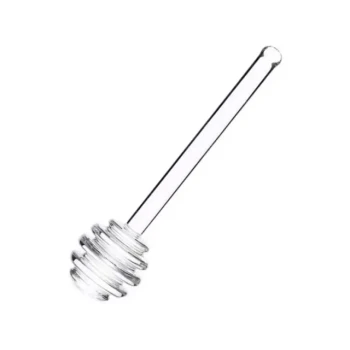
- Premium Heat-Resistant Glass Honey Dipper
- Professional Honey Filter with Tripod Support Stand
- Professional Stainless Steel Honey Filtering Machine with Water Bath Heating for Beekeeping
People Also Ask
- What role do high-precision refractometers play in determining the maturity and quality of honey? Ensure Honey Purity.
- Do the color and viscosity of honey affect its refractometer reading? Mastering Moisture Measurement Accuracy
- Why is a honey refractometer considered essential for commercial beekeepers? Ensure Honey Quality and Profitability
- What is a honey refractometer? The Essential Tool for Perfect Honey Quality
- How do refractometers ensure technical precision when measuring honey moisture? Secure Quality and Prevent Fermentation