Shot brood in honeybee colonies is primarily a genetic incompatibility problem at the sex-determination locus. When a queen mates with a closely related drone carrying the same sex allele, some fertilized eggs become homozygous at the complementary sex determiner (csd) locus. These eggs develop as diploid drones rather than viable workers or queens, and worker bees remove them, leaving scattered empty cells in the brood pattern.
The practical lesson: Line breeding must preserve sufficient sex-allele diversity. Breeders achieve this through pedigree and drone management, controlled mating or instrumental insemination, periodic introduction of unrelated stock, and queen-rearing equipment that supports precise selection and propagation.
Why Sex Alleles Create Shot Brood
The complementary sex-determination system
Honeybees use a single primary sex-determination locus, commonly referred to as csd, to determine whether a developing bee becomes female or male.
- Heterozygous fertilized eggs develop into females—workers or queens.
- Unfertilized eggs, carrying one sex allele, develop into normal haploid drones.
- Fertilized eggs that are homozygous for the same sex allele develop into diploid drones.
The problem is therefore not simply that the colony is “inbred.” The critical issue is the loss of diversity specifically among the sex alleles carried by the queen and drones.
What happens during close-relative mating
A queen stores sperm from multiple drones. If those drones are closely related to her or come from a narrow breeding population, they are more likely to carry sex alleles already present in the queen.
When a sperm cell carrying the same sex allele as the egg fertilizes an egg, the resulting embryo is homozygous at the sex locus and follows the diploid-drone pathway.
Why the brood pattern becomes scattered
Diploid drones are not allowed to mature normally. Worker bees recognize and remove them, often during the larval stage or around the time they would otherwise be capped.
The result is a frame containing scattered empty cells among otherwise healthy capped brood. This is the characteristic “shot” or “spotty” brood pattern associated with sex-allele incompatibility.
How Shot Brood Affects Colony Performance
Fewer worker bees emerge
Every removed diploid drone represents a fertilized egg that did not become a productive worker. As the proportion of incompatible eggs rises, fewer workers emerge to care for brood, forage, regulate the nest, and defend the colony.
In a close brother–sister mating, approximately half of the fertilized eggs may be expected to receive matching sex alleles under the simplified two-allele example. Actual results depend on the number and distribution of sex alleles in the breeding population.
The colony can look weak despite a laying queen
A queen may lay normally while the colony still develops a poor brood pattern. This makes sex-allele incompatibility different from some queen-laying failures, where eggs or larvae are absent because of inadequate queen performance.
Before blaming the queen, breeders should also consider disease, chilled brood, nutritional stress, pesticide exposure, poor mating, and other causes of irregular brood.
Reduced workforce can amplify the problem
A declining worker population reduces the colony’s ability to maintain brood temperature and feed larvae. The original genetic problem can therefore create secondary colony weakness, especially when forage or weather conditions are unfavorable.
How Breeders Prevent the Problem During Line Breeding
Maintain sex-allele diversity, not just trait diversity
Selecting for honey yield, temperament, disease resistance, or other commercial traits is not sufficient by itself. A breeding program must also monitor the risk of narrowing the queen and drone gene pools at the sex-determination locus.
Pedigree records, mating histories, and colony performance data help identify overly related crosses before they become routine.
Avoid repeated close-relative matings
Brother–sister and other close-relative matings sharply increase the probability that queen and drone share the same sex allele. Line breeding should therefore use carefully planned crosses rather than repeatedly mating within a single narrow family.
A line can retain desirable traits while still receiving unrelated or less-related genetic input at planned intervals.
Introduce unrelated queen or drone stock
Periodic introduction of non-related breeder queens or drones restores genetic variation. The objective is not uncontrolled mixing, but the deliberate widening of the sex-allele pool while preserving the traits being selected.
For commercial programs, new stock should be evaluated for health, productivity, behavior, adaptation, and pedigree compatibility before being incorporated widely.
Manage the drone population deliberately
Drones are half of the mating equation. Breeders should manage which colonies produce drones at mating yards or controlled mating locations, rather than focusing only on queen selection.
A useful drone source should combine:
- Known pedigree
- Strong colony health
- Desired production traits
- Reliable local adaptation
- Sufficient genetic distance from the queen line
Use controlled mating systems when precision is essential
Isolated mating yards and mating nucleus colonies can reduce exposure to unknown drones, but geographic isolation alone does not guarantee adequate sex-allele diversity. If all colonies in the isolated population are too closely related, the system can still produce high levels of homozygosity.
For highly controlled crosses, instrumental insemination allows breeders to select semen from defined drones and document the cross. It requires specialized equipment and technical skill but offers substantially greater control than unmanaged mating.
Queen-Rearing Equipment That Supports Prevention
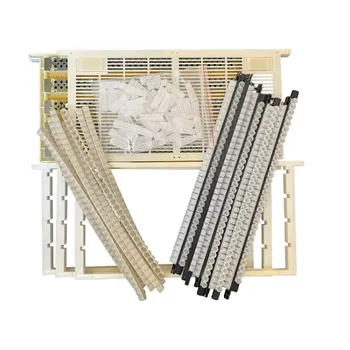
Grafting tools and queen cell cups
Grafting needles or grafting tools transfer very young worker larvae into artificial queen cell cups. The cups are mounted in a queen-rearing frame and placed in a suitable starter or finisher colony.
This equipment supports the production of queens from specifically selected breeder colonies. It does not itself prevent shot brood; its value is that it enables controlled propagation of queens whose mating can then be managed genetically.
Queen-rearing frames and cell bars
Queen-rearing frames, cell bars, and artificial cups make it possible to produce multiple queen cells from a selected mother queen.
They provide a repeatable system for:
- Selecting larvae from high-quality breeder colonies
- Producing queens in batches
- Replacing queens on a planned schedule
- Maintaining records for each queen line
- Separating desirable lines from poorly performing stock
Mating nucleus hives
Mating nucs provide small colonies in which virgin queens can mature, mate, and begin laying. They are essential for scalable queen production and can be positioned in controlled mating yards.
However, mating nucs are only as genetically controlled as their surrounding drone population. Their best use is alongside planned drone colonies, isolation, pedigree tracking, or instrumental insemination—not as a substitute for those controls.
Instrumental insemination equipment
Instrumental insemination apparatus allows a breeder to collect semen from selected drones and inseminate virgin queens under controlled conditions.
This approach is particularly valuable for:
- Testing specific line crosses
- Preserving rare or valuable genetics
- Avoiding unwanted matings
- Building documented breeding populations
- Managing genetic diversity in small or isolated programs
It should be treated as a precision breeding system, not merely as a queen-rearing accessory.
Supporting handling and record-keeping supplies
Queen transport cages, cell protectors, incubators, marking tools, and colony identification systems support reliable queen production and deployment.
For distributors and commercial operators, a useful supply program should cover the full workflow: grafting, cell handling, mating, queen introduction, colony identification, and replacement.
Understanding the Trade-offs
Isolation improves control but can narrow genetics
An isolated mating yard reduces unknown mating pressure, but a limited drone population may contain too few sex alleles. Isolation is therefore beneficial only when the participating colonies are sufficiently numerous and genetically diverse.
Instrumental insemination improves precision but raises complexity
Instrumental insemination provides the highest level of mating control, but it requires trained personnel, clean handling procedures, suitable equipment, and accurate records.
It is often justified for nucleus breeding, research, conservation, and premium queen production, while controlled natural mating may be more practical for larger commercial volumes.
Line breeding preserves traits but increases inbreeding risk
Line breeding can stabilize valuable traits, but repeated use of a small number of related queens or drones increases homozygosity. Breeders must balance selection intensity with periodic outcrossing.
A profitable breeding program is not the one that selects the narrowest line; it is the one that maintains performance without sacrificing brood viability.
Shot brood is not always caused by sex alleles
A spotty brood pattern may also result from queen age or poor mating, brood diseases, nutrition problems, chilled brood, pests, chemical exposure, or environmental stress.
Genetic diagnosis should therefore be combined with careful inspection of larvae, brood cappings, colony food stores, queen condition, and local disease risks.
How to Apply This to a Breeding Program
Use a combination of genetic planning, controlled mating, and reliable queen-rearing equipment rather than relying on any single intervention.
- If your primary focus is preventing shot brood: Maintain detailed pedigrees, avoid close-relative matings, introduce unrelated stock periodically, and ensure mating colonies contain diverse, healthy drone lines.
- If your primary focus is premium queen production: Use grafting tools, artificial cell cups, queen-rearing frames, mating nucs, and—where justified—instrumental insemination to control queen origin and mating outcomes.
- If your primary focus is commercial supply and fulfillment: Build a complete inventory covering grafting, cell protection, queen transport, mating nuc management, and colony identification so customers can source the entire workflow efficiently.
- If your primary focus is preserving selected traits: Combine line breeding with planned outcrosses and performance testing to retain productivity or behavior without excessively narrowing sex-allele diversity.
- If your primary focus is diagnosing an existing problem: Confirm that scattered brood is not caused by disease, nutrition, chilling, or queen failure before attributing it to sex-allele homozygosity.
The most reliable line-breeding systems select for desirable traits while deliberately protecting the genetic diversity required for a solid, productive brood pattern.
Summary Table:
| Aspect | Description |
|---|---|
| Cause | Homozygosity at the csd locus, leading to diploid drones that are removed by workers. |
| Symptoms | Scattered empty cells in brood pattern, reduced worker population. |
| Prevention | Maintain sex-allele diversity, avoid close inbreeding, introduce unrelated stock, manage drones, use controlled mating. |
| Equipment | Grafting tools, queen cell cups, queen-rearing frames, mating nucs, instrumental insemination. |
Looking to optimize your bee breeding program? HONESTBEE offers a comprehensive range of queen-rearing equipment and expert support to help you maintain healthy, productive colonies. Contact us today to learn how our full-spectrum beekeeping supplies and rapid fulfillment can enhance your operations. Get in touch with our team to discuss your specific needs and discover the HONESTBEE advantage for distributors and commercial beekeepers.
Related Products
- Retractable Chinese Queen Rearing Grafting Tools Equipment
- HONESTBEE Improved No Grafting Queen Rearing Kit For Queen Rearing and Royal Jelly Production
- No Grafting Queen Rearing Kit: System for Royal Jelly Production and Queen Rearing
- Premium Nicot Style Queen Rearing Kit with Hair Roller Bee Cages
- Nicot Queen Rearing Kit for Beekeeping and Grafting in Nicot System
People Also Ask
- Which specialized tools are necessary for implementing standardized queen rearing? Scale Your High-Yield Apiary
- How does selective queen rearing benefit an apiary? Discover Essential Tools for High-Quality Queen Bees
- Why are specialized queen rearing tools necessary to mitigate winter hive losses? Boost Apiary Survival and Recovery
- What operational workflows and queen rearing tools are required for implementing instrumental insemination and isolated mating in commercial queen breeding programs?
- How do queen-rearing tools facilitate the sustainability and expansion of a commercial apiary? Drive Scalable Growth