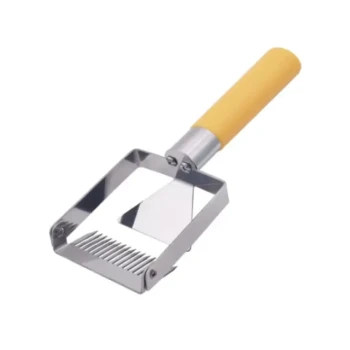
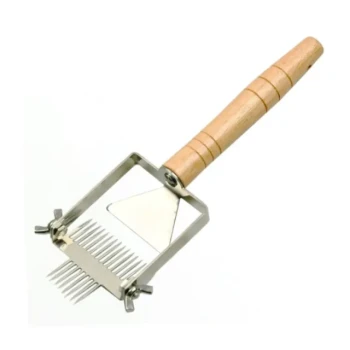
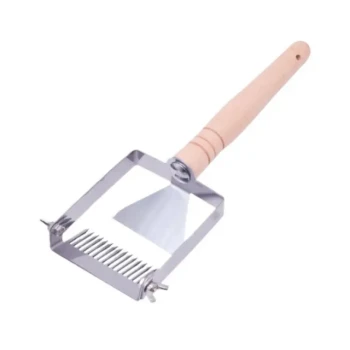
To perform a standard honey harvest safely and effectively, you must equip yourself with tools for both colony management and honey processing. The essential kit includes protective clothing (suit and veil) and a smoker for working the hive, followed by specialized uncapping tools, a centrifugal extractor, strainers, and food-grade storage containers for the extraction phase.
A successful harvest requires a seamless workflow from the hive to the jar. The correct equipment not only ensures clean, hygienic honey but also minimizes physical damage to the colony, preserving the bees' ability to rebuild and thrive.
Protective Gear and Hive Management
Before you can extract honey, you must safely access the frames and clear them of bees.
Personal Protection
The foundation of any harvest is safety. You require a protective suit accompanied by a hat or veil (sometimes integrated into a helmet) to prevent stings during this disruptive process.
Calming the Colony
A smoker is indispensable. It masks alarm pheromones and calms the bees, allowing you to work without triggering an aggressive defensive response.
Accessing the Frames
A hive tool is required to pry apart propolis-sealed hive bodies and lift heavy honey frames. Once a frame is lifted, you need a method to remove the bees; this is typically done with a bee brush, though escape boards or bee blowers are effective alternatives for clearing supers.
Uncapping and Frame Preparation
Honey is stored in cells capped with wax, which must be removed before extraction can begin.
Precision Uncapping Tools
You need an uncapping tool or a specialized honey harvest knife. These can be manual or electric, designed to slice off the wax cappings efficiently.
Preserving Comb Integrity
A specialized knife is engineered to make clean, flat incisions. This precision minimizes physical damage to the internal structure of the honeycomb, allowing the colony to reuse the frame later with minimal repair work.
Extraction and Filtration Systems
Once uncapped, the honey must be removed from the comb and purified.
The Honey Extractor
The centerpiece of the operation is the honey extractor, which can be manual or electric. These devices use centrifugal force to spin the honey out of the frames, maximizing yield while keeping the wax comb intact.
Filtration Equipment
Honey exiting the extractor contains wax bits and other debris. You must pass the honey through strainers to ensure the final product is clear and hygienic.
Storage Solutions
Finally, the harvested product must be stored in food-grade containers. Using proper vessels ensures the honey remains safe for consumption and maintains its sensory qualities.
Understanding the Trade-offs
While the equipment list is standard, the complexity of the machinery involves significant trade-offs regarding cost and volume.
Scale vs. Investment
For small-scale or hobbyist beekeepers, manual extractors and knives are cost-effective but physically demanding. Industrial-grade electric equipment drastically increases speed and yield (handling up to 15 kg per hive) but represents a major financial investment unjustified for small apiaries.
Speed vs. Quality
High-speed automated systems and pumps allow for rapid processing, which is critical during peak harvest windows. However, care must be taken; improper handling or excessive heat in industrial lines can alter the physicochemical properties of the honey, potentially degrading its unique flavor and quality.
Making the Right Choice for Your Goal
The specific gear you choose should align with the volume of your harvest and your long-term objectives.
- If your primary focus is a small-scale or hobby harvest: Prioritize a high-quality manual extractor and a sharp, heated manual uncapping knife to balance cost with ease of use.
- If your primary focus is commercial production or high volume: Invest in electric uncapping knives and a radial electric extractor to maximize throughput and ensure consistent hygiene standards.
Equipping yourself with the right tools transforms the harvest from a chaotic chore into a streamlined, hygienic process that respects both the product and the producer.
Summary Table:
| Category | Essential Equipment | Purpose |
|---|---|---|
| Hive Management | Suit, Veil, Smoker, Hive Tool | Safety, colony calming, and frame access |
| Uncapping | Uncapping Knife (Manual/Electric) | Removing wax cappings to expose honey |
| Extraction | Centrifugal Honey Extractor | Using centrifugal force to spin honey from combs |
| Processing | Strainers & Food-grade Buckets | Removing debris and ensuring hygienic storage |
| Efficiency | Bee Brush or Escape Boards | Safely clearing bees from honey supers |
Scale Your Honey Production with HONESTBEE
Maximize your apiary's efficiency with professional-grade equipment designed for durability and high yield. HONESTBEE specializes in catering to commercial apiaries and distributors, providing a comprehensive wholesale catalog that covers every stage of the beekeeping lifecycle.
From high-capacity honey-filling machines and industrial extractors to essential consumables and honey-themed cultural merchandise, we deliver the specialized hardware you need to succeed in the competitive honey market.
Ready to upgrade your operation? Contact us today to discuss our wholesale offerings and discover how our expertise can streamline your harvest and boost your bottom line.
Related Products
- All-Stainless Steel Pivoting Honey Uncapping Fork for Beekeeping
- Stainless Steel Pivoting Honey Uncapping Fork with Plastic Handle
- HONESTBEE 2 Frame Manual Acrylic Honey Extractor Beekeeping Equipment
- Professional Stainless Steel Pry-Bar Hive Tool
- Double Nozzle Small Honey Filling Machine Honey Sachet Packing Packaging Equipment
People Also Ask
- How does a honey uncapping fork supplement the use of an uncapping knife? Boost Your Honey Yield and Extraction Efficiency
- What is the design purpose of honey uncapping forks and honey uncapping tanks? Maximize Your Harvest Efficiency
- What are the essential tools for uncapping honey frames? Choose the Right Tool for Your Apiary
- What are the tools used for uncapping honeycombs? Expert Guide to Tools & Functions for Maximum Yield
- What tools are used for honey uncapping? Choose the Right Knife for Your Harvest