A legally compliant honey label requires five specific data points to meet FDA guidelines. At a minimum, your label must display the product name (e.g., "Honey"), the net weight in ounces located on the bottom third of the panel, the producer's name and address, the country of origin if the honey is imported, and a lot or batch number for safety traceability. Furthermore, all mandatory text must be printed at a minimum size of 1/16th of an inch to ensure legibility.
While creative branding captures consumer attention, strict adherence to FDA guidelines protects your business. A successful honey label must first satisfy legal requirements regarding weight, identity, and traceability before addressing the physical constraints of the packaging.
The Core Regulatory Requirements
Product Identity
The most fundamental requirement is identifying the commodity. The word "Honey" must appear prominently on the front of the package.
If the honey is from a specific floral source (like "Clover Honey"), this can be included, but the general term must be present.
Net Weight Placement
The net weight must be displayed in ounces. This declaration has a strict placement requirement: it must be located on the bottom 30% of the principal display panel.
This ensures consumers can easily find the quantity information regardless of the brand design.
Producer Contact Information
Transparency regarding the source is mandatory. The label must list the name and address of the producer, packer, or distributor.
This establishes accountability and provides a point of contact for consumers or regulators.
Traceability and Origin
For safety purposes, a lot or batch number must be included to facilitate traceability in the event of a recall.
Additionally, if the honey is not produced domestically, the country of origin must be clearly stated.
Minimum Text Size
To prevent fine-print obfuscation, the FDA mandates a minimum text size. All required information must be at least 1/16th of an inch in height.
Matching the Label to the Container
Analyzing Container Shape
The physical constraints of your packaging dictate the label's dimensions. Standard round jars accommodate standard rectangular labels easily.
However, unique containers, such as square or hexagonal jars, often require unconventional label shapes or smaller, separate panels to fit the flat surfaces without wrinkling.
Surface Texture and Application
Applying labels to curves and angles is significantly more challenging than applying them to flat surfaces.
When choosing a jar with complex geometry, verify that the label material is flexible enough to adhere without lifting at the edges.
utilizing Extra Space
If the primary face of the jar is small, consider utilizing the container lid for branding elements.
This frees up space on the main label to ensure all regulatory text meets size requirements without cluttering the design.
Machinery Compatibility
If you are moving beyond hand-labeling, you must consider the specifications of your labeling machine.
Verify the machine's limitations regarding roll size, core size, and label orientation before finalizing your design to avoid costly production errors.
Common Pitfalls to Avoid
Sacrificing Legibility for Design
A common mistake is shrinking mandatory text to make room for logos or artwork.
Never reduce the text below the 1/16th inch minimum. If the font is too small, the label is non-compliant, regardless of how attractive the design is.
Ignoring Application Method
Designing a label without knowing how it will be applied is a recipe for failure.
A label designed for hand application may not work on an automated line. Always confirm the unwind direction and spacing requirements of your equipment first.
Ensuring a Compliant and Practical Label
To create a label that is both legal and functional, align your approach with your specific packaging and production scale.
- If your primary focus is Regulatory Compliance: Prioritize the "bottom third" rule for net weight and ensure your font size is strictly above the 1/16th inch minimum before adding artistic elements.
- If your primary focus is Unique Packaging: Select your container first (e.g., hexagonal jars), then design a custom-shaped label that fits the flat panels rather than attempting to wrap a standard label around sharp angles.
- If your primary focus is Scalability: Consult your labeling machine's manual for maximum dimensions and roll specifications to ensure your design can be applied automatically without jamming.
By anchoring your design in FDA regulations and adapting to your physical container, you ensure your product is shelf-ready and safe.
Summary Table:
| Requirement | Specification | Placement/Size |
|---|---|---|
| Product Identity | Must clearly state "Honey" | Front principal display panel |
| Net Weight | Must be listed in ounces | Bottom 30% of the display panel |
| Producer Info | Name and address of packer/distributor | Any visible panel |
| Traceability | Lot or batch number & Country of origin | Required for safety and imports |
| Text Size | Minimum font height | At least 1/16th of an inch |
Elevate Your Honey Production with HONESTBEE
Navigating FDA labeling requirements is just one step in running a successful commercial apiary. HONESTBEE is dedicated to supporting commercial beekeepers and distributors with high-performance solutions. Whether you need honey-filling machines designed for precise weight control or automated labeling machinery that ensures perfect application on any jar shape, we have the expertise you need.
Our Value to You:
- Comprehensive Equipment: From hive-making to professional honey processing.
- Wholesale Supplies: Essential industry consumables and specialized hardware.
- Market Expansion: Unique honey-themed cultural merchandise to boost your brand.
Ready to scale your honey business with professional-grade tools? Contact HONESTBEE today to explore our wholesale offerings!
Related Products
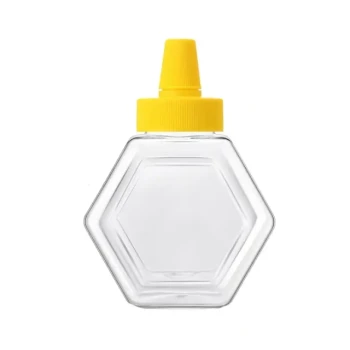
- Hexagonal Squeeze Honey Bottle with No Drip Lid
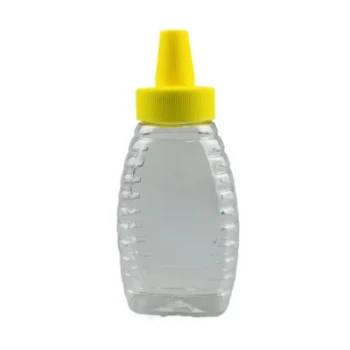
- Classic Beehive Honey Bottle Jar with Squeeze Dispenser Lid
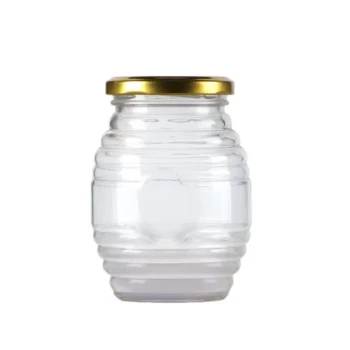
- Classic Glass Honey Jar with Metal Lug Cap for Beehive Storage
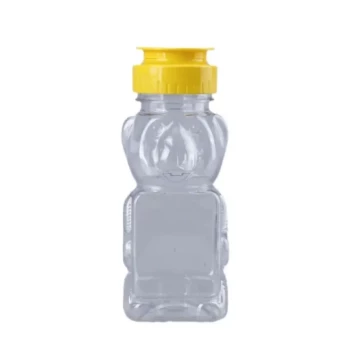
- Classic Honey Bear Jars with Flip Top Dispensing Cap for Liquid Sweeteners
- Premium Stainless Steel Honey Tank Bucket Pail with Reinforced Handle and Polished Finish
People Also Ask
- What are the benefits of squeeze bottles for honey packaging? Unlock Mess-Free Convenience & Control
- How do honey bottles contribute to the preservation of honey products? Secure Quality and Commercial Value
- What are the features of honey bottles? Design for Convenience & Long-Term Preservation
- How should honey bottles be prepared before pouring honey into them? The #1 Rule for Honey Longevity
- What are the features and benefits of using honey bottles for packaging? Optimize Preservation and Consumer Experience