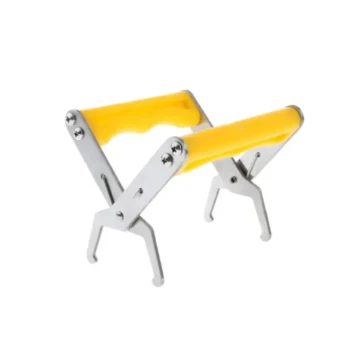
Half-height frame plastic mangers function as specialized structural interfaces designed to bridge the gap between natural bee behavior and industrial standardization. Installed at specific positions at the bottom of the beehive, they guide the natural construction of drone combs to create a uniform environment for larvae growth, while significantly reducing the labor required for harvesting and cleaning.
By compartmentalizing and standardizing the space for drone cell development, these mangers transform the harvesting of biological material into a streamlined process, enabling the rapid throughput necessary for commercial Apilarnil production.
The Mechanics of Standardized Growth
Strategic Hive Placement
To leverage the colony's natural instincts, these mangers are installed at specific positions at the bottom of the beehive.
This placement aligns with the bees' natural tendency to construct drone combs in peripheral or lower areas, encouraging immediate acceptance and construction.
Creating a Uniform Environment
The primary technical function of the manger is to provide a standardized space for cell development.
Unlike wild comb construction, which can be irregular, the plastic manger ensures that drone cells grow within fixed geometric parameters. This uniformity is critical for predicting yield and ensuring consistent larval development.
Streamlining Operational Efficiency
Facilitating Rapid Removal
For standardized production, speed is a critical variable. The half-height frame design allows beekeeping personnel to remove combs rapidly from the hive.
This minimizes disturbance to the rest of the colony and reduces the time the delicate larvae are exposed to ambient conditions outside the hive.
Simplifying Post-Harvest Processing
Once removed, the physical structure of the manger aids in the cleaning and processing of the combs.
Because the frames are standardized, they fit seamlessly into processing workflows, allowing for the efficient extraction of the combs containing the drone larvae without the irregularities found in natural comb frames.
The Role in Apilarnil Production
Preparing for Physical Breakdown
The ultimate goal of using these mangers is to prepare larvae for downstream processing. The system facilitates the harvest of 3-11 day old drone larvae, which are the required raw material for Apilarnil.
Ensuring Input Consistency
The standardization provided by the mangers supports the requirements of industrial-grade homogenization.
To successfully transform larvae into a viscous liquid rich in amino acids, hormones, and enzymes, the input material must be consistent. The mangers ensure that the biomass collected is uniform, facilitating the high-energy grinding process required to disrupt tissue structures effectively.
Understanding Operational Considerations
Specificity of Application
It is important to recognize that these components are highly specialized. They are designed specifically for the production of drone larvae, not for general honey or pollen storage.
Placement Precision
The effectiveness of the system relies heavily on correct installation. Failure to install the mangers at the specifically designated bottom positions may result in poor comb construction or rejection by the colony.
Making the Right Choice for Your Goal
When designing a production workflow for drone larvae, consider how these components align with your objectives:
- If your primary focus is large-scale processing: These mangers are essential for creating the uniform biological input required for industrial homogenization equipment.
- If your primary focus is labor efficiency: Implement these frames to drastically reduce the man-hours spent on manual comb removal and hive management.
The half-height frame plastic manger is the critical hardware link that allows natural biological production to meet the rigorous consistency demands of industrial processing.
Summary Table:
| Feature | Technical Function | Benefit for Apilarnil Production |
|---|---|---|
| Strategic Placement | Positioned at hive bottom | Aligns with natural bee instincts for drone comb construction |
| Geometric Design | Fixed cell parameters | Ensures uniform larval development and predictable biomass yield |
| Frame Structure | Half-height removable design | Facilitates rapid removal and minimizes colony disturbance |
| Processing Compatibility | Standardized dimensions | Streamlines cleaning, extraction, and industrial homogenization |
Elevate Your Commercial Apilarnil Production with HONESTBEE
Maximize your apiary's efficiency and industrial output with high-precision equipment. HONESTBEE specializes in catering to commercial apiaries and distributors by providing a comprehensive wholesale range of beekeeping tools and machinery. From standardized drone larvae mangers to hive-making and honey-filling machines, we offer the full spectrum of hardware and consumables required for large-scale success.
Our Value to You:
- Specialized Hardware: Precision-engineered tools for standardized biological harvesting.
- End-to-End Solutions: Everything from hive components to cultural merchandise.
- Industry Expertise: Designed to meet the rigorous consistency demands of commercial processing.
Ready to scale your beekeeping operations? Contact HONESTBEE today to discuss our wholesale offerings and industrial solutions!
References
- Devrim Oskay, Ahmet OĞUZ. The Effect of Substitute Feeding On Drone Larvae Production Performance in Honey Bee Colonies. DOI: 10.29185/hayuretim.1184151
This article is also based on technical information from HonestBee Knowledge Base .
Related Products
- Ergonomic High Visibility Plastic Frame Grip Handles
- Durable Plastic Frame Spacer
- Plastic Bee Frame Beekeeping Hive Frames for Wholesale
- Ergonomic Plastic Frame Spacer Tool for Rapid Hive Management Beekeeping
- 3.5L Plastic Beehive Frame Feeder Deep Frame Water Feeder for In Hive Use
People Also Ask
- What is the purpose of using frame grips in beekeeping operations? Elevate Your Apiary Precision & Hive Safety
- What is a frame grip and how is it used? Secure Your Hive Inspections with Ease
- What are Frame Grips used for in beekeeping? Boost Your Hive Inspection Efficiency & Bee Safety
- What is the purpose of a frame grip in beekeeping? Achieve Secure, One-Handed Frame Handling
- How should Frame Grips be maintained after use? A Guide to Biosecurity and Tool Longevity