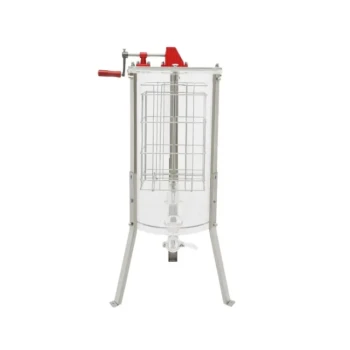
Honey processing equipment serves as the critical technical bridge between raw harvest and commercial viability. Its primary function is to standardize raw honey through the rigorous removal of impurities and the precise control of moisture content. By stabilizing the product against fermentation and spoilage, these systems ensure the honey meets the strict international standards required for high-value global trade.
Core Insight: Raw honey is inherently variable and prone to spoilage due to moisture and organic debris. Processing equipment transforms this unstable input into a consistent, shelf-stable commodity, directly unlocking profitability by enabling access to premium import and export markets.
The Mechanics of Standardization
To understand the value these systems add, we must look at how they alter the physical state of the honey to ensure consistency.
Purification and Debris Removal
Raw honey extracted from the comb often contains physical contaminants such as beeswax, larval remains, and other debris. Industrial-grade filtration and purification systems—including centrifuges and precision filters—mechanically separate these impurities.
This process transforms cloudy, raw mixtures into the clear, transparent liquid honey expected by consumers. By removing organic debris, the equipment also improves the overall hygiene levels of the final product.
Crystallization and Moisture Control
The most critical threat to honey's commercial value is fermentation, which is caused by excess water content. Vacuum moisture reduction and concentration equipment is used to lower the water content to a safe, standardized level.
Simultaneously, crystallization control devices manage the texture of the honey. By preventing premature crystallization and halting fermentation, this machinery significantly extends the product's shelf life, a prerequisite for successful large-scale distribution.
Economic Impact on the Value Chain
Beyond the physical treatment of the liquid, this equipment plays a strategic role in the economics of the honey industry.
Meeting International Trade Standards
Global markets enforce rigorous import and export regulations regarding food safety and purity. Standardized processing ensures that every batch adheres to these strict international protocols.
Without this mechanized standardization, honey producers risk rejection at borders due to inconsistent quality or hygiene violations.
Enhancing Trade Value and Profitability
Unprocessed honey faces limitations in distribution range and storage time. By utilizing professional processing machinery, producers convert a perishable agricultural product into a durable commercial good.
This conversion increases the trade value of the honey. It allows producers to move away from low-margin bulk sales and enter high-value retail markets, thereby enhancing the overall profitability of the operation.
Understanding the Trade-offs
While processing is essential for scale, it requires a delicate balance to maintain the product's integrity.
Balancing Purity with Nutritional Value
The goal of industrial processing is to remove impurities without stripping the honey of its value. Over-processing or excessive heating can destroy natural enzymes and nutritional components.
Modern industrial equipment is designed to provide "controlled physical force" and efficient filtration that preserves natural flavors and nutrients while still achieving clarity. The objective is to meet hygiene standards without rendering the honey sterile or "dead" effectively.
Standardization vs. Niche Appeal
Processing creates a uniform product, which is ideal for mass-market retail and export. However, this uniformity eliminates the unique textural variations found in raw honey. Producers must decide if their target market values shelf stability (requiring processing) or raw authenticity (requiring minimal intervention).
Making the Right Choice for Your Goal
The level of processing required depends entirely on the intended destination of your product.
- If your primary focus is International Export: You must prioritize vacuum moisture reduction and precision filtration to ensure the product meets strict shelf-life and clarity standards required by global importers.
- If your primary focus is the Domestic Health Market: You should focus on gentle filtration technologies that remove physical debris (wax/larvae) while retaining maximum enzyme activity and nutritional profiles.
Standardized processing equipment effectively removes the risks of spoilage and inconsistency, securing the product's position in the global supply chain.
Summary Table:
| Feature | Function | Impact on Value Chain |
|---|---|---|
| Filtration Systems | Removes wax, larvae, and organic debris | Improves clarity, hygiene, and consumer appeal |
| Moisture Reduction | Lowers water content via vacuum technology | Prevents fermentation and ensures shelf stability |
| Crystallization Control | Manages texture and physical state | Extends shelf life and maintains product consistency |
| Standardization | Aligns product with international protocols | Enables access to premium export and retail markets |
Elevate Your Honey Production with HONESTBEE
Maximize your apiary's profitability by transforming raw harvest into premium, export-ready honey. At HONESTBEE, we specialize in empowering commercial apiaries and distributors with high-performance beekeeping tools and industrial machinery.
Our comprehensive wholesale offering includes:
- Advanced Machinery: From high-precision honey-filling machines to industrial-grade moisture reduction systems.
- Hardware & Consumables: A full spectrum of specialized hive-making tools and essential beekeeping supplies.
- Cultural Merchandise: Unique honey-themed products to diversify your brand.
Whether you are scaling for international trade or optimizing domestic distribution, HONESTBEE provides the technical expertise and equipment you need to succeed.
Contact HONESTBEE Today to Discuss Your Wholesale Needs
References
- Duran GÜLER. ANALYSIS OF SIMILARITIES AND DIFFERENCES IN BEEKEEPING BETWEEN TÜRKİYE AND EUROPEAN UNION COUNTRIES. DOI: 10.31467/uluaricilik.1487445
This article is also based on technical information from HonestBee Knowledge Base .
Related Products
- Electric Double Wall Honey Filtering Machine Purifier Equipment for Honey Processing Plant
- 0.5T Capacity Honey Dehumidifier Dryer with Vacuum Heating and Thickening Filtering Machine
- Heavy Duty Stainless Steel Honey Processing Machine Decrystallizing Tank
- Double Wall Honey Heating Stirring Homogenizer Mixing Machine with Various Capacity
- Economy Honey Homogenizer Mixer and Melting Machine for Beekeeping
People Also Ask
- What types of equipment are used in honey filtering? Build an Efficient System for Pure, Marketable Honey
- What is the process of filtering honey? A Guide to Clean, Pure, and Market-Ready Honey
- What is the overall importance of using the right equipment in honey filtering? Boost Quality & Marketability
- What is a potential concern associated with filtering honey? Balancing Clarity and Pollen Preservation
- What are the benefits of drying honey filtering equipment after use? Protect Your Honey Quality & Equipment Investment