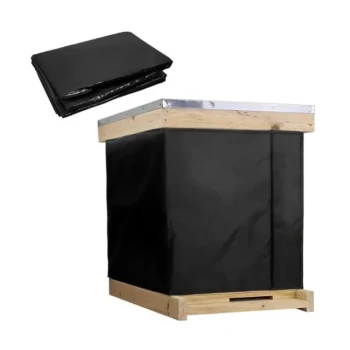
Sackcloth serves as a dual-purpose consumable material that balances environmental regulation with physical protection. Specifically, it provides basic thermal insulation and high breathability, acting as a permeable barrier that absorbs moisture from evaporation to prevent the buildup of harmful condensation within the hive.
By prioritizing breathability and moisture absorption over heavy insulation, sackcloth acts as a regulator that keeps the hive dry and prevents pest intrusion, addressing two of the most critical threats to colony health.
Regulating Hive Humidity and Airflow
Preventing Condensation Buildup
One of the primary functions of sackcloth is moisture management. The material effectively absorbs moisture generated by evaporation inside the hive.
By capturing this moisture, sackcloth prevents the accumulation of harmful condensation. This is critical for preventing the damp conditions that can compromise colony health.
Controlling Humidity Levels
Beyond simply absorbing water, sackcloth actively regulates the humidity within the hive structure.
It acts as a buffer, managing the moisture load to ensure the internal environment remains stable rather than becoming saturated.
High Breathability
Sackcloth is defined by its high breathability.
Unlike synthetic barriers that might trap stale air, the natural fibers allow for consistent air exchange. This property ensures the hive is insulated but not hermetically sealed.
Physical Barriers and Thermal Properties
Basic Thermal Insulation
While its primary asset is moisture control, sackcloth does provide basic thermal insulation.
It offers a layer of warmth protection for the colony. However, the reference characterizes this insulation as "basic," distinguishing it from high-performance thermal barriers.
Defense Against Pests
Sackcloth serves a distinct structural function in hive management.
It acts as a physical barrier designed to prevent pest intrusion. This creates a secure perimeter that protects the bees from external biological threats.
Natural Composition
The material is composed of natural fibers.
This composition aligns with the biological requirements of the hive, offering a consumable solution that integrates safely with the bees' living environment.
Understanding the Trade-offs
Thermal Limitations
It is important to note that sackcloth provides only basic thermal insulation.
While it effectively retains some heat, it prioritizes breathability. In scenarios requiring maximum heat retention, this natural permeability may be less effective than denser, impermeable insulators.
Absorption vs. Repulsion
Sackcloth functions by absorbing moisture rather than repelling it.
This means the material holds moisture to keep it away from the bees. This is distinct from waterproof materials that would simply block water but potentially trap internal condensation.
Making the Right Choice for Your Goal
When evaluating sackcloth for your apiary, consider your primary environmental challenges:
- If your primary focus is Humidity Control: Sackcloth is the ideal choice for preventing condensation buildup by actively absorbing evaporation.
- If your primary focus is Pest Management: Rely on sackcloth as a breathable physical barrier to block intrusion without sealing off airflow.
- If your primary focus is Maximum Heat Retention: Be aware that sackcloth offers only basic insulation and is better suited for moisture regulation than extreme thermal protection.
Sackcloth provides a balanced, natural solution for keeping hives dry, breathable, and secure.
Summary Table:
| Functional Property | Benefit to Colony | Key Advantage |
|---|---|---|
| Moisture Absorption | Prevents condensation buildup | Keeps the hive dry and healthy |
| High Breathability | Facilitates consistent air exchange | Prevents stale air and saturation |
| Basic Insulation | Provides foundational warmth | Balanced thermal protection |
| Physical Barrier | Blocks pest intrusion | Enhances hive security |
| Natural Fibers | Eco-friendly & bee-safe | Safe integration with hive biology |
Elevate Your Apiary Efficiency with HONESTBEE
At HONESTBEE, we specialize in supporting commercial apiaries and distributors with premium beekeeping solutions. Whether you need natural sackcloth consumables for humidity regulation or advanced hive-making and honey-filling machinery, our comprehensive wholesale portfolio has you covered.
Why partner with us?
- Full Spectrum Supply: From specialized hardware to essential industry consumables.
- Commercial Grade: Tailored for large-scale operations and global distributors.
- Expert Support: We provide the tools and machinery needed to scale your honey production.
Ready to optimize your beekeeping operations? Contact HONESTBEE today to discuss our wholesale offerings and how we can add value to your business.
References
- B. Hemeida, AHAMED O. EL-ASHHAB. EFFECT OF THE INTERNAL SIZE AND THERMAL INSULATION OF THE HIVE ON BEE COLONIES STRINGTH AND PRODUCTIVITY. DOI: 10.21608/jssae.2015.41813
This article is also based on technical information from HonestBee Knowledge Base .
Related Products
- Professional Insulated Winter Hive Wrap for Beekeeping
- Inner Beehive Cover for Beekeeping Bee Hive Inner Cover
- Professional Insulated Plastic Bee Hives
- Three-Layer Ventilated Beekeeper Suit with Structured Fencing Veil
- Professional 600D Oxford Cloth Beekeeping Tool Bag with 8 Pockets and Elastic Loops
People Also Ask
- What are the steps to properly wrap a beehive for winter? Ensure Your Colony Survives the Cold
- When is the best time to wrap a beehive for winter? A Guide to Perfect Winterization Timing
- How do professional insulation wraps provide protection for bee colonies? Optimize Winter Survival & Energy Efficiency
- What are the technical benefits of using winter wraps for beehive insulation? Boost Colony Survival & Hive Health
- What are the benefits of using insulated covers for hives? Ensure Colony Survival and Health