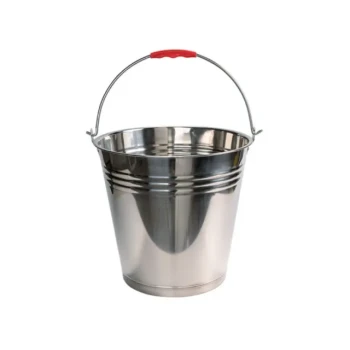
20-liter food-grade pails serve as critical intermediate vessels that bridge the gap between raw extraction and final bottling. These containers provide a standardized, airtight environment that protects bulk honey from moisture absorption, contamination, and light degradation while facilitating essential logistical steps like weighing, grading, and monitoring crystallization.
The core value of the 20-liter pail lies in its ability to maintain the honey's "food-safe" status and chemical stability during the vulnerable transition phase between the hive and the retail jar.
Preserving Honey Integrity and Safety
Protection Against Environmental Factors
The primary function of these pails is to create a secure barrier against the environment. Airtight lids are essential because honey is hygroscopic, meaning it naturally absorbs moisture from the air.
By sealing the honey immediately after extraction, the pail prevents fermentation caused by excess water content.
Preventing Light Degradation
These pails provide a light-protected environment for bulk storage. Prolonged exposure to light can degrade the quality of honey, affecting both flavor and nutritional properties.
The opaque nature of standard 20-liter pails helps preserve the honey’s original characteristics until it is ready for final packaging.
Ensuring Material Safety
As intermediate containers, these pails ensure that honey remains in contact only with food-safe materials.
This creates a continuous chain of custody from the extraction site to the final bottling facility, eliminating the risk of chemical leaching that can occur with non-food-grade plastics.
Operational and Logistical Functions
Monitoring Natural Crystallization
In cooler climates, these pails serve as observation units for the natural hardening of honey.
Beekeepers can monitor the crystallization process within these manageable units, allowing them to determine the optimal time for processing or liquefaction without disturbing a massive bulk tank.
Facilitating Grading and Quality Screening
The pails allow producers to categorize honey immediately following extraction.
By separating honey into different buckets based on color and viscosity, producers can achieve standardized grading. This granular separation enables the creation of uniform logistics units required for specific blends or high-value retail packaging.
Immediate Weighing and Storage
Functionally, these buckets are used for the immediate weighing and temporary storage of the harvest.
They act as the standard unit of measure for inventory, allowing producers to quantify their yield accurately before the honey moves to large-scale blending or heating facilities.
Understanding the Trade-offs
Manual Handling Challenges
While 20-liter pails are portable, they become significant ergonomic hazards when full. A 20-liter pail of honey weighs approximately 28–30 kg (over 60 lbs) due to honey's high density.
Moving large numbers of these pails manually requires significant physical effort and increases the risk of workplace injury compared to pumping honey into drums or bulk tanks.
Processing Efficiency
Pails are excellent for batch separation but inefficient for high-volume industrial processing.
If the honey crystallizes hard within the pail, it requires individual heating or mechanical removal. This is significantly more labor-intensive than using drum heaters or bulk tank agitators found in professional processing facilities.
Making the Right Choice for Your Goal
To determine if 20-liter pails are the right storage solution for your operation, consider your volume and quality control needs:
- If your primary focus is Artisanal Quality Control: Use these pails to segregate different floral sources or harvest batches, allowing for precise grading based on color and viscosity.
- If your primary focus is Long-Term Storage: Ensure the lids are perfectly sealed and airtight to prevent moisture absorption, which is the leading cause of spoilage in stored honey.
- If your primary focus is Logistics: Utilize these pails as your standardized unit for weighing and inventory transfer to larger processing cooperatives.
Standardizing your intermediate storage ensures that the purity of the harvest is maintained from the moment of extraction to the final pour.
Summary Table:
| Function | Key Benefit | Technical Aspect |
|---|---|---|
| Environmental Protection | Prevents fermentation and spoilage | Airtight seals block moisture and light |
| Quality Control | Enables granular grading and sorting | Easy separation by color and viscosity |
| Material Safety | Maintains food-safe status | BPA-free, food-grade plastic construction |
| Operational Utility | Simplified inventory management | Standardized unit for weighing and storage |
| Crystallization Monitoring | Optimizes processing timing | Visible and manageable batch units |
Elevate Your Honey Production with HONESTBEE Professional Solutions
Maintaining the integrity of your harvest requires the right equipment. HONESTBEE provides commercial apiaries and distributors with a comprehensive range of premium beekeeping tools, from food-grade storage pails to advanced honey-filling machines and hive-making hardware.
Whether you are scaling your distribution or refining artisanal quality control, our wholesale portfolio is designed to enhance your efficiency and product safety. Partner with HONESTBEE to secure your supply chain—Contact us today to discuss your bulk equipment needs!
References
- Rolyne Mae Pajarillo, Mac Donald Acosta. Profiling of the Beekeeping Industry: Status of Beekeeping in Region 1 and Cordillera Administrative Region. DOI: 10.62960/dmmmsu.v6i.32
This article is also based on technical information from HonestBee Knowledge Base .
Related Products
- Stainless Steel Pail Perch Bucket Bench
- Food Grade Plastic Honey Bucket Pail for Beekeeping
- Premium Stainless Steel Honey Tank Bucket Pail with Reinforced Handle and Polished Finish
People Also Ask
- How do professional-grade Pollen Drying Ovens preserve active ingredients? Ensure Bioactive Potency with Precision
- What are the technical requirements for using a constant temperature drying oven for raw propolis? Expert Guide
- How do tipping bucket mechanisms function in apiary rain monitoring? Efficient Magnetic Sensing for Remote Hives
- How do forced circulation drying ovens sterilize beekeeping tools? Efficient Oxidation for Metal Equipment Safety
- What roles do iron sieve basins play in honey filtration and beeswax refining? Essential Two-in-One Processing Guide