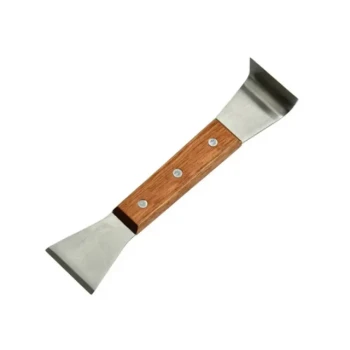
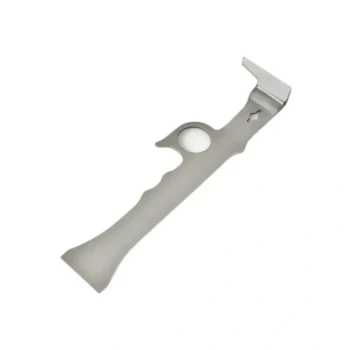
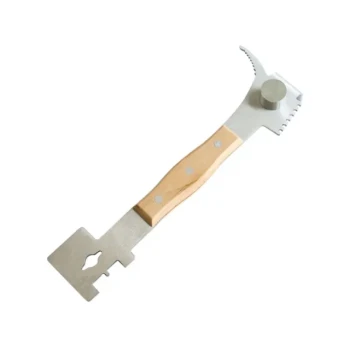
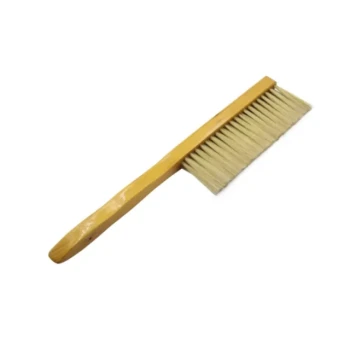
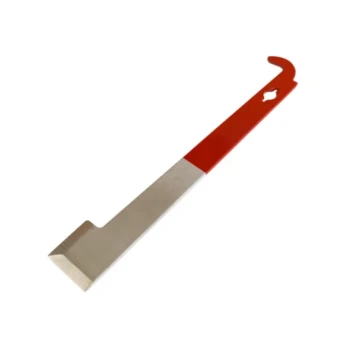
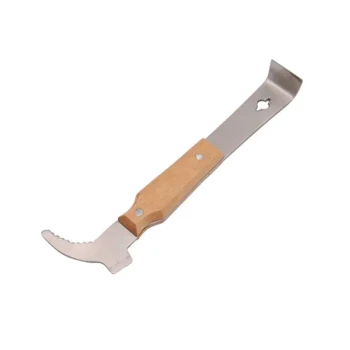
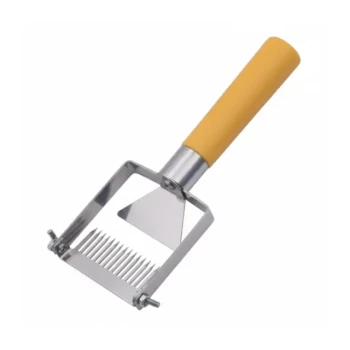
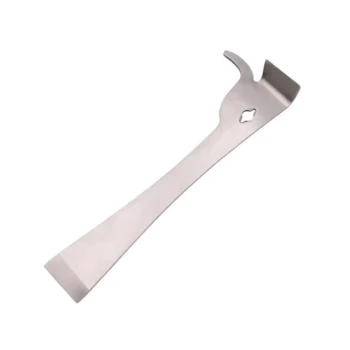
The beekeeping hive tool functions as the primary mechanical interface for colony access. By utilizing the lever principle and a flat blade to separate frames bonded by propolis, it allows the beekeeper to perform critical spring inspections regarding the queen's presence, brood viability, and internal spatial organization.
The hive tool is not merely a wedge; it is a precision instrument for refined colony management that enables the environmental optimization necessary for rapid spring reproduction.
The Mechanics of Colony Access
Overcoming Propolis Bonds
Bees naturally seal hive components with propolis, a resinous bonding agent. The hive tool utilizes a flat blade and leverage to pry these components apart without damaging the wooden frames. This mechanical separation is the prerequisite for any internal audit.
Establishing Physical Access
Once the seal is broken, the tool is used to physically lift and move frames. This creates the necessary gap to safely withdraw combs for visual inspection. Without this tool, the force required to move frames would likely result in equipment breakage or colony agitation.
Critical Spring Audit Functions
Verifying Queen Vitality
The primary biological audit during spring is inspecting for the presence of the queen bee. The hive tool allows the beekeeper to navigate through the brood nest to visually confirm she is active. This confirms the colony has the leadership required for growth.
Assessing Brood Development
Beyond the queen, the tool facilitates the inspection of egg-to-larva ratios. By exposing specific frames, beekeepers can evaluate if the colony is expanding its population at a healthy rate. This data point is essential for predicting the colony's future strength.
Optimizing the Hive Environment
Adjusting Internal Space
Spring audits are not just observational; they are adjustment periods. The hive tool is used to fine-tune bee spaces—the precise gaps between frames. Proper spacing prevents the bees from building "burr comb" (unwanted connections) that hinders management.
Regulating Temperature and Humidity
Precise manipulation of frames directly impacts the hive's microclimate. By optimizing the internal arrangement, the beekeeper aids the colony in controlling temperature and humidity. This stability is the physical foundation required for successful larval development.
Operational Trade-offs
Force vs. Precision
While the tool is designed for leverage, applying too much force can be detrimental. Excessive pressure can snap wooden frames or crush bees caught between contact points. Precise operation is required to break propolis seals without sending shockwaves through the colony.
Disruption Risks
Every time a hive is pried open, the colony's internal atmosphere is compromised. While the tool is necessary, its use must be efficient to minimize the duration of the opening. Prolonged exposure during audits can disrupt the very temperature regulation you are trying to optimize.
Making the Right Choice for Your Goal
The hive tool is the catalyst for shifting a colony from survival mode to production mode.
- If your primary focus is Rapid Colony Reproduction: Use the tool to meticulously optimize bee space and temperature control to support sensitive larval growth.
- If your primary focus is Future Honey Production: Use the tool to verify the egg-to-larva ratio early, ensuring the population will peak exactly when the nectar flow begins.
Mastering the hive tool transforms a rough inspection into a refined management strategy.
Summary Table:
| Function | Description | Impact on Colony |
|---|---|---|
| Propolis Breaking | Uses leverage to separate frames sealed by resin. | Enables access without equipment damage. |
| Queen Verification | Allows navigation through the brood nest. | Confirms colony leadership and health. |
| Brood Assessment | Facilitates inspection of egg-to-larva ratios. | Predicts future colony strength and growth. |
| Space Adjustment | Fine-tunes 'bee spaces' and removes burr comb. | Prevents management obstacles; stabilizes climate. |
| Microclimate Control | Reorganizes frames to regulate heat/humidity. | Supports optimal larval development. |
Elevate Your Apiary Operations with HONESTBEE
Precision tools are the backbone of professional beekeeping. At HONESTBEE, we specialize in supporting commercial apiaries and distributors with a comprehensive wholesale range of high-performance beekeeping equipment. From ergonomic chisel hive tools and protective gear to industrial-grade honey-filling machines and specialized hive-making machinery, we provide everything needed to scale your production.
Partner with us to access durable, professional-grade hardware and essential consumables that ensure your colonies thrive and your honey production peaks.
Ready to upgrade your wholesale supply? Contact us today to discuss our bulk solutions and cultural merchandise tailored for the global beekeeping industry.
References
- Б.Д. Гармаев, A A Martemyanova. Hygienic behavior of bees as an element of sterility in the production of environmentally friendly products. DOI: 10.1088/1755-1315/981/3/032078
This article is also based on technical information from HonestBee Knowledge Base .
Related Products
- Stainless Steel J Hook Hive Tool for Beekeeping
- Professional Dual-End Stainless Steel Hive Tool for Beekeeping
- HONESTBEE Classic Pry Bar Hive Tool with High Visibility Finish for Beekeeping
- HONESTBEE Professional Mini J-Hook Hive Tool for Beekeeping
- HONESTBEE Advanced Ergonomic Stainless Steel Hive Tool for Beekeeping
People Also Ask
- What specific challenges do beekeeping hive tools address during hive maintenance? Essential Solutions for Apiaries
- What are the features of a J-hook hive tool? Effortlessly Lift Frames with Superior Leverage
- What is a J-hook hive tool and why is it favored by some beekeepers? Master Gentle Frame Handling
- What is the purpose of the J-hook hive tool? Effortlessly Lift Frames with Superior Leverage
- How is a J-hook hive tool designed and what is its primary use? Master Effortless Hive Inspections