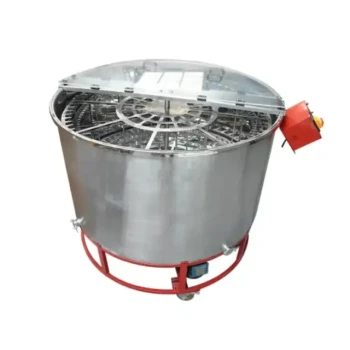
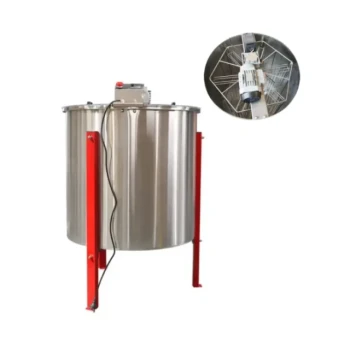
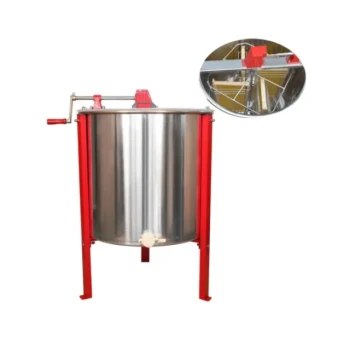
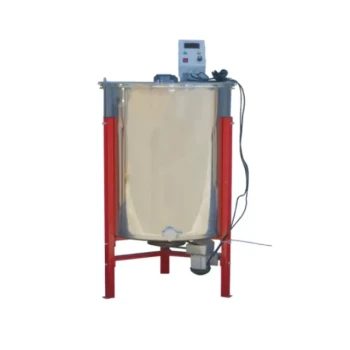
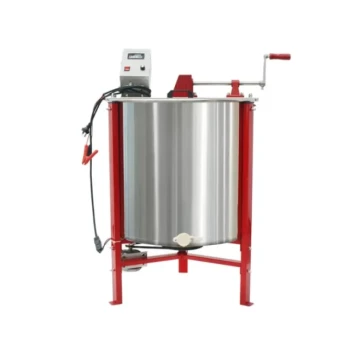
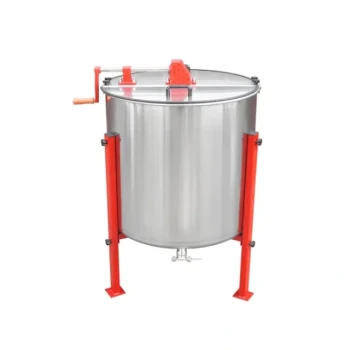
A honey extractor is a specialized mechanical device designed to harvest honey from honeycombs using centrifugal force. By spinning frames within a drum, the device forces liquid honey out of the cells and onto the inner walls without destroying the delicate wax structure. This allows the intact combs to be returned to the hive for immediate reuse by the colony.
Core Takeaway The primary value of an extractor is that it separates honey from the comb without damaging the wax foundation. This preserves the bees' hard work, allowing them to refill existing frames immediately rather than expending energy to rebuild the comb from scratch.
The Mechanics of Extraction
Using Centrifugal Force
The extractor consists of a drum—typically made of stainless steel or plastic—holding a central basket. As the basket spins, physics takes over, flinging the honey out of the uncapped cells and onto the sides of the drum.
Collection and Filtration
Once the honey hits the drum walls, gravity pulls it to the bottom of the unit. From there, it drains through a gate or tap, ready to be filtered and bottled.
Comb Preservation
Unlike the "crush and strain" method, extraction keeps the frame structure rigid. This is critical for the health of the hive, as producing wax requires significantly more energy from the bees than producing honey.
Critical Factors for Selection
Capacity Requirements
The most significant efficiency factor is how many frames the unit can process at once. For operations managing multiple hives, you should select an extractor that handles at least four frames simultaneously.
Material Construction
Material dictates both durability and hygiene. Stainless steel is the preferred choice for most beekeepers because it is durable, rust-resistant, and easy to clean. Plastic options exist but may not offer the same longevity.
Operational Height
Consider the physical design of the unit's legs or stand. The gate must be high enough to allow a collection bucket or sieve to fit comfortably underneath to streamline the draining process.
Power Source
Extractors are available in manual (hand-crank) or electric models. Manual units are cost-effective for small hobbyists, while electric motors provide consistent speed and significantly reduce physical labor for larger harvests.
Understanding the Trade-offs
Cost vs. Efficiency
Electric, high-capacity extractors are a significant financial investment. While a 4-frame electric model streamlines the process for multi-hive apiaries, the cost may not be justifiable for a beekeeper with only one or two colonies.
Storage and Maintenance
Larger extractors require significant storage space when not in use—which is most of the year. Furthermore, while stainless steel is durable, it requires rigorous cleaning after harvest to prevent residue buildup or fermentation.
Making the Right Choice for Your Goal
To select the right tool, you must balance your budget against the size of your operation and your physical capabilities.
- If your primary focus is efficiency for multiple hives: Prioritize an electric extractor with a capacity of at least four frames to minimize time spent spinning.
- If your primary focus is budget or small-scale hobbyist beekeeping: A manual, 2-frame extractor is a cost-effective entry point that still preserves your combs.
- If your primary focus is long-term durability: Invest in a unit made of high-grade stainless steel rather than plastic components.
Selecting the right extractor turns the most labor-intensive day of the year into a streamlined, manageable process.
Summary Table:
| Feature | Manual Extractor | Electric Extractor |
|---|---|---|
| Best For | Small-scale hobbyists (1-2 hives) | Commercial apiaries & multi-hive setups |
| Frame Capacity | Typically 2-4 frames | 4 to 20+ frames |
| Labor Intensity | High (manual hand-cranking) | Low (automated motor) |
| Material | Plastic or Stainless Steel | High-grade Stainless Steel |
| Price Range | Budget-friendly | Premium investment |
Streamline Your Honey Production with HONESTBEE
As a dedicated partner to commercial apiaries and global distributors, HONESTBEE provides the professional-grade machinery you need to scale your operations. From high-capacity stainless steel honey extractors and honey-filling machines to durable hive-making equipment, our comprehensive wholesale portfolio is designed to maximize your efficiency and output.
Whether you are looking to outfit a large-scale honey processing facility or source premium beekeeping tools and essential consumables for distribution, we deliver the quality and reliability your business demands.
Ready to elevate your harvest? Contact us today to explore our wholesale machinery and cultural merchandise tailored for your success!
Related Products
- HONESTBEE 72 Frame Industrial Electric Honey Extractor for Beekeeping
- Commercial Electric 12 Frame Honey Extractor Spinner Motorized Honey Extractor
- HONESTBEE 6 Frame Self Reversing Electric Honey Extractor for Beekeeping
- HONESTBEE 3-Frame Manual Acrylic Honey Extractor
- Stainless Steel Manual 8 Frame Radial Honey Extractor Machine for Beehives
People Also Ask
- What is the importance of balancing honeycomb frames within a honey extractor? Ensure Stability and Protect Machinery
- How is honey separated from the frames after they are uncapped? Efficient Extraction Methods for High Yields
- What are the main benefits of using a honey extractor? Maximize Yields and Protect Your Honeycomb
- What are the recommended methods for removing honey from the honeycomb? Top Extraction Techniques for Maximum Efficiency
- How do manual honey extractors compare to electric honey extractors? Choosing the Right Tool for Your Apiary Growth