
The 3-in-1 Screened Bottom Board combines three essential hive functions into a single piece of equipment. At its core, it serves as a landing board for hive traffic, a fully screened bottom for ventilation and mite control, and a solid bottom for insulation and monitoring. This versatility allows a beekeeper to adapt the hive to changing seasonal needs without swapping out major components.
The true value of the 3-in-1 design isn't just convenience; it's about providing the beekeeper with adaptive control over the hive's internal environment. This allows for effective ventilation, pest management, and seasonal adjustments, all from one foundational component.
The Core Functions Explained
The power of this design lies in understanding how and when to use each of its three configurations. Each mode serves a distinct purpose in managing the health and productivity of the colony.
Function 1: The Screened Board for Ventilation & Mite Control
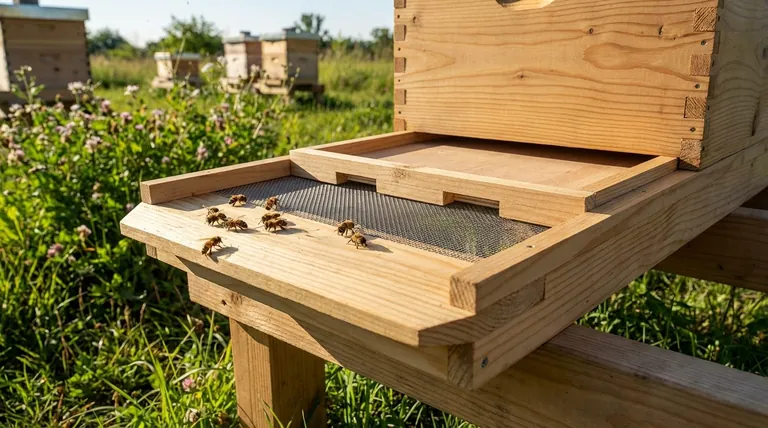
The default and most common configuration is the open screen. A sturdy mesh screen serves as the floor of the hive.
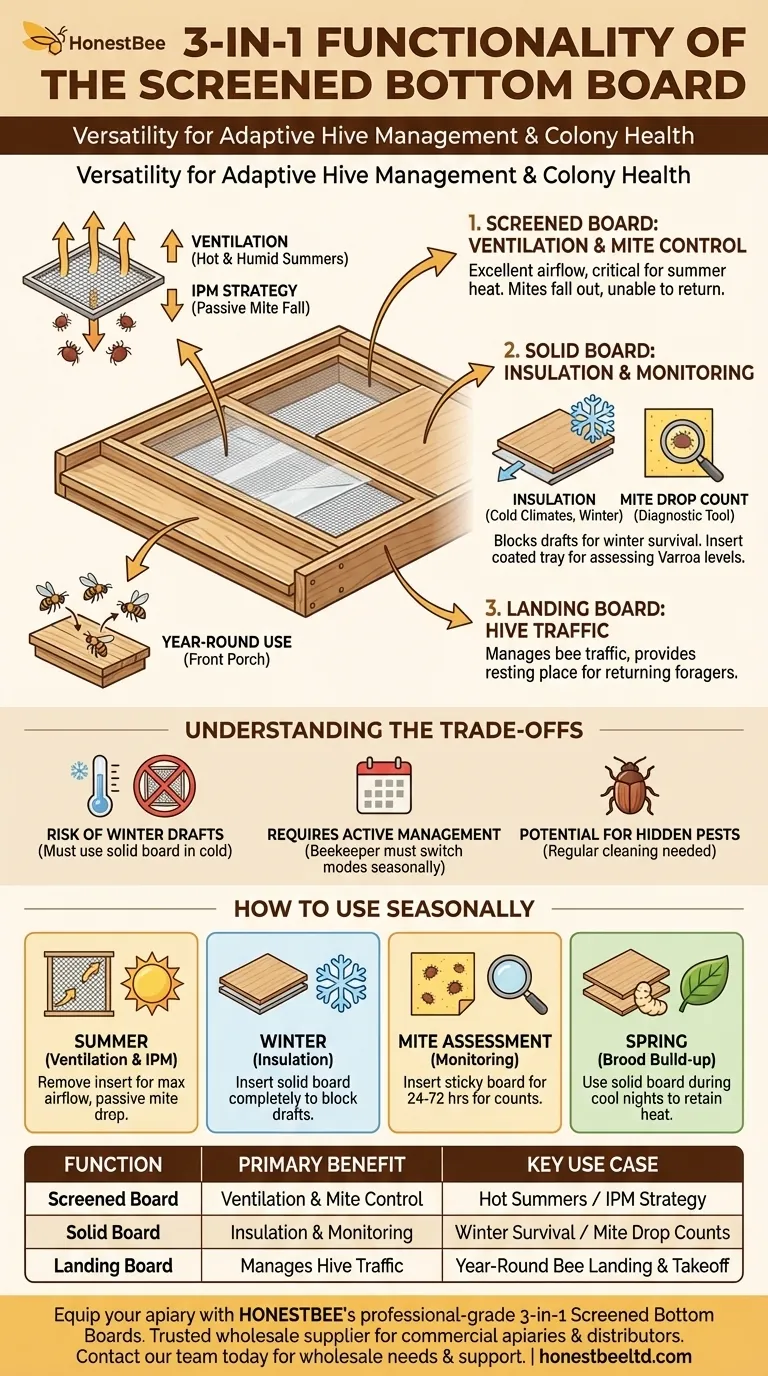
This provides two primary benefits. First, it creates excellent ventilation, allowing excess moisture and heat to escape, which is critical during hot and humid summers. Second, it is a key tool in an Integrated Pest Management (IPM) strategy for Varroa mites. When mites fall off a bee, they drop through the screen and out of the hive, unable to climb back in to find a new host.
Function 2: The Solid Board for Insulation & Monitoring
The 3-in-1 board includes a removable tray or panel, often made of plastic or wood. When this panel is inserted, it closes off the screen and transforms the base into a solid bottom board.
This mode is essential for two reasons. In cold climates, inserting the solid board helps insulate the hive for winter, preventing cold drafts from chilling the colony. It is also a critical diagnostic tool; by coating the board with a non-stick spray or petroleum jelly (creating a "sticky board"), you can perform a mite drop count to assess the level of Varroa infestation within the hive.
Function 3: The Landing Board for Hive Traffic
Regardless of its configuration, the physical structure of the bottom board serves as the hive's front porch.
The board typically extends past the front of the hive body, creating a landing and takeoff platform for foraging bees. This manages bee traffic and gives returning foragers a place to rest before entering the hive.
Understanding the Trade-offs
While highly versatile, the 3-in-1 design is not a "set it and forget it" solution. Its effectiveness depends entirely on correct and timely management by the beekeeper.
Risk of Winter Drafts
If you live in a region with harsh winters, failing to insert the solid board can be detrimental. An open screen can create a severe updraft that makes it impossible for the colony to maintain its crucial winter cluster temperature.
Requires Active Management
The board's versatility is also its main requirement. A beekeeper must know when to switch between modes. Leaving the solid board in during a hot summer can lead to overheating and moisture buildup, while leaving the screen open during a deep freeze can be fatal.
Potential for Hidden Pests
The small gap between the screen and the inserted solid board can become a hiding place for other pests, such as wax moth larvae or small hive beetles. Regular inspection and cleaning of this area are necessary to prevent secondary infestations.
How to Use the 3-in-1 Board Seasonally
Your goal determines how you should configure the board. Use this guide to make adjustments throughout the year.
- If your primary focus is summer ventilation and passive mite control: Keep the insert removed to maximize airflow and allow mites to fall out of the hive.
- If your primary focus is winter survival and heat conservation: Insert the solid board completely to block cold drafts and help the colony maintain its temperature.
- If your primary focus is assessing Varroa mite levels: Insert a prepared sticky board for a 24-72 hour period to perform a mite drop count, then remove it.
- If your primary focus is spring brood build-up: Consider keeping the solid board in during cool spring nights to help the bees retain the heat needed for raising new brood efficiently.
Mastering the 3-in-1 board empowers you to proactively manage your colony's health and comfort throughout the year.
Summary Table:
| Function | Primary Benefit | Key Use Case |
|---|---|---|
| Screened Board | Ventilation & Mite Control | Hot & Humid Summers / IPM Strategy |
| Solid Board | Insulation & Monitoring | Winter Survival / Mite Drop Counts |
| Landing Board | Manages Hive Traffic | Year-Round Bee Landing & Takeoff |
Equip your apiary with HONESTBEE's professional-grade 3-in-1 Screened Bottom Boards. As a trusted wholesale supplier for commercial apiaries and beekeeping equipment distributors, we provide durable, versatile equipment that empowers you to proactively manage colony health year-round. Enhance your IPM strategy and seasonal hive management—contact our team today to discuss your wholesale needs and see how our solutions can support your operation's success.
Visual Guide
Related Products
- Langstroth Screen Bottom Board for Beekeeping Wholesale
- Australian Pine Wood Langstroth Screen Bottom Board for Wholesale
- Langstroth Solid Bottom Board for Beekeeping
- Solid Bottom Board Australian Pine Wood Langstroth Bottom Board for Wholesale
People Also Ask
- What is the primary function of a screen bottom board? Achieve Accurate Varroa Mite Assessment in Your Apiary
- What is the primary function of a standard screen bottom board when assessing honeybee grooming behavior? - Key Mite Data
- Why is the combination of a screen bottom board and a sticky trap board essential for monitoring Varroa mite? Guide
- What role do screen bottom boards and monitoring inserts play in assessing Varroa mite mortality and maintaining hive hygiene in Langstroth hives?
- Why might a screen bottom board be less effective for pest control? Understanding the 'Mixed Sunlight' Complication


