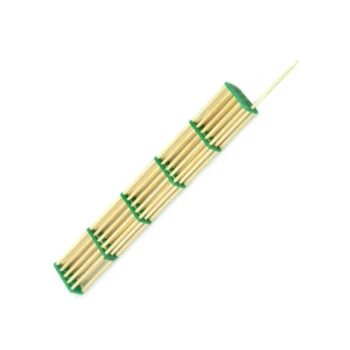
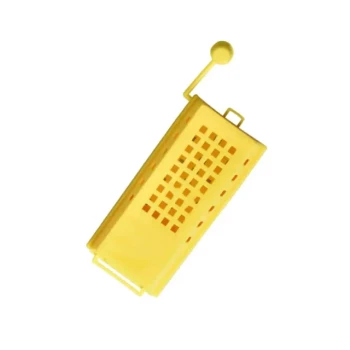
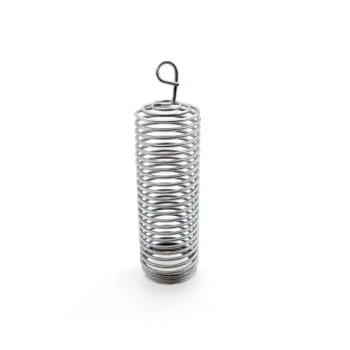
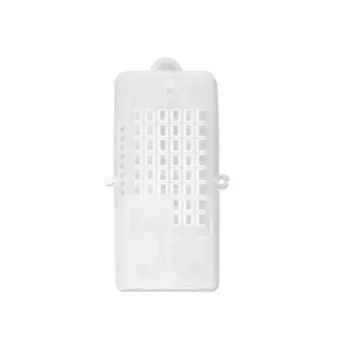
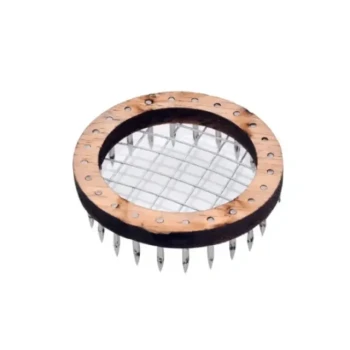
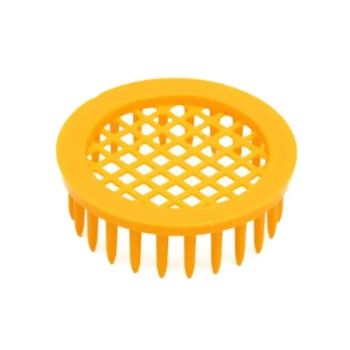
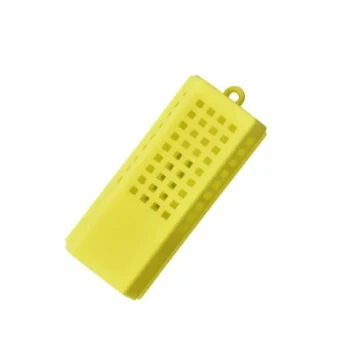
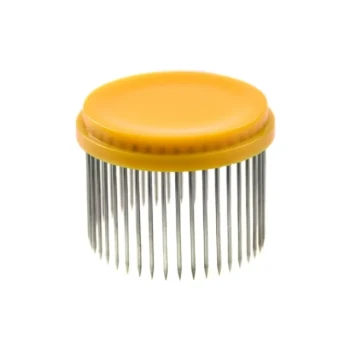
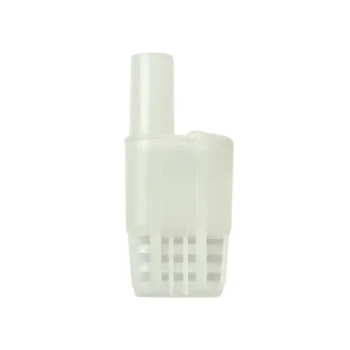
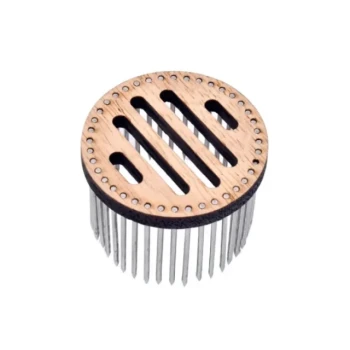
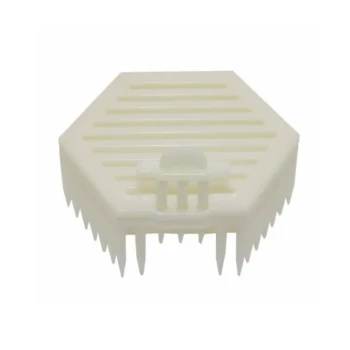
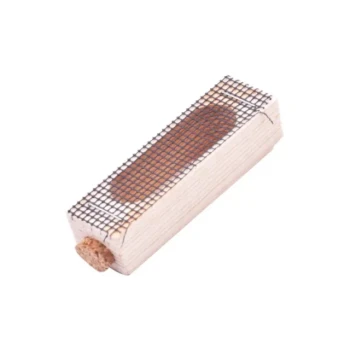
The core function of a specialized Queen Confinement Cage (QCC) is to physically isolate the queen bee to strictly limit her egg-laying space, thereby intentionally interrupting the colony’s brood cycle. This forced "brood break" eliminates the availability of new larvae and pupae, which serves as a critical mechanical intervention to disrupt the life cycle of dependent hive parasites.
The Strategic Goal By temporarily halting the production of brood, the QCC deprives parasitic mites of their food source and reproductive habitat. This drives mites out of the protection of sealed cells, causing them to die from starvation or rendering them fully exposed to subsequent treatments.
The Mechanics of Brood Interruption
Limiting Reproductive Space
The QCC functions through physical isolation. By placing the queen within the cage, beekeepers restrict her movement to a defined area where she cannot deposit eggs into the wider comb.
This restriction halts the continuous generation of new larvae. Without a steady supply of eggs, the colony enters a calculated gap in development known as a brood break.
Forcing Mite Dispersal
Parasitic mites, such as Tropilaelaps mercedesae, act as obligate parasites that are highly dependent on honeybee brood.
When the QCC stops the creation of new brood, these mites are forced into a dispersal phase. They can no longer hide or feed within the comb cells, compelling them to move onto adult bees or die out.
Targeting Parasitic Vulnerabilities
Inducing Starvation and Dehydration
Mites require the hemolymph of larvae and pupae to survive and reproduce.
When the QCC successfully interrupts the brood cycle, this food source disappears. Consequently, the mites suffer from fatal dehydration and starvation due to the lack of accessible hosts.
Eliminating Protective Shielding
Under normal conditions, mites hide inside sealed brood cells, which shields them from external threats and chemical applications.
By preventing the capping of new brood, the QCC ensures all mites are exposed. This loss of physical protection significantly increases the efficacy of contact chemical treatments, as the parasites have nowhere to retreat.
Distinguishing the QCC from Other Tools
QCC vs. Queen Excluders
It is vital not to confuse a QCC with a standard Queen Excluder.
A Queen Excluder is a precision barrier designed to manage colony expansion and swarming by keeping the queen out of honey supers while allowing workers to pass. It coordinates hive rhythm but does not stop egg-laying entirely; the QCC is a medical intervention tool designed to stop reproduction for a specific timeframe.
QCC vs. Incubation Cages
Similarly, wooden mesh comb cages serve a different purpose entirely.
These cages are used for indoor incubation and research, isolating brood frames to ensure airflow and precise sampling of newly emerged bees. Unlike the QCC, which targets the queen to stop the cycle, incubation cages protect the brood to manage emergence.
Optimizing Your Hive Management Strategy
To select the correct equipment for your specific apiary challenges, consider the following objectives:
- If your primary focus is eradicating parasitic mites: Utilize a Queen Confinement Cage (QCC) to force a brood break, expose mites to treatment, and induce pest starvation.
- If your primary focus is managing swarms or honey harvest: Utilize a Queen Excluder to restrict the queen's location without halting her egg-laying capabilities.
- If your primary focus is research or precise sampling: Utilize wooden mesh comb cages to isolate emerging brood frames in a controlled environment.
Effective pest management relies not just on chemical treatment, but on controlling the biological timing of the hive itself.
Summary Table:
| Feature | Queen Confinement Cage (QCC) | Queen Excluder | Incubation Cage |
|---|---|---|---|
| Primary Goal | Brood break & parasite control | Colony expansion & honey management | Research & brood sampling |
| Queen Action | Physically isolated/restricted | Restricted to specific hive boxes | N/A (Targets brood frames) |
| Effect on Brood | Complete temporary halt | Continuous production | Controlled emergence |
| Pest Impact | Induces mite starvation & exposure | Minimal direct impact | Minimal direct impact |
Elevate Your Apiary Management with HONESTBEE
Are you ready to optimize your hive health and maximize honey yields? At HONESTBEE, we specialize in empowering commercial apiaries and distributors with the professional-grade tools needed to combat parasites effectively. From high-quality Queen Confinement Cages and Queen Excluders to advanced honey-filling machines and specialized hive-making equipment, we provide the full spectrum of beekeeping hardware and consumables.
Why partner with HONESTBEE?
- Comprehensive Wholesale Offering: A one-stop shop for all beekeeping tools and machinery.
- Industry Expertise: Solutions tailored for large-scale operations and global distributors.
- End-to-End Support: From hardware to honey-themed cultural merchandise, we support your brand's growth.
Take control of your colony's biological timing and safeguard your bees today. Contact us now to explore our wholesale solutions!
References
- Rogan Tokach, Geoffrey R. Williams. Managing the parasitic honey bee mite Tropilaelaps mercedesae through combined cultural and chemical control methods. DOI: 10.1038/s41598-024-76185-4
This article is also based on technical information from HonestBee Knowledge Base .
Related Products
- Professional Bamboo Queen Isolation Cage
- Professional Queen Cage with Sliding Gate and Feeder Plug
- Durable Galvanized Steel Spring Queen Bee Cage
- Professional Queen Bee Introduction and Transport Cage
- Professional Multi-Functional Queen Bee Cage
People Also Ask
- Why are specialized queen bee cages used for the banking of mated queen bees? Maximize Commercial Apiary Storage Efficiency
- What is the mechanism of action for using temporary queen bee cages? Master Successful Queen Introduction
- How does the side ventilation design of a queen bee cage impact the safety of the queen during long-distance transport?
- What should you do if the queen is still in the cage and the worker bees have not accepted her? Protect Your Colony from Queen Rejection
- What technical precaution must be taken regarding the mesh or grill side of a queen bee cage? Ensure Queen Survival