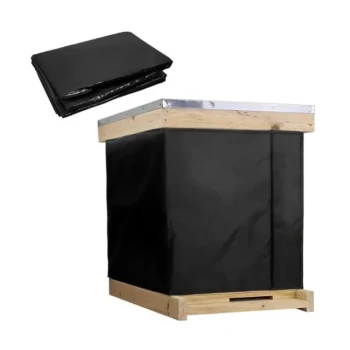
A specialized thermal chamber functions as a precision hyperthermia environment designed to eliminate parasites through heat shock. It creates an enclosed, strictly controlled space where temperatures are raised to a critical range of 46-48°C for a duration of 10-12 minutes. This process leverages the physiological difference between the heat tolerance of pests, such as Varroa mites, and the honeybees themselves.
Core Takeaway The thermal chamber exploits a specific biological vulnerability: parasites die at temperatures that honeybees can briefly withstand. This allows for effective physical pest control that eliminates the need for chemical treatments, leaving the hive residue-free.
The Mechanics of Differential Heat Tolerance
Exploiting Biological Weaknesses
The fundamental principle of the thermal chamber is differential heat tolerance. Honeybees have evolved a higher resilience to heat compared to their parasitic invaders.
The Critical Temperature Window
To be effective, the chamber must maintain a precise thermal environment between 46°C and 48°C.
At this specific intensity, the heat is sufficient to cause parasites to detach from their hosts and perish.
The Importance of Duration
The treatment utilizes a short exposure time, typically 10 to 12 minutes.
This brief window is critical; it is long enough to ensure parasite mortality but short enough to prevent physiological harm to the bees.
Operational Benefits Over Chemical Methods
Physical vs. Chemical Control
Unlike acaricides or other chemical applications, the thermal chamber acts as a purely physical barrier.
It eliminates pests without introducing toxic substances into the colony, ensuring there are no chemical residues left in the honey or wax.
Preserving Colony Health
By removing high pathogen loads physically, the process helps suppress parasite populations that contribute to Colony Collapse Disorder (CCD).
This method supports the immune system of the honeybee by removing the stress of the parasite without adding the stress of chemical toxicity.
Understanding the Trade-offs
Precision is Non-Negotiable
The effectiveness of this method relies entirely on exact temperature regulation.
If the temperature drops below the target range, the parasites may survive or fail to detach.
The Risk of Overheating
Conversely, exceeding the 48°C limit or the 12-minute duration poses a lethal risk to the bees.
The equipment must be capable of uniform heat distribution to avoid "hot spots" that could damage the colony while other areas remain too cool to be effective.
Making the Right Choice for Your Goal
The use of a thermal chamber is a decision to prioritize physical precision over chemical convenience.
- If your primary focus is Maximum Pest Mortality: Ensure your equipment can sustain 46-48°C consistently for the full 12 minutes to guarantee parasite detachment.
- If your primary focus is Organic Purity: Utilize this thermal method to maintain a strictly chemical-free environment, eliminating the risk of residue contamination in your commercial production.
Mastering the thermal chamber allows you to turn the biology of the parasite against itself, securing your apiary’s future without chemicals.
Summary Table:
| Feature | Specification/Detail | Benefit |
|---|---|---|
| Temperature Range | 46°C - 48°C | Exploits the parasite's low heat tolerance |
| Treatment Duration | 10 - 12 Minutes | Maximum pest mortality with minimal bee stress |
| Control Mechanism | Physical Hyperthermia | 100% residue-free; no chemical contamination |
| Target Pests | Varroa Mites & Nosema | Prevents CCD and boosts colony immune health |
| Key Requirement | Precision Regulation | Ensures uniform heat distribution without hot spots |
Elevate Your Apiary's Health with HONESTBEE
Are you looking to eliminate Varroa mites while maintaining the organic purity of your honey? HONESTBEE specializes in supporting commercial apiaries and distributors with high-performance beekeeping machinery and tools.
From advanced thermal treatment equipment to specialized hive-making and honey-filling machines, we provide the full spectrum of hardware and consumables needed for large-scale success. Contact us today to discuss how our professional-grade solutions can optimize your production and keep your colonies chemical-free.
References
- V. G. Kashkovsky, А. А. Плахова. Treatment of bee families without drugs, or a zootechnical method of combating diseases of bees. DOI: 10.31677/2072-6724-2021-59-2-115-124
This article is also based on technical information from HonestBee Knowledge Base .
Related Products
- Oxalic Acid Vaporizer 12V for Bee Varroa Mite Treatment
- Heavy Duty 12V Oxalic Acid Evaporator Vaporizer for Bee Varroa Mite Treatment Beekeeping Fumigator Atomizer
- 12V Bee Mite Removal Evaporator Oxalic Acid Vaporizer for Bee Fumigation Treatment 180W Atomization
- Adjustable Formic and Acetic Acid Dispenser for Bee Mite Treatment
- Durable 12V Oxalic Acid Vaporizer for Varroa Mite Treatment Beehive Beekeeping Tool
People Also Ask
- What factors determine how often to treat for varroa mites with oxalic acid? Time Your Treatment for Maximum Efficacy
- What are the technical advantages of using professional Sublimators? Maximize Mite Control with Precision Vaporizers
- What is the technical objective of applying oxalic acid via a sprayer? Maximize Varroa Resistance in Your Apiary
- How can oxalic acid treatment be applied effectively when capped brood is present? Master the 3-Stage Vapor Protocol
- What is the overall goal of using oxalic acid in late fall for beekeepers? Maximize Winter Survival with a Broodless Treatment