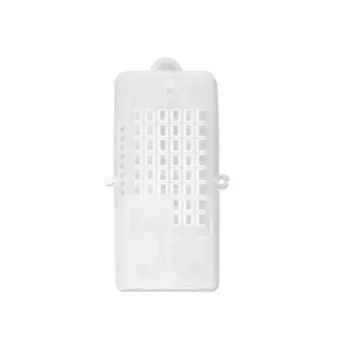
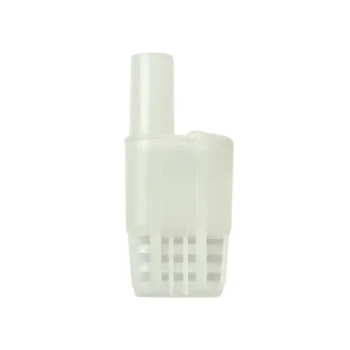
Installing a queen cage correctly requires suspending it securely between the two middle frames of the hive body where the bee population is densest. You must position the cage so that the mesh screen is fully accessible to the worker bees, allowing for pheromone exchange and feeding without exposing the queen to immediate aggression.
Core Takeaway: The queen cage is not just a container; it is an acclimation tool. Its primary function is to protect the queen from initial rejection while allowing her pheromones to permeate the hive, converting the colony's aggression into acceptance over a period of days.
Preparation and Placement
Creating Necessary Space
Before installing the cage, you must remove one frame from the center of the brood box.
This step is mandatory to create enough physical void for the cage. Attempting to wedge the cage between full frames without making space risks squishing the bees or damaging the comb.
Positioning the Cage
The cage should be suspended and attached between the two middle frames of the hive.
This central location is vital because it ensures the queen remains in the warmest part of the cluster. Placing her on the perimeter can lead to chilling or neglect if the colony clusters in the center during cool nights.
Securing the Hardware
You must secure the cage so it does not shift or fall to the bottom board.
Common methods involve using a rubber band around a frame or a thumbtack to pin the cage's strap to the top bar. A fallen cage often results in the queen perishing away from the cluster's warmth and care.
Ensuring Interaction and Safety
Correct Screen Orientation
The mesh screens of the cage must be oriented to ensure honey bees can interact with the queen.
The primary reference notes the screens should face toward the front of the colony; the critical principle is that the mesh must be exposed to the open space where workers congregate. This interaction allows nurse bees to feed the queen and smell her pheromones.
The Role of Candy Plugs
Ensure the cage is positioned so worker bees have access to the candy plugs.
These plugs act as a slow-release timer. As the workers eat through the candy to reach the queen, the delay provides the necessary time for the colony to acclimate to her scent.
Understanding the Trade-offs
The Risk of blocked Screens
A common error is pressing the screen side of the cage tight against the beeswax of an adjacent frame.
If the screen is blocked, the queen will die. Worker bees cannot feed her through the mesh, and her pheromones cannot circulate, causing the colony to reject her or fail to realize she is present.
Proper Removal
After the queen has been released (usually a few days later), you must remove the empty cage.
Leaving the cage indefinitely can result in burr comb (unwanted wax bridges) being built around it, which disrupts the even spacing of your frames. Always check for stray bees inside the cage before removing it.
Making the Right Choice for Your Goal
- If your primary focus is survival: Ensure the cage is in the absolute center of the cluster and the screen is completely unobstructed to guarantee feeding and warmth.
- If your primary focus is rapid acceptance: Verify that the candy plug is accessible and not covered by the mechanism used to hang the cage (e.g., a rubber band).
The installation is successful only when the queen is secure, warm, and capable of communicating chemically with her new workforce.
Summary Table:
| Step | Action | Why It Matters |
|---|---|---|
| Space | Remove one center frame | Prevents crushing bees and provides room for the cage. |
| Position | Suspend between middle frames | Keeps the queen in the warmest part of the cluster. |
| Orientation | Mesh screens must be exposed | Allows worker bees to feed the queen and sense her pheromones. |
| Release | Accessible candy plugs | Acts as a timer for gradual acclimation and acceptance. |
| Security | Fix with rubber band or tack | Prevents the cage from falling to the bottom of the hive. |
Maximize Your Colony’s Potential with HONESTBEE
Successful queen integration is just the beginning of a productive season. At HONESTBEE, we empower commercial apiaries and distributors with the high-performance tools needed to scale operations efficiently.
From durable hive-making machinery and precision honey-filling lines to a comprehensive range of wholesale beekeeping tools and consumables, our portfolio is designed to meet the rigorous demands of the modern bee industry.
Ready to elevate your apiary's productivity? Contact HONESTBEE today to explore our wholesale solutions and discover how our expertise can drive your business growth.
Related Products
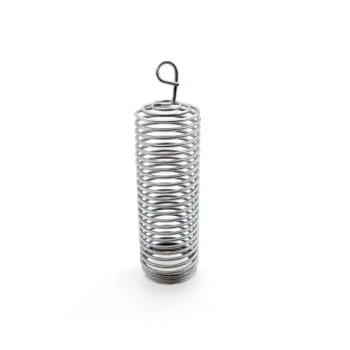
- Durable Galvanized Steel Spring Queen Bee Cage
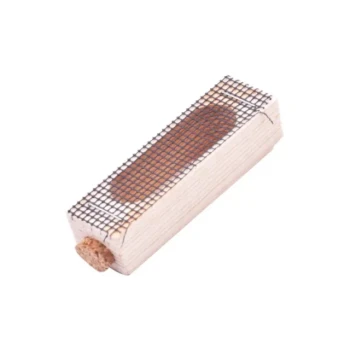
- Classic Wooden and Mesh California Queen Cage
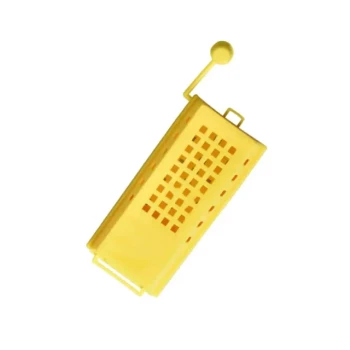
- Professional Queen Bee Introduction and Transport Cage
- Professional Queen Cage with Sliding Gate and Feeder Plug
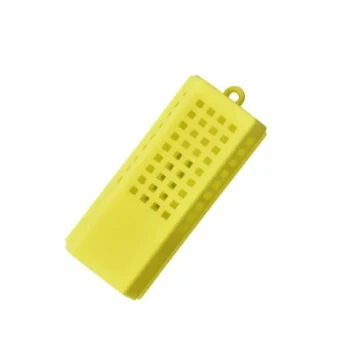
- Professional Multi-Compartment Queen Cage with Sliding Lid
People Also Ask
- Why are specialized queen bee cages used for the banking of mated queen bees? Maximize Commercial Apiary Storage Efficiency
- What is the mechanism of action for using temporary queen bee cages? Master Successful Queen Introduction
- What is the step-by-step process for installing a queen bee's cage onto a frame? Ensure Hive Acceptance Safely
- What is the optimal placement for a queen bee cage? Essential Strategies for Successful Re-queening
- What are the advantages and disadvantages of introducing a queen bee by embedding the cage? Boost Your Queen Acceptance