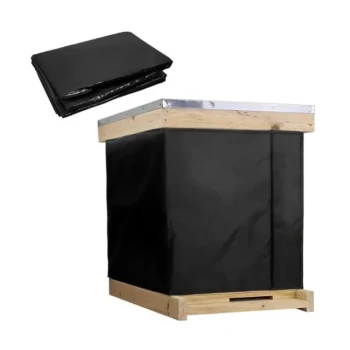
The critical function of top insulation in a winterized, bottom-heated hive is to act as a thermal lid that captures rising heat. Because warm air naturally ascends, a bottom-heating system is rendered inefficient without a barrier at the highest point of the hive. High-performance top insulation prevents this rapid heat loss, trapping a stable warm air mass inside the structure where the colony needs it most.
Top insulation works in conjunction with bottom-heating systems to create a closed-loop thermal protection network. By trapping rising heat, it drastically reduces the metabolic energy bees must expend to stay warm, directly preserving their winter honey stores.
The Mechanics of Thermal Retention
Counteracting Natural Convection
In any hive, but specifically one with a bottom heater, warm air rises vertically.
Without a distinct thermal barrier at the top, the heat generated by your system simply escapes through the lid.
Top insulation stops this "chimney effect," forcing the warm air to circulate back down or remain suspended around the cluster.
Creating a Closed-Loop System
The primary reference defines the combination of bottom heating and top insulation as a closed-loop thermal protection network.
The bottom heater introduces energy, while the top insulation retains it.
This partnership ensures that the heat source is actually modifying the internal microclimate rather than warming the outside air.
Impact on Colony Survival
Reducing Metabolic Stress
Bees generate their own heat by vibrating their wing muscles, a process that consumes significant energy.
When external heat is retained efficiently, the colony does not need to work as hard to maintain a life-sustaining temperature.
This reduction in labor lowers the overall stress on the colony during the vulnerable winter months.
Preserving Food Stores
The energy bees use to generate heat comes exclusively from consuming honey.
High-performance insulation directly correlates to lower honey consumption.
By stabilizing the internal temperature, the colony burns through fewer resources, significantly increasing the likelihood that their food stores will last until spring.
Understanding the Trade-offs
Managing Moisture Accumulation
While trapping heat is critical, a completely sealed system can trap moisture.
Supplementary data suggests that insulation helps during "damp nights," but you must ensure the hive design prevents condensation from dripping back onto the bees.
Top insulation actually helps here: by keeping the inner cover warm, it prevents moist air from condensing on the ceiling of the hive.
The Necessity of Balance
Insulation is not just about trapping maximum heat; it is about establishing homeostasis.
If the insulation is too effective and the heater is unregulated, the hive could theoretically overheat, though this is rare in winter.
The goal is a stable environment, not a hot house; the insulation serves to smooth out the jagged spikes of external temperature drops.
Optimizing Your Winter Strategy
If your primary focus is Energy Efficiency:
- Prioritize top insulation to minimize the electricity used by your heater and the calories burned by your bees.
If your primary focus is Colony Survival:
- Ensure your top insulation is installed by late October to protect the cluster from the dual threats of cold and dampness.
If your primary focus is Resource Management:
- Utilize this "closed-loop" setup to reduce the volume of supplementary feeding required during late winter.
Successful winterization relies on managing the flow of heat, not just generating it.
Summary Table:
| Feature | Function in Winterized Hive | Impact on Bee Colony |
|---|---|---|
| Thermal Lid Effect | Prevents rising warm air from escaping (chimney effect) | Maintains stable internal microclimate |
| Metabolic Reduction | Minimizes energy bees expend on wing vibration | Reduces honey consumption and physical stress |
| Moisture Control | Keeps the inner cover warm to prevent ceiling condensation | Protects bees from freezing dampness |
| Closed-Loop System | Works with bottom heaters to recycle energy | Increases energy efficiency of heating systems |
Secure Your Apiary’s Success with HONESTBEE
Maximize your winter survival rates and operational efficiency with professional-grade beekeeping solutions. At HONESTBEE, we specialize in supporting commercial apiaries and distributors with a robust wholesale catalog. From high-performance hive-making machinery and honey-filling systems to essential consumables and honey-themed cultural merchandise, we provide the full spectrum of equipment needed to scale your business.
Ready to upgrade your inventory? Contact us today to discuss how our comprehensive wholesale offerings can enhance your value to the beekeeping community.
References
- M. A. Al-Rajhi. Warming Beehives with Solar Energy Stored in Water. DOI: 10.19159/tutad.1126564
This article is also based on technical information from HonestBee Knowledge Base .
Related Products
- Professional Insulated Winter Hive Wrap for Beekeeping
- Inner Beehive Cover for Beekeeping Bee Hive Inner Cover
- Telescopic Beehive Outer Cover Lid Roof with Galvanised Sheeting for Langstroth Hive and Beehive Outer Cover
- Professional Insulated Plastic Bee Hives
- HONESTBEE Square Top Hive Bee Feeder Top Bee Feeder
People Also Ask
- What are the steps to properly wrap a beehive for winter? Ensure Your Colony Survives the Cold
- When is the best time to wrap a beehive for winter? A Guide to Perfect Winterization Timing
- How do professional insulation wraps provide protection for bee colonies? Optimize Winter Survival & Energy Efficiency
- What are the technical benefits of using winter wraps for beehive insulation? Boost Colony Survival & Hive Health
- What are the benefits of using insulated covers for hives? Ensure Colony Survival and Health